
Last updated: October 2026 · Checked against Highway Code
Pedestrian Zone Sign: meaning, rules and what to do
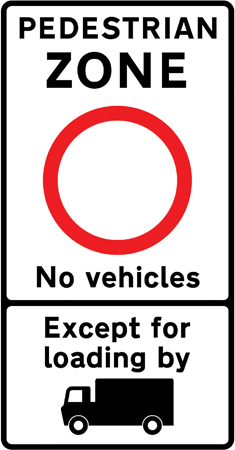
The pedestrian zone sign UK drivers meet at precinct mouths is usually a white rectangular plate headed PEDESTRIAN ZONE, with a red no-vehicles symbol and words that list who may still drive in, such as loading by goods vehicles during stated hours. It marks the start of a foot-first street where general motor traffic must stay out unless a supplementary panel grants a narrow exemption.
Sign image © Crown copyright, reproduced from GOV.UK traffic sign images under the Open Government Licence v3.0.
What the Pedestrian zone Sign Looks Like
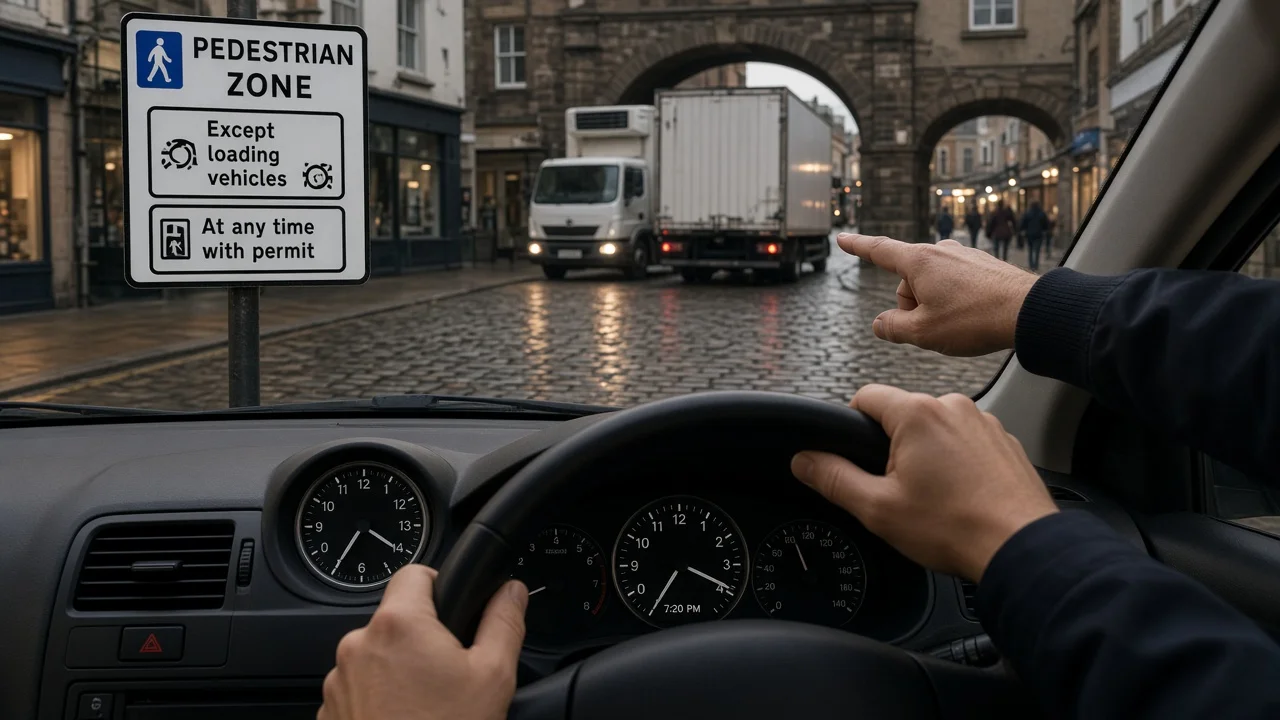
The common GOV.UK layout is a tall white rectangle with a black border. The top panel carries the legend PEDESTRIAN ZONE in bold capitals. Beneath it sits a red regulatory circle with car and motorcycle pictograms and the words No vehicles, matching the class ban used on standalone no motor vehicles plates.
A lower panel often states Except for loading by above a black lorry silhouette. Additional white strips may fix hours such as 6 pm to 10 am, name residents, taxis, buses, or disabled access, or show permit symbols. Each strip is a separate legal modifier; the headline zone plate does not grant vans a free pass all day.
Entry assemblies frequently stand beside rising bollards, camera poles, and thick stop lines on flagged stone. Repeaters after side streets remind drivers who turn in mid-precinct that the order still applies. End plates copy the zone grammar with a diagonal bar or END legend facing outbound traffic.
Learners confuse this worded zone entry with the blue pedestrian only circle that shows a bicycle above walkers on a shared path. Colour and layout differ: the zone rectangle describes a whole precinct in text and pairs with motor bans, while the blue pictogram marks a non-motor route for the classes drawn. Sat-nav may label both simply as pedestrian street.
Temporary festival boards sometimes mimic the white zone layout at cordons. Obey the official post until stewards replace signing. Rain and grime can hide the smaller hour bands while the red no-vehicles disc still reads clearly, so slow enough to read the full stack before your bonnet crosses the line.
Pedestrian only blue circles positively allocate a path to walkers and pedal cycles illustrated on the disc. No motor vehicles red circles forbid engines without naming the precinct in words. Pedestrian zone rectangles bundle the precinct title with the motor ban and loading exemptions on one assembly. Read shape grammar before you assume a van ahead means your car may follow.
What the Pedestrian Zone Sign Means
Traffic authorities pedestrianise cores so shoppers, residents, and hospitality venues can use the carriageway without through traffic. The zone order is geographic: it covers the signed streets and any side arms included in the traffic order, not merely the single post where you first noticed the plate.
Rule 253 in The Highway Code reminds drivers where pedestrians must not walk, including motorways. Inside a lawful pedestrian zone the opposite expectation applies for people on foot: the street is designed for them, while motors stay out unless exempted. Rule 7 still requires you to obey all traffic signs, including hour bands on white panels.
The no vehicles symbol on the zone plate matches the standard motor-vehicle class ban. Pedal cycles may remain legal on many precinct streets unless a separate no cycling plate appears. Electric scooters and motorcycles count as motor vehicles in typical orders unless local trials say otherwise.
Loading exemptions exist so shops receive stock without reopening the precinct to general traffic all day. The lorry pictogram signals goods vehicles, not every white van driver who claims a quick drop. Authorities tie access to time windows, permits, or maximum stay limits printed in smaller text.
Evening and overnight bands are common because retailers accept deliveries after shoppers leave. A panel showing 6 pm to 10 am does not invite private cars to sightsee at nine in the evening; it usually limits goods vehicles serving premises inside the zone. Umar’s instructor drills that distinction because tailing a lorry is a favourite theory trap.
Residents, buses, and taxis sometimes appear on separate strips with permit discs or registration lists. Blue-badge holders are not automatically exempt from motor bans. Check whether disabled access for motors is named before you drive across flagged stone to reach a hotel entrance.
Camera enforcement and rising bollards often sit a few metres beyond the plate. The legal line remains at the sign facing your direction. Driving past then stopping when steel pins refuse to sink still counts as entry for penalty purposes if your wheels crossed while the order applied to you.
Northern Ireland uses the same sign family on most public roads. If you revise in Belfast after studying in Birmingham, read the white zone stack the same way: words, hours, and pictograms together, not the headline alone.
Before you angle into a historic high street, scan both kerbs for the white zone rectangle and any no motor vehicles repeaters. Name the hours aloud during lessons so the exemption story is fresh before dusk deliveries begin.
Sat-nav may route you to a shop front without mentioning the precinct order. Trust the post, not the vehicle ahead, unless you have confirmed your class and time band on the panels.
When supervising Umar on evening lessons, rehearse refusing to follow a lit lorry through an arch. Examiners reward early recognition more than a reverse among diners after the bonnet has crossed the line.
Café furniture and market stalls can hide lower hour plates. Approach slowly enough to read Except for loading text before you commit.
Hazard lights and flashers do not create an exemption. Hold a permit or stay outside until the lawful window if you are servicing premises.
Park-and-ride and tour buses use separate gates with their own plates. Do not assume a bus ahead waives the zone order for your lesson car.
Winter markets shift barriers forward. Read the current post position rather than last year’s memory of where engines last turned.
If you must reverse after a mistake, pick a gap before crowds thicken. An open window helps walkers hear you inching back on cobbles.
Highway Code rules 7, 64 to 66 and 249 to 253 (signs, cyclists and pedestrians)
Pedestrian zone vs Similar Signs
| Sign | Meaning | Legal or warning? |
|---|---|---|
| Pedestrian zone | Precinct entry with motor ban and listed exemptions | Zone entry plate |
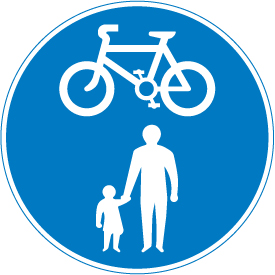 Pedestrian only | Shared path for walkers and pedal cycles | Blue regulatory circle |
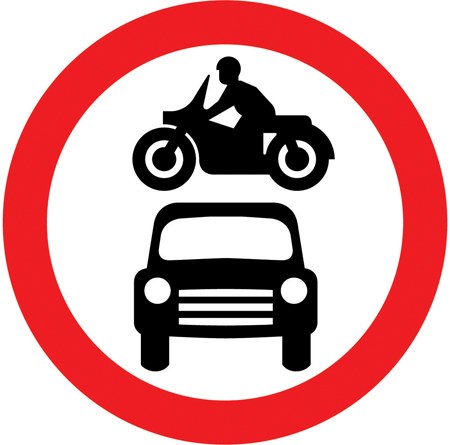 No motor vehicles | Engines forbidden on carriageway | Red regulatory circle |
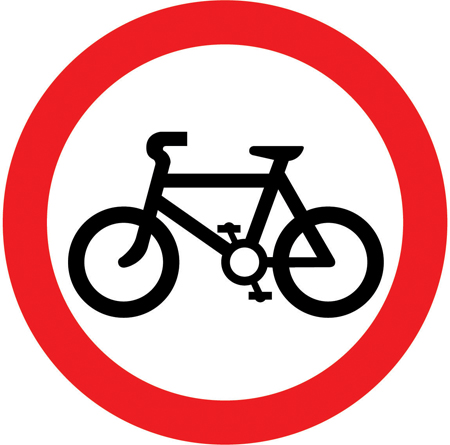 No cycling | Riding forbidden | Red regulatory circle |
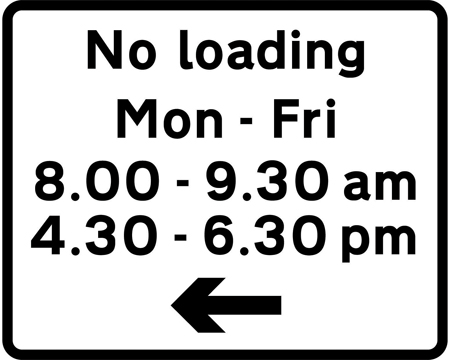 No loading | Goods loading ban on signed length | Regulatory plate |
Rules and Penalties
Driving inside a pedestrian zone without a lawful exemption can bring penalty charge notices from civil enforcement cameras, with amounts set by the local authority and higher tariffs during events when access must stay clear.
Police may stop drivers who endanger crowds after illegal entry, especially when a car squeezes past tables or forces walkers against shop fronts during busy evenings.
Insurance disputes after bumps on flagged stone often turn on whether the vehicle was lawfully present. Dashcam footage that shows the zone plate and hour bands strengthens or weakens a claim.
Theory tests pair the white zone layout with stories about deliveries and market towns. Choose answers that keep general motor traffic out while respecting narrow loading windows, not answers that treat any van as permission for all cars.
Using trade excuses while outside the stated loading band still counts as a contravention. Enforcement staff compare timestamps with permit registers.
Repeat offences in city centres can attract wheel clamping or removal when emergency access is blocked by parked intruders.
Check the latest theory test pass mark and book when you are ready via our booking guide.
Pedestrian zone in Practice
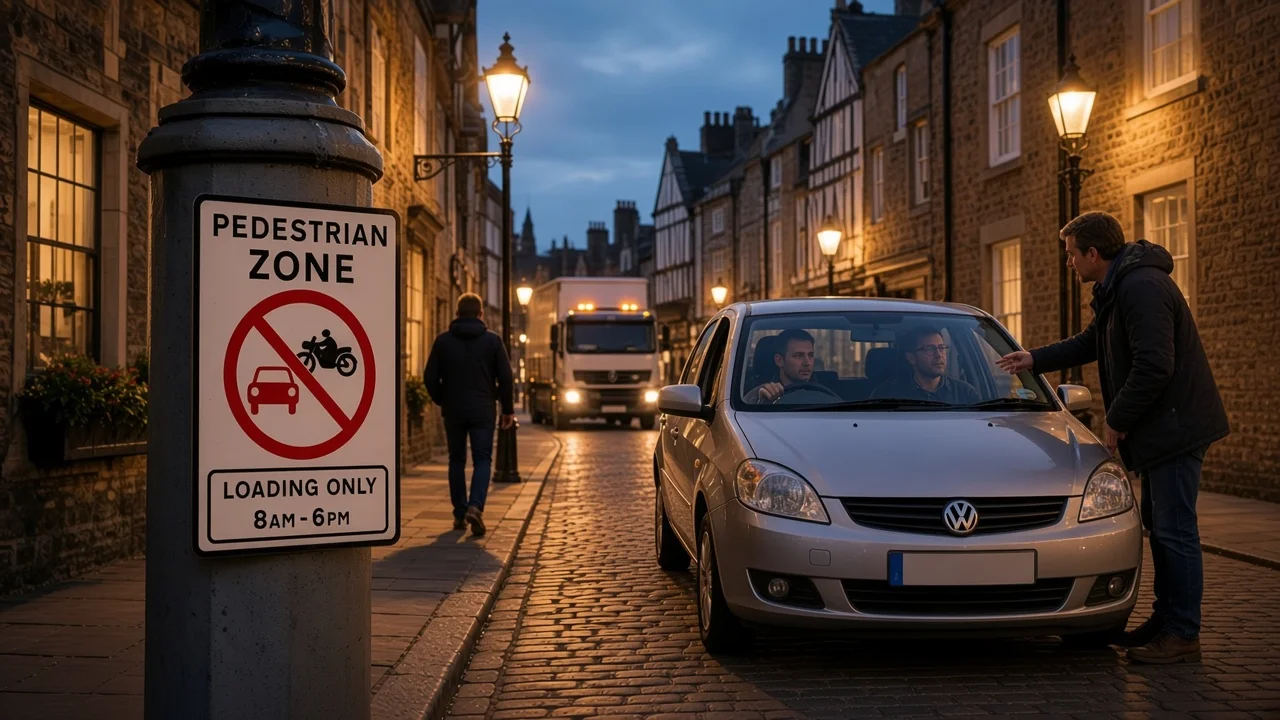
Umar is on an autumn evening lesson in York when his instructor routes past an arch into a cobbled precinct. The white pedestrian zone sign UK layout faces them: PEDESTRIAN ZONE above the red no-vehicles disc, and a lower panel reading Except for loading by beside the lorry pictogram. A narrow strip beneath fixes access from 6 pm to 10 am.
The dashboard clock shows twenty past seven. A refrigerated lorry ahead signals left through the arch, amber beacons reflecting on wet stone. Umar asks whether he may follow because the street looks open. His instructor tells him to hold before the stop line and read the panels again: the exemption names goods vehicles on the loading band, not learner cars on a practice loop.
They watch the lorry creep through at walking pace while a camera housing on the nearside lamp column records its plate. Shoppers cross freely between stalls. Umar selects neutral with the handbrake on, then completes a three-point turn in the side street while the instructor explains that evening delivery rights do not clone themselves onto every following driver.
A hatchback behind them tries to tail the lorry; Umar leaves space so it cannot bully him forward. The instructor notes that examiners treat illegal zone entry as a serious fault when pedestrians are dense, even if another motorist was waving him through.
That night Umar revises theory questions showing the same GOV.UK JPEG. He answers that general cars must stay out while lawful goods loading may continue inside the posted hours, and he contrasts the white zone stack with the blue pedestrian only circle from an earlier module.
How This Sign Appears on the Theory Test
Picture items show the white PEDESTRIAN ZONE legend with the red no-vehicles symbol and ask what drivers should do. Link the image to precinct entry rules and supplementary hour plates, not to bus stops or cul-de-sac information signs.
Scenario stems describe a learner tempted to follow a lorry after dark. The safe answer stops at the motor ban unless the story names a lawful exemption and active time band for that vehicle class.
Distractors swap in blue pedestrian only circles, no entry bars, and pedestrians in road triangles. Triangles warn drivers; white zone rectangles define precinct orders with words.
When two plates share a post, read the lorry panel and clock before you tap. Except for loading is narrower than many candidates assume and rarely covers private cars sightseeing during the same evening window.
Filter mock questions on regulatory signs, then revisit Highway Code guidance on vulnerable road users. Examiners assume you treat zone plates with the same weight as stop lines.
Take a free mock theory test and filter questions on road and traffic signs. Pair that with the warning signs guide for triangle symbols.
Related Road Signs
Pedestrian only
Blue circle for shared walker and cycle routes.
No motor vehicles
Red circle motor ban often paired at zone mouths.
No loading
Restricts goods loading where zone panels allow it elsewhere.
No cycling
Can remove riders where walkers remain welcome.
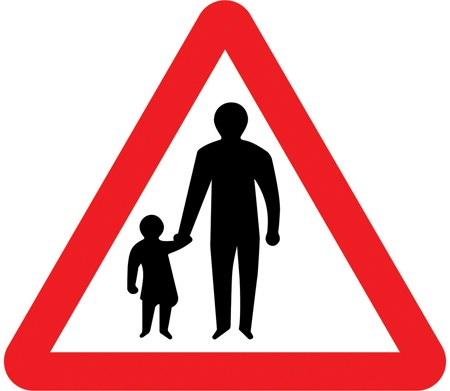
Pedestrians in road
Warns where walkers share a normal carriageway.
Test Yourself on UK Road Signs
When the white plate names a pedestrian zone with a no-vehicles symbol and loading panels, treat the precinct as foot-first and read hours before you follow evening traffic. Pair this guide with a free mock theory test so precinct and delivery traps stay obvious under exam time pressure.
Frequently Asked Questions
Can I drive through if a lorry is loading after 6 pm?
Only if the white panels name your vehicle class and the clock shows you inside the lawful band. A goods exemption for loading does not let private cars tail delivery traffic through the arch. Read every strip on the post before you move.
How is the pedestrian zone plate different from pedestrian only?
The zone rectangle describes a whole precinct with words and a motor ban, often plus loading hours. The blue pedestrian only circle marks a non-motor route for walkers and cycles illustrated on the disc. Drivers need the zone stack at shopping entries; the blue plate guides shared paths.
Do pedestrians have to walk in the road in a zone?
The street is designed for foot traffic, but walkers still choose sensible paths around furniture and stalls. The sign frees the carriageway from general motors; it does not force people to ignore pavements where they exist.
Why do some zones show a lorry but not a time band?
Some orders rely on separate white rectangles for hours or permits. If no band is visible, assume the strictest reading until you confirm on the authority website or at the venue. Never guess that loading runs all night.
Will this appear on my car theory test?
Yes. Precinct scenarios with delivery vans are common. Learn the white PEDESTRIAN ZONE layout, the red no-vehicles symbol, and how hour plates limit loading so you keep general cars out while lawful goods vehicles may enter.