
Last updated: October 2026 · Checked against Highway Code
No Cycling Sign: meaning, rules and what to do
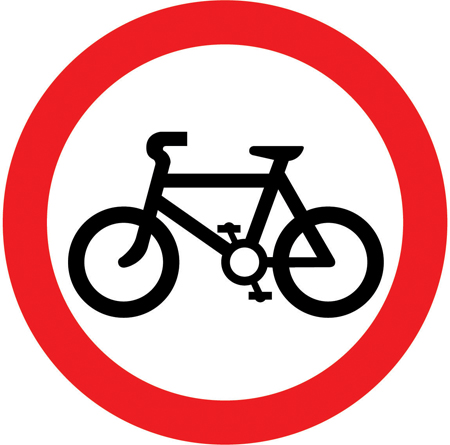
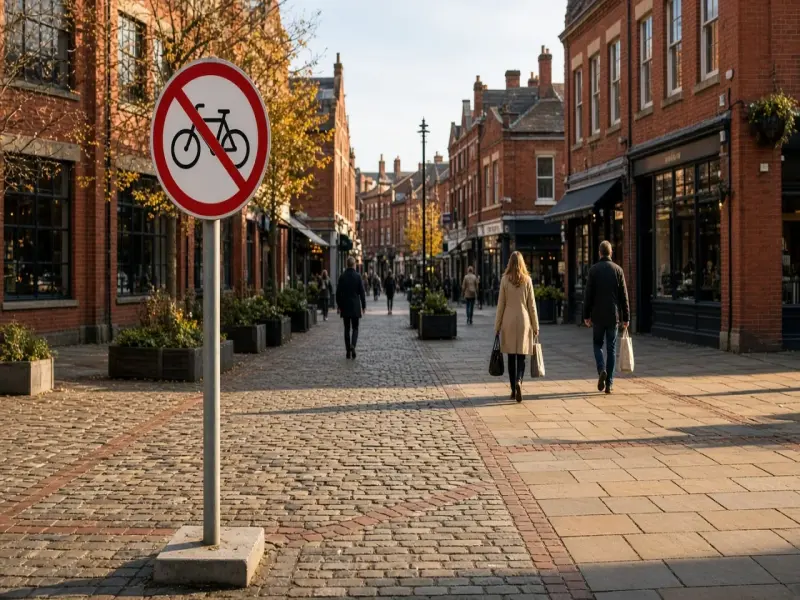
A red-ringed circle with a black bicycle crossed by a diagonal bar forbids riding a pedal cycle in the road, path, or zone ahead. Walkers may still use the space unless another plate says otherwise, but you must not cycle through the signed length.
Sign image © Crown copyright, reproduced from GOV.UK traffic sign images under the Open Government Licence v3.0.
What the No cycling Sign Looks Like
The regulatory disc follows UK prohibition grammar: white centre, thick red border, black pictogram. A bicycle is shown in side profile with two wheels and handlebars, and a red diagonal slash crosses the whole symbol from upper left to lower right. There is no rider figure because the order targets the act of cycling, not a particular club or uniform.
Posts stand at the mouth of shopping precincts, towpaths opened to walkers only, underpasses with low headroom, and footways beside busy carriageways where riding would endanger pedestrians. Repeat circles sometimes appear mid-zone after side paths join so late entrants still see the restriction.
Learners confuse it with the red triangle that shows a lone bicycle, which warns drivers that riders may be ahead, and with blue mandatory cycle track circles that require cyclists to use a lane. The barred bicycle in a red ring always prohibits riding for cyclists facing that plate, not encourage sharing space with cars.
Supplementary white rectangles may sit beneath the circle: “Except disabled”, distance in metres, operating hours, or “Pedestrians only” on related pedestrian zone schemes. Those plates are part of the legal order. A small time band can turn a daytime ban into an evening route for commuters, so read the full post before you roll through on a shortcut.
At night, retroreflective red rings catch headlamps before the black bicycle detail resolves. Rain and graffiti on estate schemes can hide a post until you are beside it. If you commute on two wheels, treat unfamiliar cut-throughs as guilty until you confirm no red circle faces your direction.
Blue cycle route direction panels guide navigation without banning motors. Red warning triangles with a plain bicycle warn drivers to expect riders. Mandatory cycle track circles on blue tell cyclists where they must ride. The no cycling plate is a negative order for pedal traffic. Pair it mentally with pedestrianised high streets that also show no motor vehicles pictograms on the same gantry.
What the No Cycling Sign Means
Traffic authorities install the order where mixing cycles with dense footfall would create unacceptable risk: narrow high streets, shared surfaces outside stations, indoor-style arcades, and paths under bridges where handlebars catch pedestrians. The ban starts at the sign and continues until an end plate, a clear break in the restriction, or a junction where another order takes over.
Rule 64 in The Highway Code states you must not cycle on a pavement unless signs permit it. The barred bicycle circle is the roadside expression of that principle on many urban links. Riding past the plate is failing to comply with a traffic sign, not a informal request from a shopkeeper.
Rule 66 reminds cyclists to be considerate and give way to pedestrians on shared paths. Where this plate appears, the considerate choice is to dismount before the line rather than weave through a crowd at walking pace while still technically riding.
Pushing a bicycle by hand is often tolerated where the traffic order bans riding only, but some pedestrian zones treat any wheeled device as excluded except mobility aids. Read supplementary plates and local bylaws. When in doubt, walk the pavement outside the zone or lock the bike at the entry.
Electric bicycles classed as electrically assisted pedal cycles follow the same symbol in most theory scenarios unless a plate names powered two-wheelers separately. Throttle-only machines may fall under different local trials. Drivers revising for the car test still need to recognise the pictogram because pedestrian zone questions pair it with motor bans.
The order does not automatically ban every other wheel user. Mobility scooters, prams, and wheelchairs are not bicycles. Skateboards and e-scooters may be restricted by separate local rules even when cycles are banned. Do not assume one plate covers every personal transport device.
Shared-use paths sometimes show a no cycling circle at one end while the other end welcomes cycles with a blue shared path sign. Direction matters: the plate faces the approach it regulates. Turning back on a one-way footway may be impossible; plan routes before you enter.
Sat-nav cycling modes may still route you through a precinct because map data lags behind new schemes. Trust the plate at the kerb. Dismounting for two hundred metres beats a fixed penalty notice and an awkward argument with a civil enforcement officer beside a coffee stall.
City centres such as parts of Cambridge, York, and central London combine no motor vehicles with no cycling on the same post cluster. Drivers learn the car pictogram; cyclists must notice the barred bike before they coast off a main road into a precinct.
Canal towpaths flip between permissive riding and footway-only sections without obvious gates. A red circle at a narrows or tunnel mouth is your cue to stop, lift the bike, or turn back before you meet oncoming walkers head-on.
Delivery cyclists for food apps face the same order as leisure riders. “Just quickly” through a signed arcade still counts as riding. Many venues expect riders to lock outside the zone and walk the last stretch.
Parents with children on tag-alongs or cargo bikes need a dismount plan before the plate. A child seat does not exempt you. Look for signed cycle parking rings on the legal side of the boundary.
Driving instructors rarely test the plate on car lessons, but ADIs who also teach cycle awareness use real precinct entries to show how orders stack. Theory candidates who cycle daily sometimes overlook the symbol because habit beats signage.
Events may add temporary duplicate boards on stands. The artwork matches the permanent sign. Marshals may shout guidance, but the legal order still flows from the red circle if it is an official plate.
If you manage a shop inside a zone, ask the council for the written traffic order before you tell staff they may ride to the goods entrance. Resident exemptions are rare for cycles compared with blue-badge motor access.
Wet cobbles inside pedestrian areas make dismounting sensible even where pushing is allowed. Control the bike while walking so a slipping wheel does not slide into a toddler crossing your path.
Highway Code rules 64 to 66 and 239 (cyclists, pavements and traffic signs)
No cycling vs Similar Signs
| Sign | Meaning | Legal or warning? |
|---|---|---|
| No cycling | Riding a pedal cycle forbidden | Regulatory red circle |
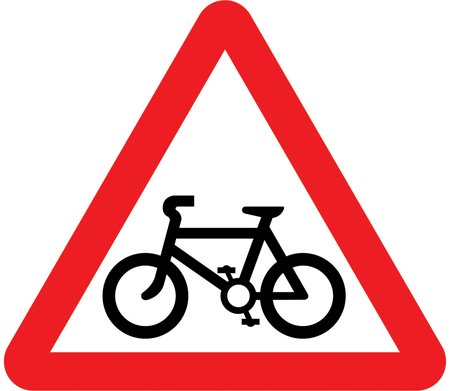 Cycle route ahead | Drivers should expect cyclists | Warning triangle |
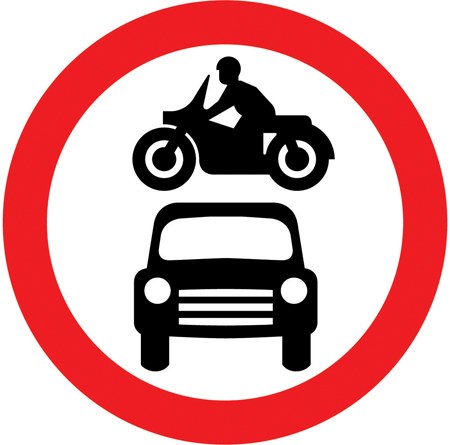 No motor vehicles | Motors banned; cycles may continue | Regulatory pictogram |
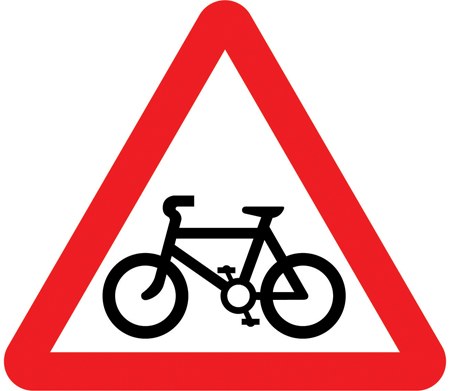 Bicycle crossing | Riders may cross the carriageway | Warning triangle |
Rules and Penalties
Cycling past a regulatory prohibition sign can support a fixed penalty for failing to comply with a traffic sign. Exact amounts and whether police or council officers enforce depend on the location and local bylaws.
Pedestrian zone schemes may use civil enforcement cameras or on-street officers during peak shopping hours. Appeals need evidence of missing or covered signing, not merely that the precinct looked empty.
Collisions with pedestrians after you ignored a visible barred bicycle plate weaken any insurance defence for a civil claim. Witness statements and CCTV from shop fronts often show the post clearly in frame.
Driving theory tests show the pictogram beside pedestrian zone stories. Choose the answer that forbids cycling, not the warning triangle that merely tells motorists to expect bikes elsewhere.
Repeat breaches in some cities trigger higher charges or orders to attend education sessions. Treat the plate as seriously as a red light for cars, even when other riders seem to ignore it.
Check the latest theory test pass mark and book when you are ready via our booking guide.
No cycling in Practice
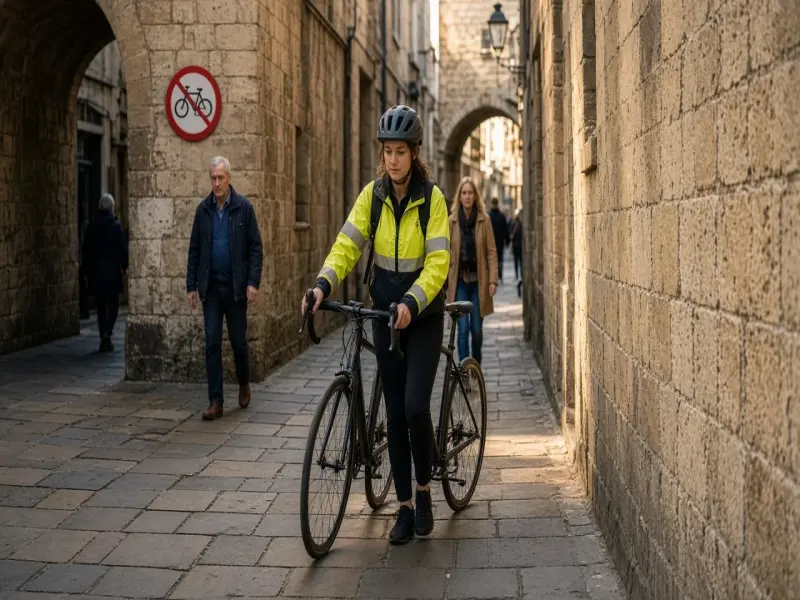
Jade commutes by bike into Bristol and uses a cut-through she thinks saves five minutes. At the mouth of a covered arcade she notices a red circle with a barred bicycle she previously overlooked because she focused on the no motor vehicles pictogram beside it.
She stops with both feet down before the sign, checks supplementary plates, and sees “Pedestrian zone” with no exemption for cycles. She dismounts, walks the bike between shop fronts at walking pace, and remounts only after a blue shared path sign marks the legal exit toward her office.
Another rider coasts past the same plate still in the saddle. A council officer stops him, explains the order, and issues a fixed penalty. Jade’s pause cost her three minutes but kept her licence clean and avoided brushing a pensioner at the narrowest pinch point.
When Jade revises for her car theory test later that year, she instantly picks the barred bicycle option in a pedestrian precinct scenario. The cycling habit and the exam answer now align because she linked the symbol to a real place on her route.
How This Sign Appears on the Theory Test
Multiple-choice items show the black bicycle with a diagonal bar inside a red ring and ask who may not proceed. Select cycling or riding a pedal cycle, not driving a car unless the stem describes a different pictogram.
Picture sets contrast the prohibition circle with the warning triangle that shows a bicycle alone. Shape first: red circle equals order; red triangle equals hazard warning. Blue circles often mandate behaviour rather than forbid it.
Scenario questions describe a shopper pushing a bike. Pushing is sometimes correct when the stem says walking, but riding through the zone is always wrong when the barred plate faces the rider. Read whether the wheels are turning under power.
Distractors swap in cycle route ahead triangles or blue direction panels numbered for National Cycle Network routes. Those signs guide or warn; they do not replace the meaning of the barred bicycle.
Filter mock questions on road and traffic signs, then revisit Highway Code rules for cyclists on pavements. Examiners assume you know that regulatory plates carry the same weight for bikes as stop lines do for cars.
Take a free mock theory test and filter questions on road and traffic signs. Pair that with the warning signs guide for triangle symbols.
Related Road Signs
Cycle route ahead
Warns drivers that cyclists use the road ahead.
No motor vehicles
Bans engines while cycles may still be allowed.
Bicycle crossing
Warning where riders cross the carriageway.
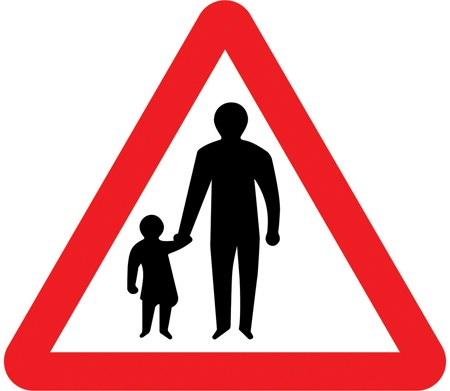
Pedestrians in road
Foot traffic hazard where bikes may also conflict.
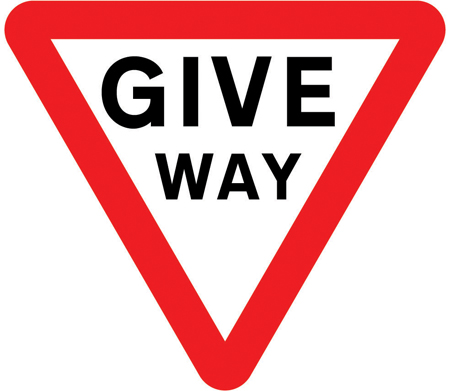
Give way sign
Priority at junctions outside signed zones.
Test Yourself on UK Road Signs
When the red ring shows a barred bicycle, treat the precinct or path as a walking space unless plates explicitly allow you to push or ride. Pair this guide with a free mock theory test so the prohibition pictogram sticks as firmly as stop and give way.
Frequently Asked Questions
Can I push my bike instead of riding past the sign?
Many orders ban riding only, so walking while leading the bike is acceptable. Some pedestrian zones exclude all wheeled devices except mobility aids. Read supplementary plates and local guidance before you enter.
Does the no cycling sign apply to e-bikes?
In most UK theory scenarios, electrically assisted pedal cycles follow the same prohibition as ordinary bikes unless a plate names powered two-wheelers separately. Always check the traffic order for your borough.
How is this different from the cycle route ahead warning?
The warning triangle tells drivers to expect cyclists on the road. The barred red circle forbids cyclists from riding in the signed zone. One warns motorists; the other orders riders to stop cycling.
Can cars drive where this sign is posted?
Often yes, unless a separate no motor vehicles or no entry plate also faces drivers. Pedestrian schemes frequently stack several circles on one post. Read every symbol before you move.
Will I get a fine for cycling past the plate?
You can receive a fixed penalty or local authority charge for ignoring a regulatory sign. Amounts vary by area. Repeat offences or collisions with pedestrians can lead to stronger action.