
Last updated: October 2026 · Checked against Highway Code
Pedestrian Only Sign: meaning, rules and what to do
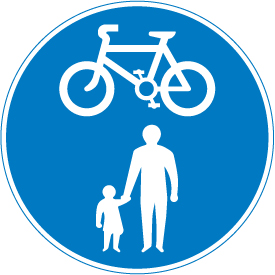
The UK pedestrian only sign is a blue regulatory circle with a white bicycle above pedestrian figures. It marks a route for pedal cycles and people on foot only. Motor vehicles must not treat the path or linked pedestrian street as a through road unless a separate plate grants access.
Sign image © Crown copyright, reproduced from GOV.UK traffic sign images under the Open Government Licence v3.0.
What the Pedestrian only route Sign Looks Like
The face is a solid blue disc with a thin white border, matching other positive UK route plates. A white bicycle sits in the upper half and two pedestrian silhouettes, often an adult and child, fill the lower half. The artwork is flat and high contrast so torch beams and CCTV still read the symbols after dark.
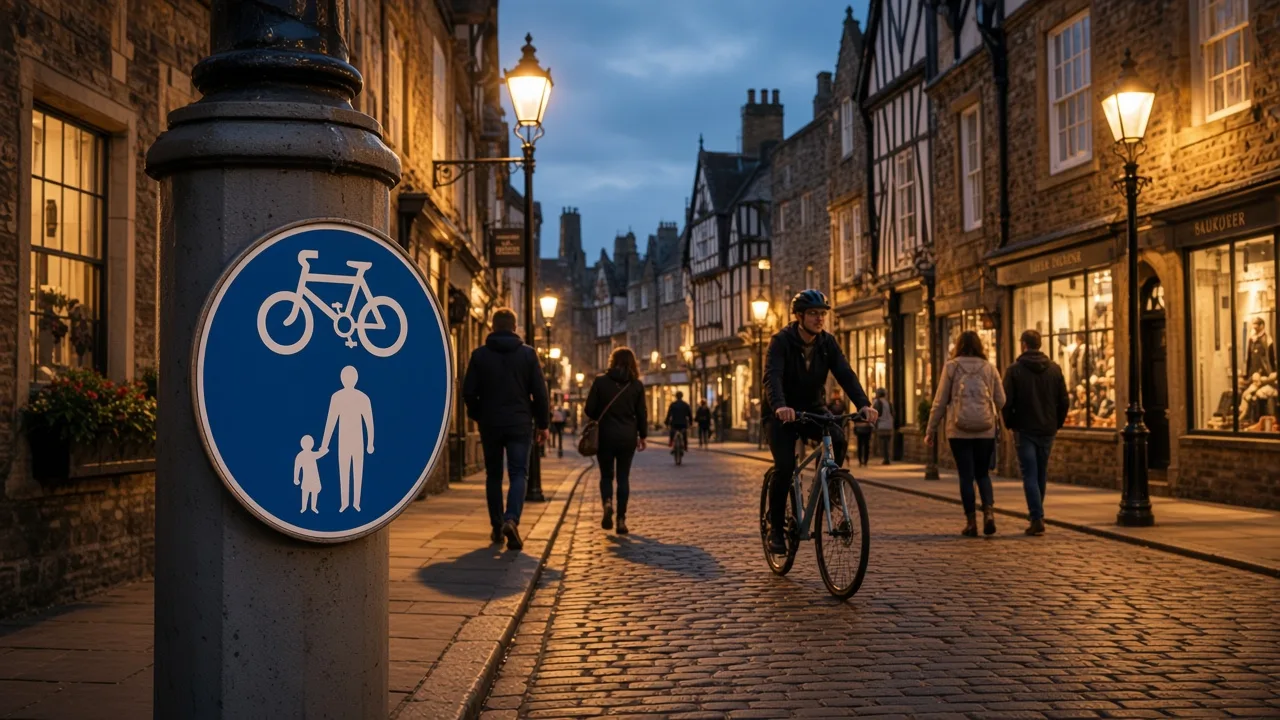
Posts appear at shared-use footways, riverside promenades, park connectors, and side entries beside pedestrianised cores. The plate may sit on its own where motors never belonged, or beside rectangular pedestrian zone legends that repeat the same message in words.
Learners confuse the layout with cycle-only blue circles that show a bicycle alone, and with red no pedestrians rings that ban walking. Colour and pictogram count matter: blue permits the classes shown; red circles forbid the class drawn inside the ring.
Supplementary white rectangles can list hours, distances, or except for access bands for service vehicles. Those plates modify the motor ban on the carriageway, not the meaning of the blue shared route symbol for everyday traffic classes.
Temporary boards during festivals sometimes copy the blue circle at cordon points. Treat any official plate as binding until an end sign or steward diversion replaces it. Phone maps may still route vans down the precinct if business data lags behind a new order.
No motor vehicles forbids engines while walkers and cycles may continue on the carriageway. Cycle-only blue circles allow pedal cycles but not a general footpath order for every walker. Pedestrian zone entry plates describe a whole precinct. The pedestrian only pictogram confirms a non-motor route for the classes illustrated, not permission for cars to nip through behind a van.
What the Pedestrian Only Sign Means
Traffic authorities use the symbol where mixing motor traffic with dense footfall would be unsafe, yet cyclists still need a legal link between streets. The order is about who may use the signed route, not about whether the surface looks like a normal road.
Rule 64 in The Highway Code reminds cyclists they must not ride on pavements unless signs allow cycling. This blue plate is the positive counterpart on many shared paths: it tells riders and walkers that the signed length is meant for them, while motors stay out unless another order opens a carriageway nearby.
Rule 253 lists places pedestrians must not walk, including motorways. The pedestrian only plate does the opposite on urban links: it invites foot traffic while telling drivers the parallel path or converted street is not for engines.
The ban on motors for the signed footway or track begins at the plate and runs until an end plate or a clear break. Driving across the mouth to drop a passenger on the flagged stones still breaches a no motor vehicles order on the carriageway even when the blue circle faces a side path.
Electric bicycles classed as electrically assisted pedal cycles usually count as cycles on shared routes in theory materials. Throttle-only machines may be restricted by local trials. Mobility scooters and wheelchairs follow separate guidance; read borough websites if you rely on a powered chair.
Delivery and servicing sometimes runs in narrow time windows on the main precinct street, printed on white rectangles beneath a no motor vehicles circle. The blue pedestrian route sign does not create a van exemption by itself. A driver who follows a courier because the street looks wide enough still risks a penalty charge.
Northern Ireland uses the same sign family on most public roads. If you revise in Belfast after studying GB plates, obey the blue pictogram layout the same way you would in Leeds or Cardiff.
Shared paths demand consideration from cyclists toward walkers. The sign allocates space; Rule 66 still expects riders to give way at pinch points. Drivers revising for the car test need the symbol because precinct questions pair it with motor bans.
Cathedral cities and market towns often stack no motor vehicles, pedestrian zone text, and blue shared route plates on one gantry. Name each symbol aloud during lessons so the motor ban registers before the bonnet crosses the line.
Sat-nav may send you toward a shop front without mentioning the precinct order. Trust the red circle with car and motorcycle pictograms at the entry, not the vehicle ahead that might hold a permit.
Blue badge holders are not automatically exempt from motor bans. Plan drop-off on the ring road and wheel or walk the last stretch unless plates name disabled access for motors.
Café tables and bollards can hide posts until you are committed. Slow before the mouth of a pedestrianised high street so you can reverse cleanly if the plates forbid cars.
Night-time hospitality crowds spill across cobbles. Even with a lawful delivery slot, drive at walking pace and expect people to step out from blind corners.
If you supervise Jasmine or another learner, rehearse refusing to follow a van into a signed precinct. Examiners reward early recognition more than a hurried reverse among diners.
Park-and-ride buses use separate gates with their own plates. Do not assume a bus ahead means your car may follow into a pedestrian only side link.
Winter markets shift barriers forward. Read the current post position rather than last year’s mental map of where engines last turned.
Highway Code rules 7, 64 to 66 and 253 (traffic signs, cyclists and pedestrians)
Pedestrian only route vs Similar Signs
| Sign | Meaning | Legal or warning? |
|---|---|---|
| Pedestrian only route | Shared path for walkers and pedal cycles | Blue regulatory circle |
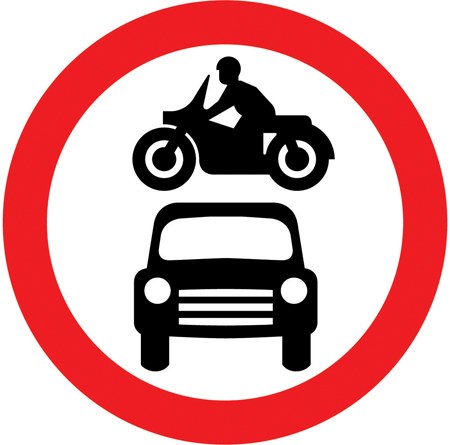 No motor vehicles | Engines banned on carriageway | Red regulatory circle |
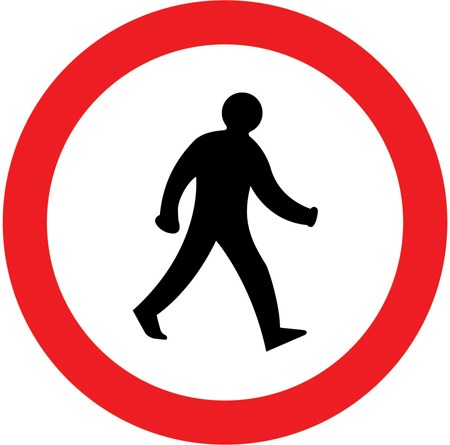 No pedestrians | Walking forbidden | Red regulatory circle |
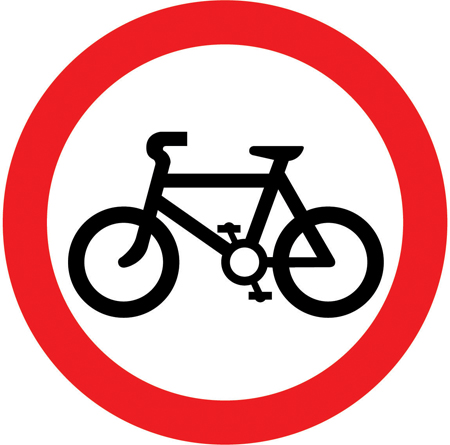 No cycling | Riding forbidden | Red regulatory circle |
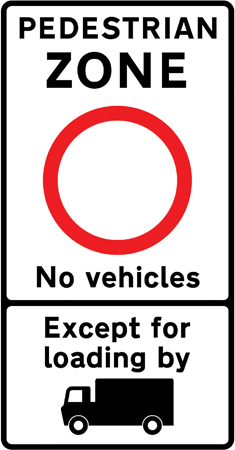 Pedestrian zone | Precinct entry rules in words | Zone plate |
Rules and Penalties
Driving past a no motor vehicles plate into a pedestrianised street can bring penalty charge notices from civil enforcement cameras, with amounts set by the local authority.
Police may stop drivers who endanger crowds after illegal entry, especially when a delivery van squeezes past tables or forces walkers against shop fronts.
Insurance disputes after bumps in precincts often turn on whether the vehicle was lawfully present. Dashcam footage that shows the entry plates strengthens or weakens a claim.
Theory tests show the blue bicycle-and-pedestrian layout beside short stories about shopping streets. Choose the answer that keeps motor vehicles out while walkers and cycles may continue.
Using hazard lights while unloading on flagged footways does not legalise a motor entry. Hold a valid permit or use the signed goods bay outside the zone.
Repeat offences in city centres can attract higher charges or wheel clamping during events when emergency access must stay clear.
Check the latest theory test pass mark and book when you are ready via our booking guide.
Pedestrian only route in Practice
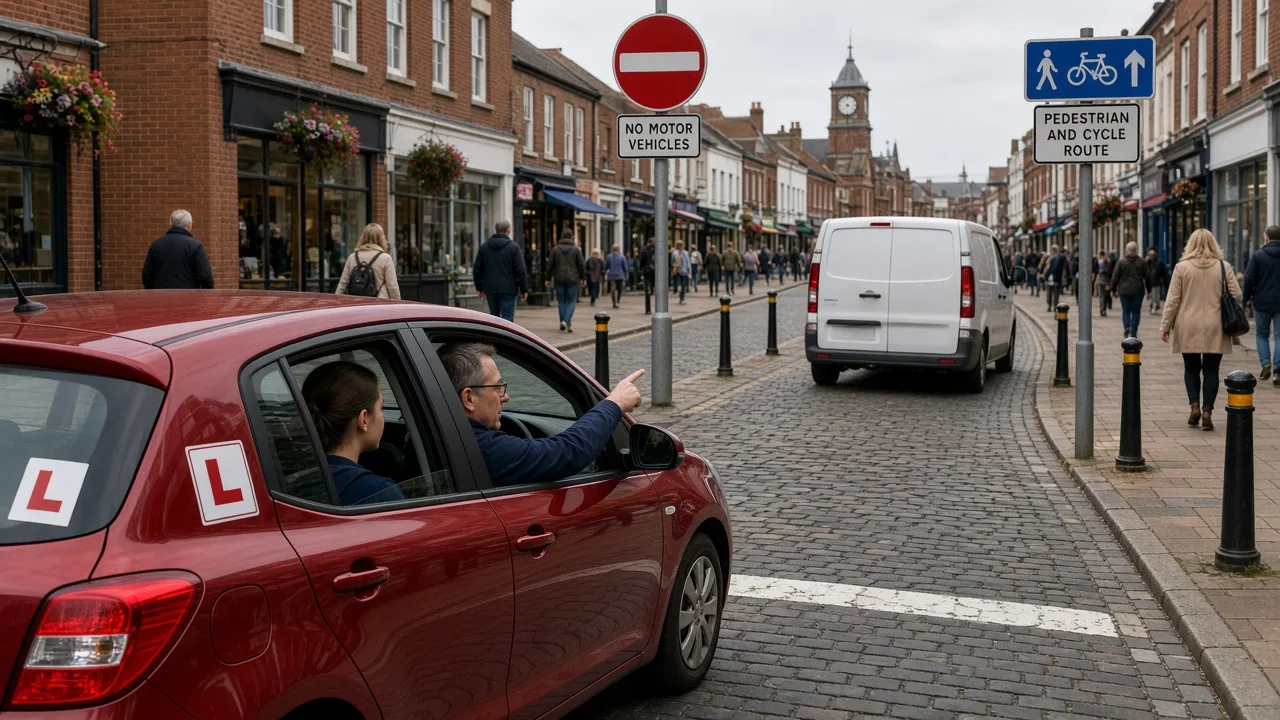
Jasmine is on a late-afternoon driving lesson in Chester when her instructor asks her to follow the main road toward an arch that leads to a cobbled high street. A blue circle with a bicycle above two pedestrians faces a side path, while a red no motor vehicles plate faces the carriageway she is on.
A white delivery van ahead indicates left into the precinct. The instructor tells Jasmine to hold position before the thick white stop line, even though the van driver waves her forward. She checks both kerbs, sees no except-for-access plate for her lesson car, and selects neutral with the handbrake on.
The van crosses the line and stops twenty metres inside beside a bollard that has not yet risen. An enforcement camera further along records the entry; the instructor explains that loading myths trap commercial drivers who confuse a busy street with lawful access.
Jasmine completes a three-point turn in the side road and notes the blue shared route sign on the path where cyclists and shoppers legally walk. On her theory app that evening she answers a precinct question by pairing the motor ban with the pedestrian only plate rather than assuming the van knew best.
How This Sign Appears on the Theory Test
Multiple-choice items show the blue bicycle above pedestrians and ask which classes may use the route. Select pedestrians and pedal cycles, not cars or motorcycles, unless the stem adds a timed motor exemption on a different plate.
Picture sets contrast the blue layout with red no pedestrians circles and with no motor vehicles pictograms. Learn which colour permits and which forbids before you read the story text.
Scenario questions describe a learner tempted to follow a delivery vehicle. The safe answer stops at the motor ban even when the street looks empty or the other driver gestures you through.
Distractors swap in pedestrian zone word plates or cycle route ahead triangles. Triangles warn drivers; blue circles define who may use the signed length.
Filter mock questions on road and traffic signs, then revisit Highway Code rules for vulnerable road users. Examiners assume you know regulatory plates carry the same weight as stop lines.
Take a free mock theory test and filter questions on road and traffic signs. Pair that with the warning signs guide for triangle symbols.
Related Road Signs
No motor vehicles
Stops engines on the carriageway at precinct entries.
No cycling
Forbids riding where walkers remain welcome.
No pedestrians
Opposite class ban for people on foot.
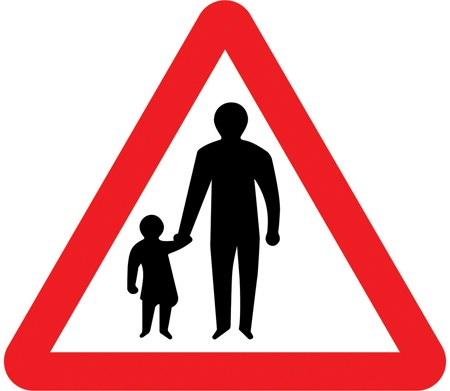
Pedestrians in road
Warns drivers where walkers share the carriageway.
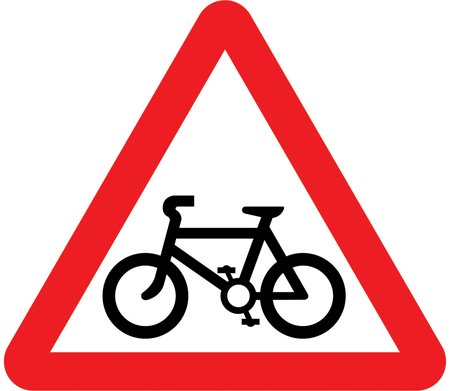
Cycle route ahead
Warning triangle before cyclists mix with traffic.
Test Yourself on UK Road Signs
When the blue circle shows cyclists above pedestrians, treat the signed length as a non-motor route and read motor bans on the carriageway before you follow a van or sat-nav into a precinct. Pair this guide with a free mock theory test so pedestrianised high street traps stay obvious under exam time pressure.
Frequently Asked Questions
Can cars ever drive where the pedestrian only sign is posted?
Not on the shared footway or track the blue circle marks. Cars use the parallel carriageway only if no motor vehicles or zone plates allow it. Service access needs a written exemption on a supplementary plate, not the blue pictogram alone.
Does the sign ban cyclists?
No. The bicycle pictogram shows pedal cycles may use the route. A separate no cycling red circle would remove riding while walkers continue. Read every symbol on the post.
How is this different from the no motor vehicles sign?
The red circle bans engines on the road ahead. The blue circle positively marks a walkers-and-cycles route, often beside that motor ban. Drivers need the red plate message; walkers and riders use the blue plate guidance.
Why did a delivery van enter if I cannot?
Some drivers hold timed permits, trade plates, or simply gamble on empty streets. Their movement does not waive the order for you. Camera enforcement often catches commercial entries without valid exemption.
Will this appear on my car theory test?
Yes. Pedestrian precinct scenarios are common. Learn the blue bicycle-and-pedestrian layout and pair it with motor bans so you pick the answer that keeps cars out while foot traffic continues.