
Last updated: October 2026 · Checked against Highway Code
No Pedestrians Sign: meaning, rules and what to do
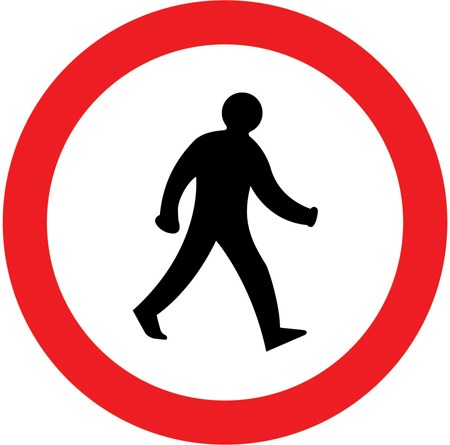
The UK no pedestrians sign is a red-ringed regulatory circle with a black walking figure that forbids people on foot from entering or continuing along the signed length, while motor traffic or cycles may still be allowed unless other plates say otherwise.
Sign image © Crown copyright, reproduced from GOV.UK traffic sign images under the Open Government Licence v3.0.
What the No pedestrians Sign Looks Like
The regulatory disc follows the standard UK prohibition layout: white centre, thick red border, no red slash through the symbol. The black pictogram is a simplified adult figure in mid stride, facing left or right depending on the artwork revision. DVSA recognition items expect you to name the plate from that walking silhouette inside the ring, not from wording on the face.
Unlike blue positive plates that list who may enter, this circle is a negative order aimed solely at foot traffic. Unlike the pedestrians in road warning triangle, it does not caution drivers about people ahead; it tells walkers to stay out. Unlike no motor vehicles, which shows car and motorcycle shapes, the figure here targets humans on foot rather than engines.
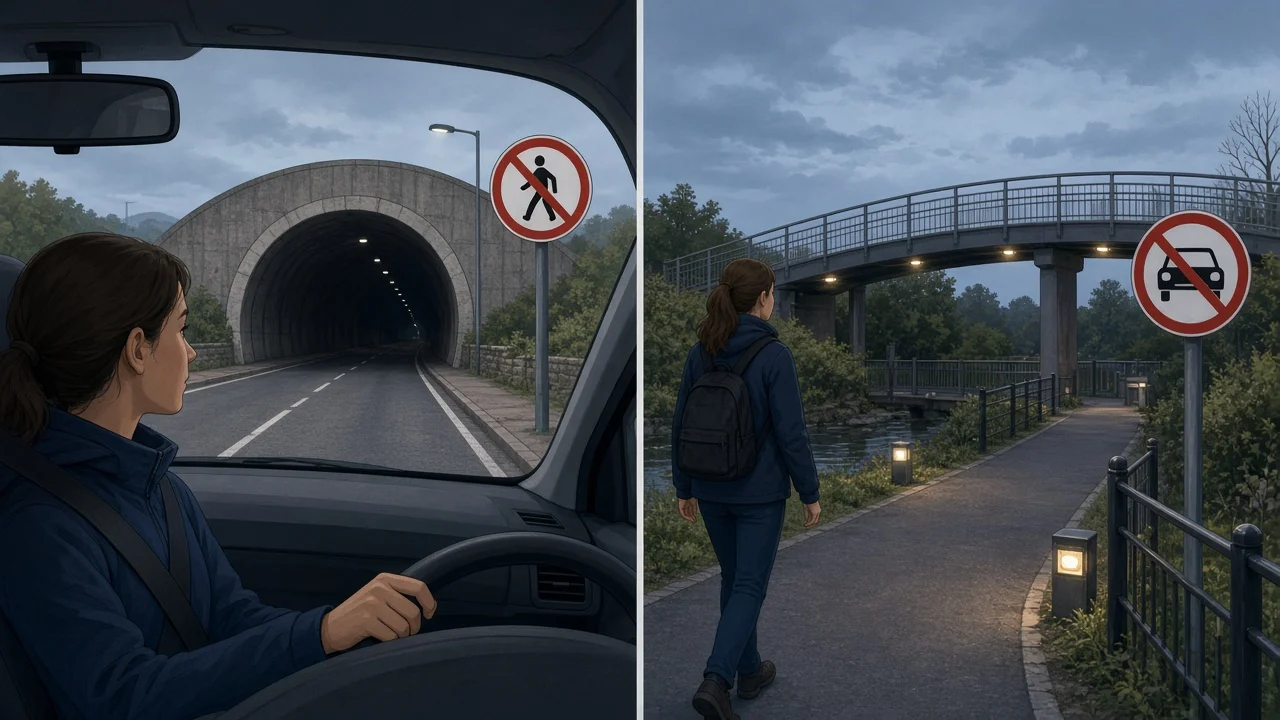
Posts appear at motorway and trunk road boundaries, tunnel mouths, some bridge walkways turned vehicle-only, tramway decks, and shared paths where engineers want cycles but not walkers. You may see repeat circles after side paths join so late entrants still see the ban. Distance plates are uncommon; the prohibition usually starts at the post.
Temporary metal stands during major incidents sometimes copy the symbol when a footpath is closed and pedestrians are diverted. Treat every official red ring as binding until an end plate or a signed diversion replaces it. Phone maps may still route walkers along a banned verge if path data lags behind roadworks.
At night the retroreflective red ring catches torch beams and headlamps before the black figure resolves. Rain and graffiti can hide the pictogram while the circle still reads as a prohibition. If you manage a site, keep faces clean so night workers do not mistake the order for a generic entry ban.
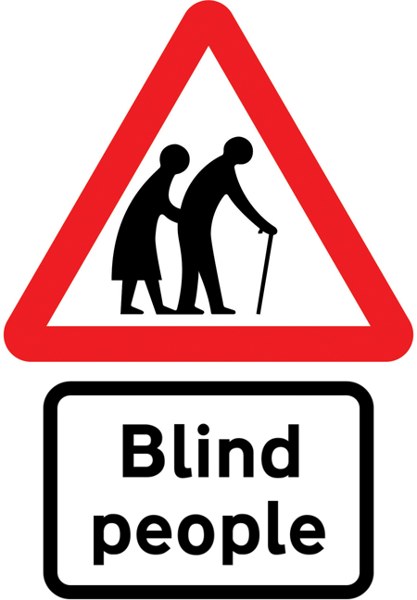
Pair the walking figure with context plates. No motor vehicles bans engines while walkers may continue. Pedestrian zone and pedestrian-only plates often use blue circles or zone entry legends to allow foot traffic instead. The pedestrians in road triangle warns drivers about walkers on the carriageway; it does not forbid walking. Read shape and symbol together before you step or drive forward.
What the No Pedestrians Sign Means
Traffic authorities install the order where foot access would endanger people or block essential vehicle movement. Motorway regulations already ban pedestrians by law; the circle repeats that message at gaps in fencing, maintenance gates, and slip-road mouths where tempted walkers might cut through. Tunnels, high-speed dual carriageways, and some lifting bridges use the same symbol at the last safe exit before live lanes.
Rule 253 in The Highway Code lists places you must not walk, including motorways and slip roads. The no pedestrians sign marks equivalent bans on lesser roads where statute alone is less obvious to the public. Driving past the plate remains lawful for motors unless another restriction applies; the offence for walkers is entering a forbidden length.
Shared-use routes sometimes split users. A red circle with a bicycle bans cycles while walkers continue; this plate does the opposite. Cyclists may still be welcome when no cycling plate is absent, yet both orders can appear on opposite sides of the same bollard line during phased upgrades. Read the symbol that faces your mode of travel.
The ban runs from the sign along the signed length until an end plate, a clear break in the restriction, or a lawful alternative path. Cutting a corner across grass beside the carriageway still breaches the order if the traffic authority defined the controlled area beyond the white edge line. Event marshals may add tape; the permanent post remains the legal anchor.
Access for maintenance crews, emergency services, and sometimes residents can appear on white rectangular plates beneath the circle. “Except for access” does not reopen the route to Sunday strollers; it targets people with a defined property or works need. If you are unsure, use the public footpath shown on the diversion rather than guessing.
Northern Ireland uses the same regulatory circle family on public roads, with The Highway Code (Northern Ireland) mirroring motorway pedestrian bans. If you walk or drive in Belfast after studying GB materials, obey the walking figure on tunnels and dual carriageways the same way you would in Manchester or Cardiff.
E-scooter riders on footways are pedestrians in enforcement terms on many streets. Where the plate faces a path, dismount and wheel the scooter if a local order still allows that; if the path is foot-only except for banned walkers, you must leave the route entirely. When in doubt, follow on-site stewards during roadworks.
Parents cannot carry toddlers through on shoulders as an excuse to enter a motorway-linked bridge marked for vehicles only. Pushchairs and dogs on leads are still pedestrian movements. Plan pram-friendly diversions before you reach the last gap in the barrier.
You most often notice this plate where footpaths meet motorway underpasses, at the landward end of sea defences beside fast traffic, and on construction detours that funnel walkers back to a lit route. Drivers should expect nobody on foot beyond the post and resist stopping on the live lane to offer lifts through.
Ramblers using OS maps should cross out shortcuts that cross the symbol on the ground. A tempting gap in fencing beside a dual carriageway can carry this circle on the far side, meaning you would be trapped between carriageways without a refuge.
Cyclists approaching a shared path should check both sides of the entry post. If only the walking figure appears, you may ride while walkers must turn back. If a no cycling plate joins it, dismount and walk on the lawful alternative.
Driving instructors near test centres on dual carriageways sometimes point out the plate to show why learners must not suggest passengers walk home along the hard shoulder. Examiners treat motorway pedestrian breaches as serious whether or not a plate was visible.
Night shift workers leaving industrial sites on foot must use lit footways, not the vehicle exit marked with the walking ban. Security lighting does not convert a motorway-linked road into a footpath.
If you manage a venue, place temporary maps at decision points before the last legal crossing. Once someone passes the circle on foot, camera evidence and police reports can follow on high-speed lengths.
Highway Code rules 1, 7 and 253 (pedestrians and motorway restrictions)
No pedestrians vs Similar Signs
| Sign | Meaning | Legal or warning? |
|---|---|---|
| No pedestrians | People on foot must not enter | Regulatory red circle |
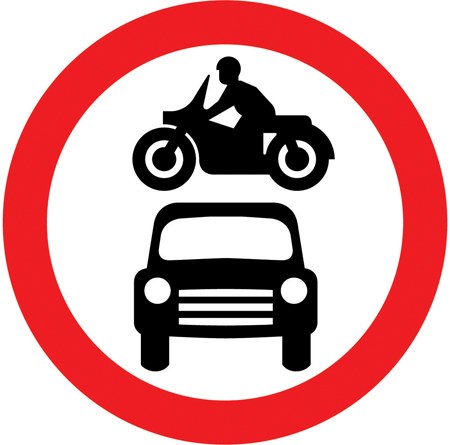 No motor vehicles | Engines banned; walkers may continue | Regulatory red circle |
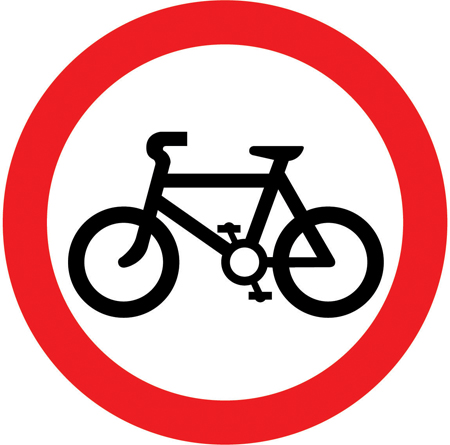 No cycling | Pedal cycles must not enter | Regulatory red circle |
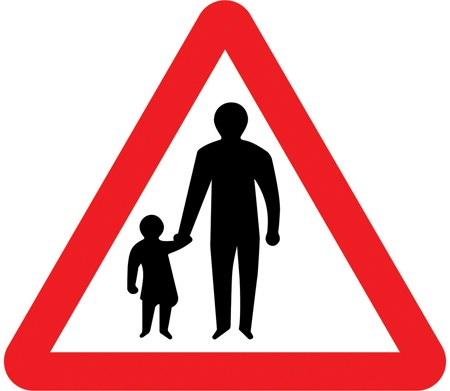 Pedestrians in road | Drivers watch for walkers ahead | Warning triangle |
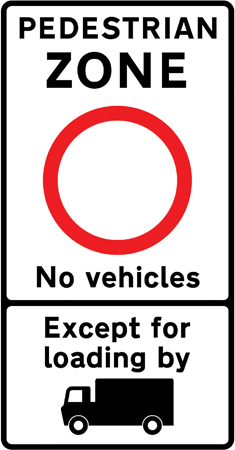 Pedestrian zone | Entry rules for foot and motor traffic | Zone entry plate |
Rules and Penalties
Walking on a motorway or other road where pedestrians are prohibited can lead to police stop checks, fixed penalties, and court summons in serious cases. The sign strengthens evidence that you ignored a visible order, not merely an obscure statute.
Drivers who stop on live lanes to let passengers out past this plate risk causing collisions and may face careless driving allegations if a following vehicle strikes a walker climbing the embankment.
Civil claims after injuries on forbidden lengths often turn on whether signage was adequate. Authorities maintain these circles precisely to show walkers were warned before stepping into high-speed traffic.
Theory tests show the walking figure beside short stories about tunnels and motorways. Choose the answer that forbids pedestrians, not the option that warns drivers about people ahead.
Trespass on railway or tram infrastructure adjoining signed roads can add separate offences beyond highway law. Treat the plate as the last warning before you enter a mixed system.
Check the latest theory test pass mark and book when you are ready via our booking guide.
No pedestrians in Practice
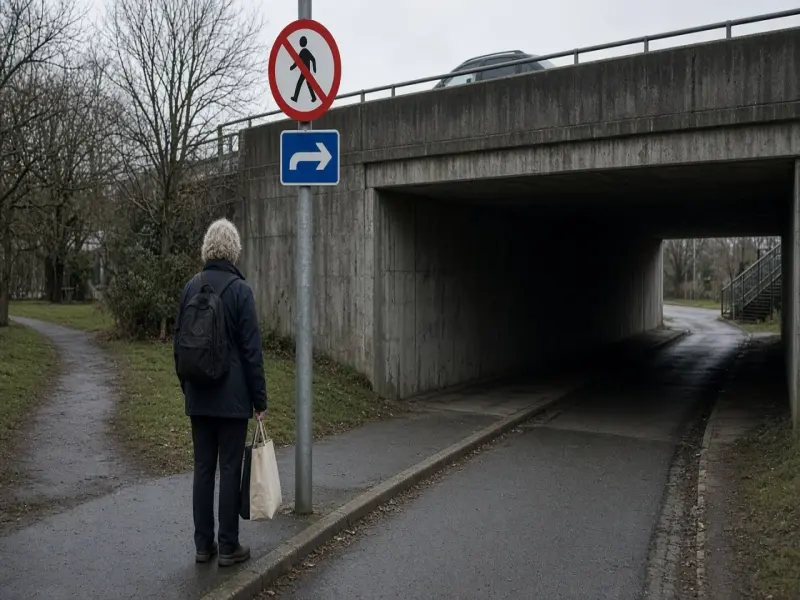
Hassan leaves a retail park on foot with shopping bags and sees a footpath arrow pointing toward a underpass beneath a dual carriageway. At the tunnel mouth a red circle with a walking figure faces him, while cyclists roll past on a adjacent track marked with a blue cycle symbol.
He stops before the white line, checks the plates on both posts, and sees no exemption for shoppers. The lawful route is a signed footbridge two hundred metres north. He backtracks, follows the diversion boards, and reaches the bus stop without entering the tunnel.
Another shopper ignored the plate, walked ten metres inside, and met a maintenance vehicle exiting the bore. Staff reported the near miss; Hassan’s pause at the symbol kept him out of a carriageway where the speed limit was sixty miles per hour.
When revising for the car theory test, Hassan recognised the walking figure in a multiple-choice item about motorway rules and picked the answer that pedestrians must use the footbridge. The exam has fifty questions; forty-three correct answers pass within fifty-seven minutes, so quick symbol recall matters.
How This Sign Appears on the Theory Test
Multiple-choice banks pair the walking pictogram with motorway slips, tunnels, and path closures. Select the option that prohibits pedestrians from entering, not the warning triangle about walkers already on the road.
Contrast the symbol with no motor vehicles and no cycling circles. Each red ring bans one class of road user. Mixed scenarios are common: motors allowed, walkers banned, cycles permitted unless a second plate forbids them.
Hazard perception clips rarely isolate the plate, but they may show a figure stepping onto a hard shoulder. Link that risk to earlier recognition of prohibition circles at the last safe exit.
Picture questions sometimes swap in pedestrian zone entry plates or school warnings. Read the black symbol first: a single walker inside a red ring is the regulatory ban, not a triangle with figures on a road line.
Take a free mock theory test and filter questions on road and traffic signs. Pair that with the warning signs guide for triangle symbols.
Test Yourself on UK Road Signs
If the red circle shows a walking figure, stay off the signed length on foot and use the diversion. Drivers should expect no walkers beyond the post and avoid unsafe drop-offs. A free mock theory test helps you separate this prohibition from pedestrian warning triangles under exam time pressure.
Frequently Asked Questions
Can cyclists still use the path when the no pedestrians sign is posted?
Often yes, if no separate no cycling plate faces the cycle entry. The walking figure targets foot traffic only. Read both sides of the post before you ride through.
Does the sign apply on motorways?
Pedestrians are already banned on motorways by law. The circle repeats the warning at gaps, tunnels, and slip roads where people might trespass. Drivers should still expect zero foot traffic.
What is the difference from the pedestrians in road warning?
The warning triangle tells drivers that walkers may be on the carriageway ahead. The regulatory circle forbids pedestrians from entering the route. Shape and message differ.
Can I push a wheelchair or pram past the sign?
If you are on foot propelling the chair, local orders usually treat you as a pedestrian and the ban applies. Use the signed accessible diversion rather than entering a vehicle-only tunnel.
Are dogs on leads allowed?
A person walking a dog is still a pedestrian movement. Unless an exemption plate names assistance animals in a specific context, you must not enter the forbidden length on foot.