
Last updated: October 2026 · Checked against Highway Code
No Loading Sign: meaning, rules and what to do
The barred goods-vehicle circle forbids loading and unloading on the signed length, even when passenger pick-ups might still be lawful on a nearby no-waiting order.
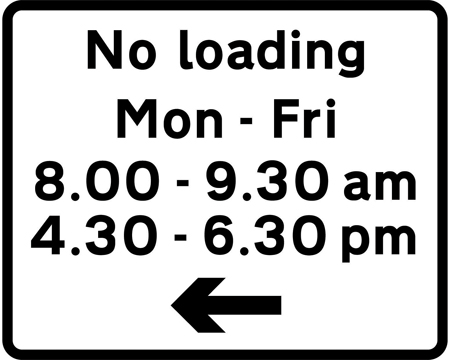

Sign image © Crown copyright, reproduced from GOV.UK traffic sign images under the Open Government Licence v3.0.
What the No loading Sign Looks Like
Regulatory plates use a blue circle with a red border. A black goods-vehicle silhouette sits in the centre, crossed by a red diagonal bar from upper left to lower right. The layout matches the international prohibition style and is the standard UK symbol when councils want to stop van work at the kerb without banning every passenger stop.
Posts at the start of a restriction usually carry a white rectangular plate naming the hours and arrows showing which side of the road is controlled. Smaller repeat plates appear after junctions so drivers joining mid-route know the goods ban continues past side streets.
Yellow kerb markings often accompany the circle. Short yellow ticks painted on top of double yellow lines mean no loading at any time on that length. Ticks on a single yellow line tie the ban to the days and times on the nearest white plate. Learners should read paint and plates together rather than trusting memory of the lorry symbol alone.
The symbol is easy to confuse with a loading bay plate, which is a white rectangle inviting goods vehicles during set hours. Bays use positive permission; the barred lorry in a red ring is a prohibition. Count the message: “loading only here” versus “no loading on this stretch”.
At night, retroreflective red rings stand out before the black lorry detail resolves. Slow enough to read “Except” panels for disabled badge holders, market days, or bank holidays. Any rectangle bolted beneath the circle is part of the legal order.
No waiting limits parking and lingering; no stopping forbids every halt. A no loading order targets goods work at the kerb while some passenger set-down may remain lawful on a different plate. Slashed yellow marks can enforce loading bans even when the circular sign is hidden behind a bus shelter.
What the No Loading Sign Means
Traffic authorities use the order where van queues would block buses, obscure pedestrian crossings, or choke narrow high streets during trading hours. It applies to the carriageway the sign faces until you pass an end plate, enter a side road outside the zone, or reach a signed loading bay that creates a pocket of permission.
Loading includes both putting goods on and taking goods off the vehicle. Rule 243 in The Highway Code groups loading controls with other waiting restrictions. Idling while a colleague carries boxes from a shop still counts as loading activity when the ban is active, even if the engine runs and the wheels never leave the lane.
The ban does not usually stop you from setting down a passenger when a separate no-waiting order allows a brief stop, but many town centres stack restrictions so both waiting and loading are forbidden at peak times. Read every plate on the post before you assume a quick drop-off is lawful.
Orders can apply to one carriageway of a dual road only. Supplementary arrows, “Mon–Sat” panels, and school-term-only legends change the window without changing the symbol. Repeat signs after side streets show the zone continues; missing the second plate is a common reason couriers collect penalty charge notices.
Disabled badge holders are not exempt from loading bans unless a plate explicitly says so. Taxi ranks, bus stops, and keep-clear hatchings add separate offences if you unload stock across them while trying to dodge a loading restriction.
Sat-nav “stop here” pins on shop parades are risky when slashed yellow lines run along the kerb. The lawful move is to use a marked bay, a rear service road, or a car park signed for deliveries rather than treating the pavement as a warehouse aisle.
Expect barred-lorry circles outside department stores, rail station forecourts, hospital entrances, and market streets where traders once blocked trams. London red routes and bus corridors often pair camera enforcement with repeat plates rather than relying on paint alone.
Courier firms train drivers to photograph plates before wheels stop. On lessons, ask your instructor to point out ticks on yellow lines in your test town so you connect the circle on revision apps with real kerb geometry.
Festival weekends sometimes add temporary no-loading plates beside pedestrian zones. Treat them like permanent orders for the dates shown, even when the street feels quiet on a Sunday morning.
If you drive a car with a roof box, unloading camping gear for a hotel stay can still breach a loading ban because goods are leaving the vehicle at the kerb. Passengers may walk luggage from a lawful bay a short distance away.
Before you book a theory test slot, run mocks that mix sign recognition with yellow-line scenarios. DVSA items love stories about vans, tick marks, and time plates on the same screenshot.
Highway Code rules 238 to 243 (waiting, parking and loading)
No loading vs Similar Signs
| Sign | Meaning | Legal or warning? |
|---|---|---|
| No loading | No loading or unloading goods on the signed length | Regulatory (barred goods vehicle) |
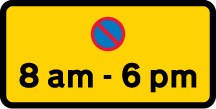 No waiting | No parking; brief passenger stop may be allowed | Regulatory (single red bar) |
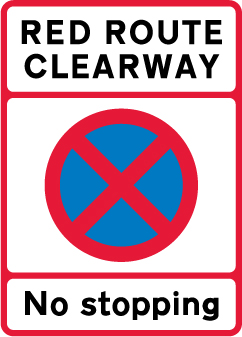
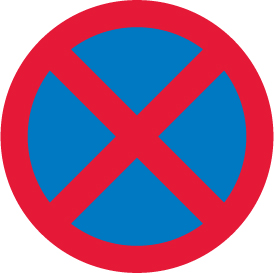 No stopping | No halt at any time on the signed length | Regulatory (double red bar) |
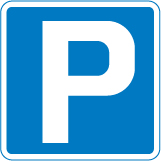 Loading bay | Goods loading only during hours on plates | Regulatory bay marking |
Rules and Penalties
Civil enforcement officers issue penalty charge notices when they photograph a vehicle while goods are being moved at the kerb inside the zone. Most councils class the breach as a waiting or loading contravention, so points on your licence are uncommon, but fines rise on red routes and near bus gates.
Camera cars on high streets may capture your number plate while the tail lift is down even if no warden walked past. Blocking a bus stop, school zigzag, or disabled bay at the same time can trigger a separate higher charge.
Courts do not accept ignorance of repeat plates as a defence. Scan both sides of the road after every junction, because slashed yellow lines may continue when the first circular sign sits hidden behind foliage or a parked coach.
On a driving test, unloading illegally on a signed length can count as a serious fault if it blocks traffic or forces pedestrians into the carriageway. Examiners notice hesitation outside shops where learners try to “just grab one bag”.
Commercial operators risk contract penalties as well as PCNs when drivers ignore goods bans outside flagship stores. Private motorists moving house are not excused because the van is hired for one day.
Check the latest theory test pass mark and book when you are ready via our booking guide.
No loading in Practice
Priya drives a small van along a high street in Leeds where a barred-lorry circle and white plates read “No loading Mon–Sat 8am–6pm”. Slashed double yellow lines run along both kerbs. At 10:15 she pulls in outside a kitchen shop to collect a worktop with the shop assistant.
While the tailgate is open and the board slides onto the pavement, a camera car records the stop. Because the restriction targets goods movement, the brief pause is not treated as a passenger set-down. She receives a penalty charge notice even though she kept the engine running and never switched off.
She could have used a signed loading bay fifty metres beyond the junction, or parked in a multi-storey and walked with a trolley. The case shows why tick marks matter as much as the circular symbol, and why trade vehicles need a kerb plan before wheels stop.
At 6:45pm the same stretch might allow lawful loading if no other ban applies, but she would still check for bus stops, taxi ranks, and no-waiting circles that forbid parking even after goods work becomes legal.
How This Sign Appears on the Theory Test
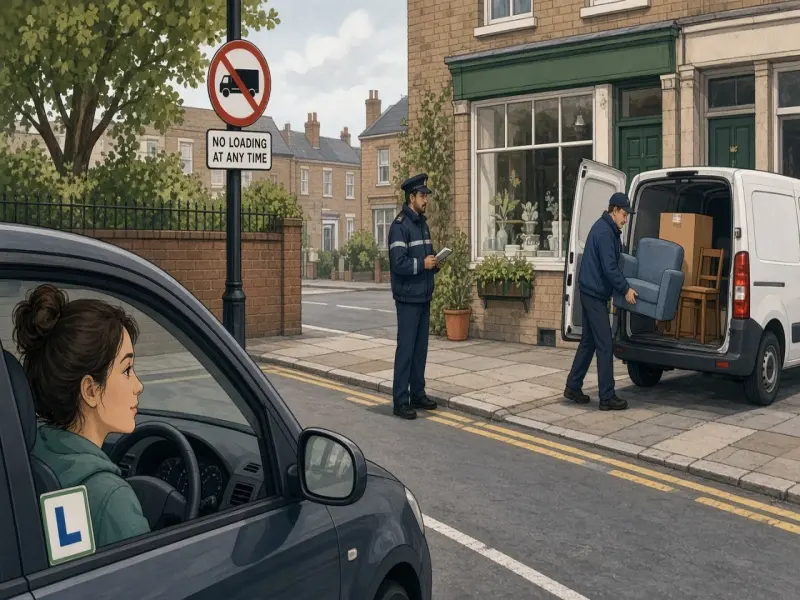
DVSA multiple-choice items often show the barred lorry beside a story about a delivery van, market stall, or furniture collection. Select the answer that forbids moving goods at the kerb during plate hours unless the scenario mentions a signed bay or an end plate.
Picture questions contrast tick marks on yellow lines with plain double yellows. Ticks mean loading is controlled; plain lines may still forbid waiting while allowing no goods work only when a separate plate says so. Revise both symbols before exam day.
Hazard perception clips will not test parking plates directly, but knowing where vans cannot stop helps you anticipate sudden reverses from drivers who spotted enforcement too late.
Flag any item that mixes loading bans with Blue Badge exemptions. Badge holders may park in some bays, yet a no-loading order still forbids stock movement unless the plate names an exception.
The car theory test has fifty multiple-choice questions; you need forty-three correct within fifty-seven minutes. Loading and waiting scenarios often appear in the signs category, so pair this page with a timed mock when your pass mark practice feels strong.
Take a free mock theory test and filter questions on road and traffic signs. Pair that with the warning signs guide for triangle symbols.
Related Road Signs

Test Yourself on UK Road Signs
Treat a barred goods-vehicle circle and slashed yellow ticks as a ban on kerb deliveries. If you need to move stock, find a loading bay, service road, or car park before you open a door or lower a tail lift.
Frequently Asked Questions
Does no loading ban unloading as well?
Yes. Loading and unloading goods are both forbidden while the order runs. The sign targets van work at the kerb, not just collecting parcels.
Can I pick up a passenger where no loading applies?
Sometimes, if only a loading ban is in force and a no-waiting order still allows a brief set-down. Many town centres forbid both at peak times, so read every plate.
What do yellow ticks on the kerb mean?
Short yellow marks on yellow lines indicate loading restrictions. They usually match the hours on white plates and can enforce a goods ban even when the circular sign is hard to see.
How is no loading different from a loading bay?
A bay invites goods vehicles during signed hours. The barred lorry circle forbids goods movement on the controlled length unless another sign creates permission.
Are delivery drivers fined on no loading streets?
Yes. Civil enforcement and camera cars issue penalty charge notices when goods are moved at the kerb during restricted hours. Plan bays or off-street parking before you stop.