
Last updated: October 2026 · Checked against Highway Code
One Way Traffic Sign: meaning, rules and what to do
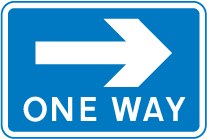
The one way traffic sign is a horizontal blue rectangle with a white border and a bold white arrow. It tells you that every vehicle on the carriageway beyond must travel only in the direction the arrow points, from that plate until the order ends or signs cancel it.
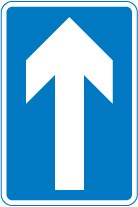
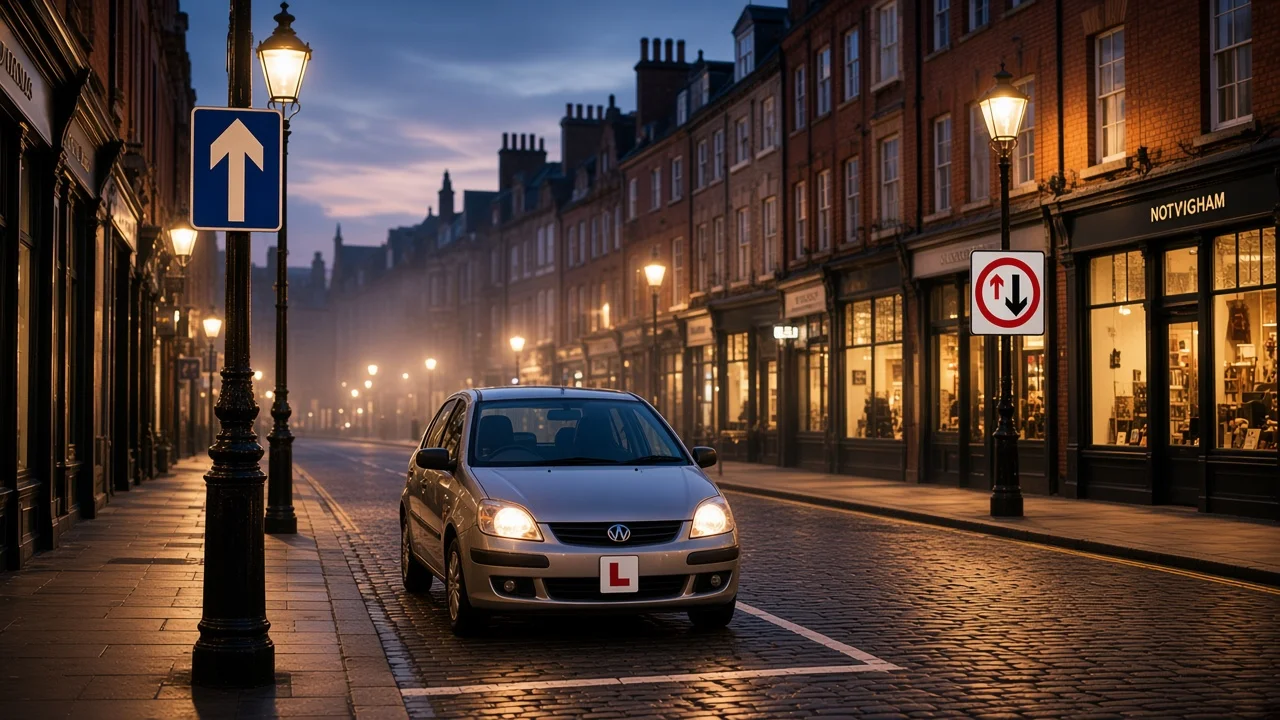
Sign image © Crown copyright, reproduced from GOV.UK traffic sign images under the Open Government Licence v3.0.
What the One-way traffic Sign Looks Like
Official UK artwork shows a blue regulatory rectangle, not a circle or triangle. A single white arrow sits in the centre, usually pointing up on the face you read at the junction. There is no red ring, no speed numeral, and no vehicle pictogram. Size varies from post-mounted plates at terrace mouths to repeaters bolted above shop canopies in dense retail grids.
Engineers mount the board on the lawful entry to a one-way length, often paired with a no-entry plate facing traffic on the forbidden mouth of the same street. Supplementary white rectangles may quote Except buses, Except cycles, or hours when the order applies. Ground arrows, absent centre lines, and red surfacing on bus strips reinforce direction once you are inside.
Repeaters appear after side streets so drivers who join mid-block still see lawful flow. Temporary versions on metal frames copy the GOV.UK layout during festivals or roadworks. Sat-nav arrows may disagree with a freshly switched system; trust the live plate and fresh lining before you commit.
Learners confuse the rectangle with mandatory blue circles such as turn-left-ahead orders, with white information boards that only describe layout, and with warning triangles for two-way traffic ahead. The lone white arrow on blue always means compulsory direction along the carriageway for the signed length, not pass-left-of-island geometry.
At night, retroreflective arrows catch headlights before you can read street names. Rain on glass shop fronts can hide a post; slow on unfamiliar city centres until you confirm which mouth allows entry and which arrow direction you will follow.
No entry uses a red circle with a white bar to forbid wrong-way entry. The blue arrow authorises travel in one direction only from the plate you face. Two-way traffic warning triangles announce opposing flow later; they do not replace one-way orders inside a grid. Contraflow bus lanes use separate mandatory bus circles and red surfacing; the arrow plate governs general motor traffic unless a white plate exempts your class.
What the One Way Traffic Sign Means
Authorities sign one-way lengths where two-way flow would cause head-on meetings on narrow terraces, bus corridors, or awkward car park exit geometry. The order begins at the blue arrow plate for traffic entering lawfully and continues until an end plate, a clear two-way junction, or markings show normal flow has resumed.
The Highway Code treats direction plates as binding orders, not hints. Once your wheels pass a lawful entry with the arrow pointing your way, every driver behind you expects you to keep that flow. Turning back against the stream or nipping out through a mouth you did not read is the same class of mistake as crossing a no-entry bar, because nobody in the lane is looking for your headlights.
The plate regulates direction, not speed or parking by itself. Yellow lines, clearways, and bus gates on the same street still apply. A blue arrow does not permit you to use a bus-only lane or a contraflow bus strip unless a separate plate or marking exempts your vehicle class.
Contraflow bus lanes are a common trap beside one-way terraces. Buses may run against the general arrow while cars must follow the blue rectangle. The nearside lane can look empty and tempting; red surfacing, BUS LANE legends, and mandatory bus circles still forbid private cars even when the main arrow points the same way as your sat-nav.
One-way systems can loop through shopping cores with several entry points. Each mouth has its own pairing of arrow and bar. Entering from a mouth without an arrow pointing your way, even if the street obviously runs left, is still wrong-way travel once you cross the no-entry line on the other face.
Cyclists may still be restricted on pedestrianised lengths by separate orders. The standard motor one-way arrow governs cars, vans, and motorcycles following the carriageway. Read Except cycles plates before assuming riders must follow the same entry mouth as you.
Blue-light crews may override some orders during an emergency, but that privilege does not transfer to learners or delivery drivers. Rising bollards and resident key fobs only open the gap they are designed for; they never cancel the arrow on the post beside you.
Treat every side turn as a fresh signing audit: left kerb, right kerb, then mirror check. Rank bays and loading slots hide repeaters behind poles, so the arrow you need may sit half a car length past the mouth you first considered.
When you supervise learner Tariq in Birmingham or another core with bus corridors, rehearse naming the arrow plate before the nearside bus strip. Examiners reward early lane choice more than a late swerve across solid white lines after the bonnet has crossed the sign.
City-centre grids change after events. Temporary arrows may face a direction that contradicts last month’s habit. Obey the current board even if memory says the terrace ran the other way.
Multi-storey exits often mirror two ramps in concrete while signing only one as lawful. Follow the board on the pillar you pass, not the ramp that looks equally wide.
Near-silent cars at crawl speed surprise shoppers who listen for engine noise before stepping between parked vans. Dipped headlights and a ready foot on the brake matter more on cobbled terraces than on open dual carriageways.
Terraces that pinch beside café tables rarely grow a second legal lane just because a bus is queuing. Stay in your signed lane unless broken centre markings and clear sight prove an overtake is safe for the whole length of the pinch.
If a contraflow bus approaches in a lane you thought was yours, hold position in the lawful carriageway and let it pass. Do not swing into the bus strip to make room unless markings show shared use for your vehicle class.
Before you turn off a high street, scan both kerbs for blue arrows and red bars. Taxi ranks and loading bays often sit beside signed mouths; a three-second glance beats a three-point turn under a bus mirror.
City-centre grids in Bristol, York, and parts of Manchester change after events. Temporary arrows may face a direction that contradicts last month's habit. Obey the current board even if memory says the terrace ran the other way.
Highway Code rules 141, 143 and 160 (bus lanes, planning and signs)
One-way traffic vs Similar Signs
| Sign | Meaning | Legal or warning? |
|---|---|---|
| One-way traffic | Traffic must follow arrow direction | Regulatory blue rectangle |
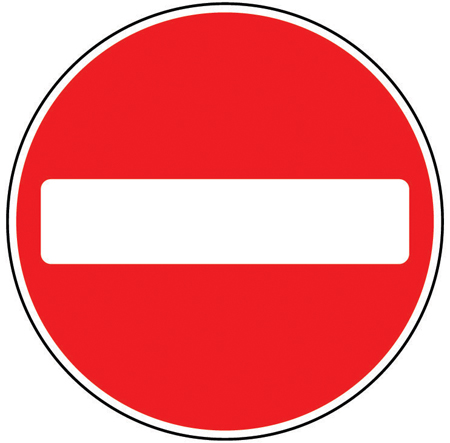 No entry | Do not enter from this mouth | Regulatory red circle |
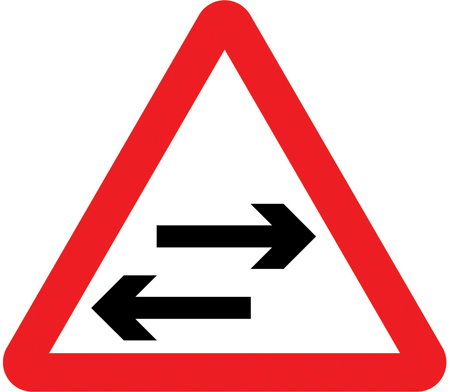 Two-way traffic | Oncoming traffic ahead on same width | Warning triangle |
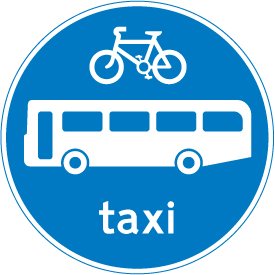 Bus only | Route reserved for buses unless plates add users | Regulatory blue circle |
Rules and Penalties
Officers can report drivers who treat a one-way terrace like a two-way shortcut, especially when a bus or cyclist had to stand on the anchors. Fixed penalties escalate when CCTV shows you passed a no-entry bar or steered against a visible arrow.
ANPR on bus corridors beside signed one-way lengths does not need a uniform at the kerb. A penalty charge notice can cite the bus order, the arrow plate, or both if your wheels crossed red surfacing while avoiding a queue.
Terrace sideswipes become insurance arguments about who read which mouth. Video that captures the blue rectangle or barred circle in the same frame as impact often settles fault faster than witness memory.
Examiners mark wrong-way entry before you leave the side street because following traffic cannot anticipate a bonnet facing them. One missed arrow at the mouth can end the test even if you correct within a few metres.
Slipping into a contraflow bus strip to skip standing traffic adds a bus-lane contravention to any direction fault. Tariq’s instructor warns that a single junction can produce two serious marks if the nearside red lane tempts you.
Check the latest theory test pass mark and book when you are ready via our booking guide.
One-way traffic in Practice
Tariq is on a mid-morning lesson near Birmingham New Street. His instructor routes him along a one-way terrace where a blue rectangle with a white arrow points ahead away from the mouth they approach, while the opposite kerb shows a no-entry bar facing their bonnet.
They continue to the next junction and turn into a signed entry where the arrow matches their direction. On the nearside, red surfacing and a mandatory bus circle mark a contraflow bus lane. A double-decker approaches head-on in that strip while general traffic flows with the arrow on the offside.
Tariq keeps the Fiesta in the lawful lane, slows for pedestrians between parked vans, and does not drift into the bus strip when the sat-nav suggests a straight line through red paint. The instructor notes that many learners follow the bus lane because it looks like a shortcut; the arrow plate and bus order together forbid that move for cars.
A hatchback ahead swings into the contraflow strip to pass a queue and meets the bus at a pinch point. Tariq stops in the correct lane, lets the bus clear, and completes the terrace without a camera flash or a serious fault mark on his test sheet.
That evening he opens a mock theory item showing the same blue arrow beside a barred circle and picks the answer that traffic must follow the arrow direction on the signed length, not that the plate bans parking on the approach road.

How This Sign Appears on the Theory Test
DVSA stems often describe a car park spiral, a market square loop, or cones after a festival. Pick the answer that keeps traffic flowing with the white arrow, not the distractor about dead ends, parking bans, or national speed limits.
Train your eye on shape before wording: horizontal blue with one arrow orders direction along the carriageway; a barred red circle forbids a mouth; a white no-through-road rectangle only warns that the street does not link onward.
Composite photos may show an arrow plate and a no-entry disc on opposite kerbs of the same terrace. Decide which board faces the vehicle in the question before you commit. Remember the car paper is fifty questions, forty-three to pass, fifty-seven minutes on the clock.
Hazard clips sometimes show a learner hugging a contraflow bus lane beside a lawful one-way stream. Score when the car slows or steers back into the signed lane, not when the distant plate first flashes.
Mixed revision decks throw mandatory turn circles beside direction rectangles. A single white arrow on blue without a red ring is the one-way traffic family, not a keep-left island or a ahead-only motorway panel.
Take a free mock theory test and filter questions on road and traffic signs. Pair that with the warning signs guide for triangle symbols.
Test Yourself on UK Road Signs
Treat the blue arrow as a one-way contract for the whole signed length, and read bus lane plates before you borrow a contraflow strip. Reinforce the habit with sign questions on a free mock theory run.
Frequently Asked Questions
What does the one way traffic sign mean in the UK?
The blue rectangle with a white arrow orders every vehicle on the signed length to move only in the direction the arrow shows, starting at the plate you pass until an end sign or a junction cancels the order.
How is it different from the no entry sign?
The arrow plate tells lawful traffic which way to go on a one-way section. The no entry disc stops you entering from the forbidden mouth. Busy streets usually display the pair on opposite kerbs so each approach gets a clear message.
Can I use a contraflow bus lane on a one-way street?
Only when mandatory bus plates and white exemptions name your vehicle class. The blue arrow alone does not permit cars to enter a signed bus-only or contraflow strip painted red.
Does the plate set the speed limit?
No. Circular limit signs and repeaters set speed. The blue arrow only fixes direction along the carriageway and does not relax parking or loading rules on the same terrace.
Will ignoring the arrow fail my driving test?
Yes in most cases. Examiners treat wrong-way travel as a serious fault because oncoming drivers in the one-way system cannot expect your bonnet. Read both kerbs at the mouth before you steer in.