
Last updated: October 2026 · Checked against Highway Code
No U-turn Sign: meaning, rules and what to do
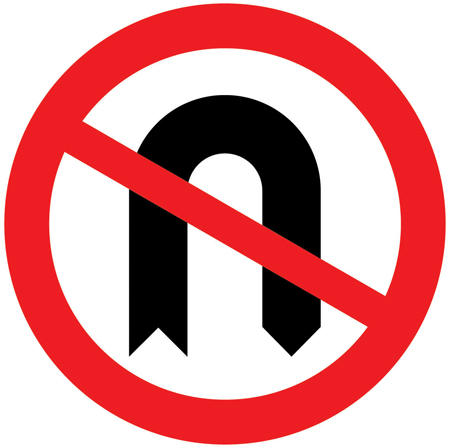
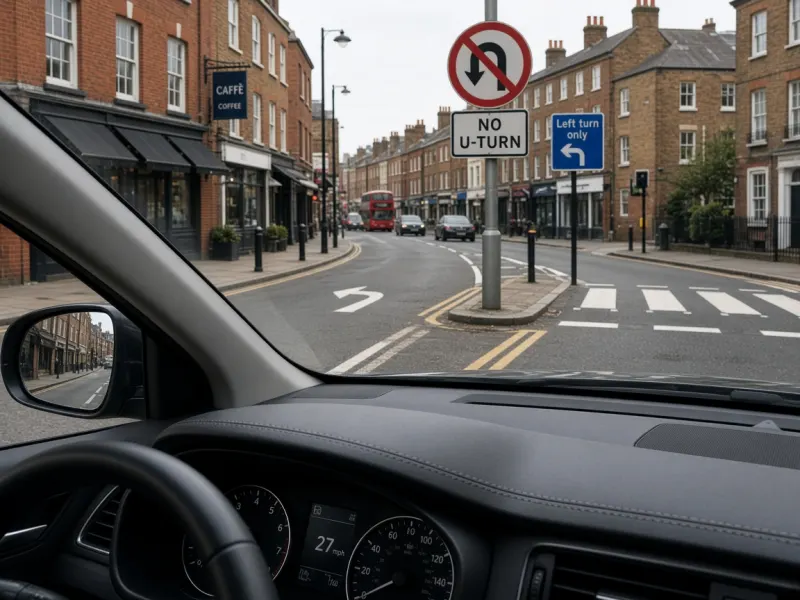
A red-ringed plate with a black U-shaped arrow crossed by a diagonal bar forbids you from turning your vehicle through roughly 180 degrees to face the opposite way along the same carriageway or at the junction ahead.
Sign image © Crown copyright, reproduced from GOV.UK traffic sign images under the Open Government Licence v3.0.
What the No U-turn Sign Looks Like
The regulatory disc is white with a thick red border. A black arrow forms a tight U shape with arrowheads at both ends, and a red diagonal slash crosses the symbol from upper left to lower right. There is no vehicle pictogram; the curved arrow alone tells you which manoeuvre is banned.
Posts commonly stand on the nearside verge before a gap in a central reservation, at the mouth of a one-way system where a U-turn would send you into oncoming flow, and on long straight sections where sight lines make reversing direction unsafe. Repeat plates sometimes follow a side road so drivers joining late still see the ban.
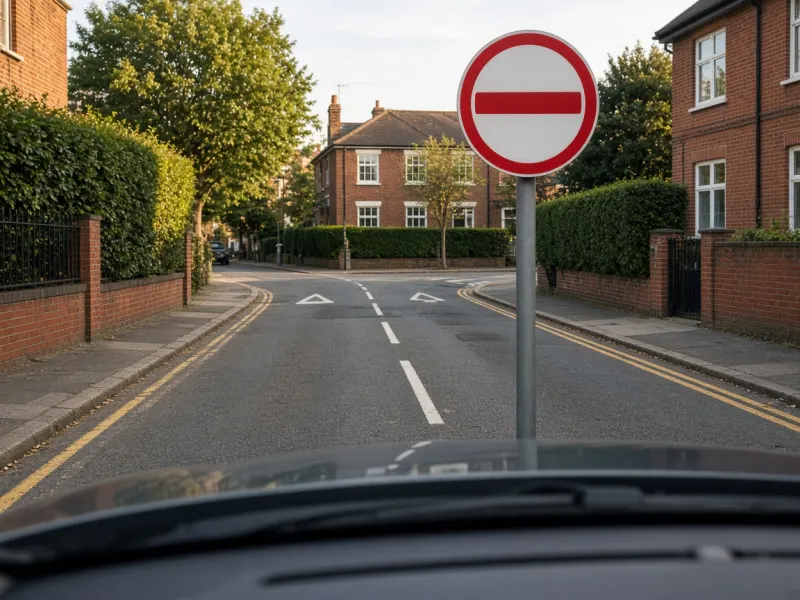
Learners confuse it with turn-left or turn-right prohibition circles, which use single-arm arrows rather than a U loop. They also mix it with no-entry bars that block every vehicle from entering a length, and with “turn around” instructions on blue direction signs, which inform rather than forbid.
Supplementary white rectangles may limit the ban to heavy goods vehicles, name distance ahead, or show hours when U-turns are forbidden. Read the whole post before you swing across hatched central markings; a small plate beneath the circle is part of the legal order.
At night the retroreflective red ring catches headlights before the black U detail resolves. Slow on unfamiliar distributor roads so you can reject a turn across the reservation before steering commits you to an illegal path.
Turn bans use slashed arrows inside red rings. Left and right variants forbid single movements at a junction. No entry blocks the entire carriageway for traffic facing the plate. Pair the barred U symbol with advance direction signs that show ahead-only lanes when you revise regulatory circles.
What the No U-turn Sign Means
Traffic authorities install the order where U-turns would cross live lanes against poor visibility, cut through tram corridors, block bus gates, or encourage three-point turns on fast dual carriageways. It applies from the sign until a junction layout or end plate makes another lawful turning movement available.
Rule 143 in The Highway Code reminds you to obey mandatory signs. A U-turn ban is a route restriction: you may still turn left or right if other plates allow those movements, but you may not rotate to face the opposite direction along the forbidden path. Crossing a hatched central reservation to complete a U-turn counts even when no oncoming vehicle is visible.
The restriction binds every motor vehicle class unless a supplementary plate exempts taxis, buses, or emergency services. Pedal cycles may remain unrestricted when a separate cycling order does not forbid the same movement. Motorcycles follow the same U-turn ban as cars unless exempted in writing on the post.
Sat-navs sometimes suggest turning around at the next gap because map data treats dual carriageways as two independent one-way links. Treat the plate on the ground as authoritative. Stopping in a live lane to reconsider creates risk for following traffic and may itself attract enforcement.
The ban often protects gaps reserved for emergency or maintenance access. Using such a gap for a casual U-turn can meet a vehicle emerging from a depot or a police patrol checking compliance. Plan your route before you reach the reservation rather than improvising at the hatch markings.
Once you pass a lawful side turn or roundabout that lets you rejoin facing the other way without reversing along the banned carriageway, the original U-turn order no longer controls that new manoeuvre. Each junction still carries its own signs; read them independently.
On urban dual carriageways the circle frequently guards the only mid-block gap before a bus lane starts. Delivery drivers should identify loading bays on the correct side of the road instead of assuming a quick spin across the reservation will save minutes.
Outside schools and hospitals, U-turn bans stop parents from rotating in front of crossing points. Yellow zigzags and keep-clear markings may reinforce the message, but the red circle is the enforceable turn restriction for motor traffic.
Rural A-roads may show the symbol before a hidden dip where a U-turn would leave your vehicle broadside across both lanes. Hold your lane and use the next signed junction even when a gap in the reservation looks wide enough for a car.
Driving test candidates who attempt a U-turn against the plate usually receive a serious fault because the manoeuvre is predictable only to themselves. Examiners expect you to continue and replan, matching DVSA guidance on obeying regulatory signs.
After roadworks, temporary plates may face a direction that contradicts old habits. Obey the current circle even if you turned legally at the same gap last year unless an official end plate or open diversion cancels the order.
Highway Code rules 143 and 109 (mandatory signs and signals)
No U-turn vs Similar Signs
| Sign | Meaning | Legal or warning? |
|---|---|---|
| No U-turn | U-turn or turn through about 180° forbidden | Regulatory red circle |
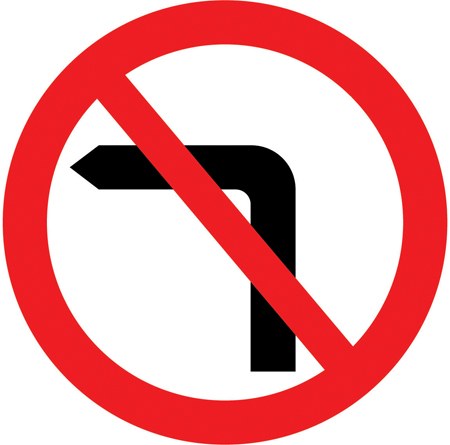 No left turn | Left turn prohibited at the junction | Regulatory red circle |
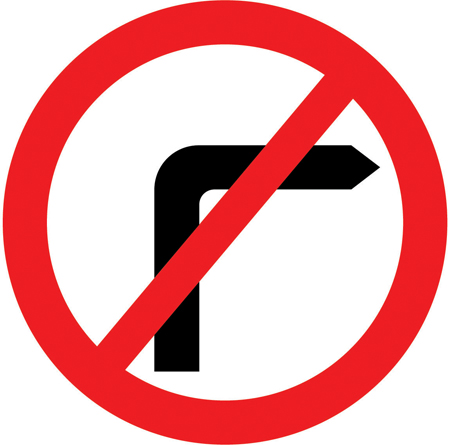 No right turn | Right turn prohibited at the junction | Regulatory red circle |
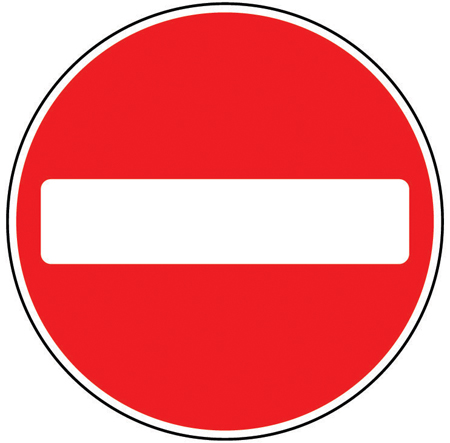 No entry | Do not enter the carriageway beyond the sign | Regulatory red circle |
Rules and Penalties
Police may issue a fixed penalty for failing to comply with a traffic sign when they witness you completing a forbidden U-turn. Points and fines depend on the offence code and whether the turn caused danger to other road users.
Some councils install cameras on corridors where U-turns would cross bus lanes or tram tracks. Evidence is usually photographic, and appeals succeed only when signage was missing, obscured, or contradicted by a lawful temporary scheme.
If your turn forces another driver to brake or swerve, prosecutors can treat the manoeuvre as careless or dangerous driving, which carries heavier penalties than a simple sign breach alone.
Insurance claims after a collision during a banned U-turn often hinge on whether you ignored a visible plate. Insurers may reduce compensation when dashcam footage shows the regulatory circle clearly in frame.
HGV and PCV drivers face the same symbol in theory and practical assessments. Length and weight do not exempt you from the order; use signed turning heads or industrial estates designed for large vehicles instead.
Check the latest theory test pass mark and book when you are ready via our booking guide.
No U-turn in Practice
Dev drives north on a dual carriageway in Bristol where a gap in the central reservation leads to a retail park. A no U-turn circle faces his lane twenty metres before the hatch, while a blue ahead-only arrow is painted in his lane.
He missed an earlier exit and considers swinging through the gap to return south. Because the barred U symbol forbids that rotation, he continues to the next roundabout, loops back legally, and reaches the car park without crossing live traffic nose-to-tail.
Another motorist in the same queue uses the gap anyway and meets a southbound van accelerating out of the dip. The van driver submits dashcam footage; the council issues a fixed penalty because the regulatory plate was unobstructed.
Dev’s extra distance preserved a clean licence and avoided blocking the reservation access used by maintenance vans. The scenario mirrors car theory questions that ask what to do when a U-turn would be convenient but signed as prohibited.
How This Sign Appears on the Theory Test
Multiple-choice items show the barred U arrow and ask which manoeuvre is forbidden. Select the U-turn option rather than “no entry” unless the pictogram is a horizontal white bar on red.
Picture sets contrast left, right, and U variants inside red rings. Learn the loop shape; the slash always cancels the movement drawn in black.
Scenario questions describe a driver who missed an exit and wants to spin across a reservation. The correct answer keeps them moving to a lawful turning point rather than reversing direction where the circle applies.
Link the sign with road markings revision: hatched central areas often accompany U-turn bans on dual carriageways. Markings alone do not replace the circle, but together they show where rotation is unsafe.
Hazard perception clips rarely centre on signs, yet spotting the plate early helps you hold lane position and avoid a last-second swing when sat-nav recalculates late.
Take a free mock theory test and filter questions on road and traffic signs. Pair that with the warning signs guide for triangle symbols.
Related Road Signs
No left turn
Red circle banning left turns at a junction, not a full rotation.
No right turn
Slashed right arrow for junction exits you must not use.
No entry
Horizontal bar blocking wrong-way entry to a carriageway.
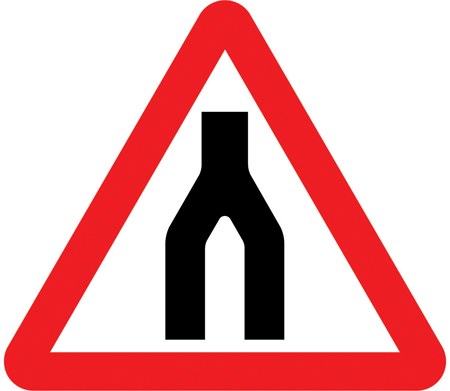
Dual carriageway ends
Warning before two-way traffic returns on one carriageway.
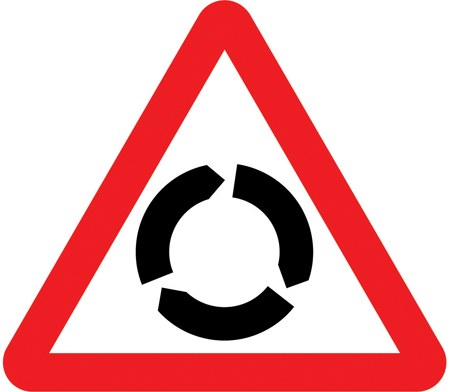
Roundabout sign
Triangle warning before a larger gyratory where U-turns may be legal.
Test Yourself on UK Road Signs
When the red ring shows a barred U arrow, plan a lawful loop before you reach the reservation gap. Revise regulatory circles with a free mock theory test so you recognise the no u turn sign quickly under exam timing.
Frequently Asked Questions
Can I U-turn if the road is quiet?
No. The regulatory order applies whenever the sign faces your approach, regardless of traffic volume. Continue to the next lawful turning point.
Does the ban cover three-point turns?
Yes. Any manoeuvre that turns you to face the opposite direction along the forbidden path counts, including multi-move shunts on a wide road.
How is this different from no left or no right turn?
Those plates forbid a single turn onto one arm. The barred U symbol forbids rotating to face back along the same route or carriageway.
Can I cross the reservation for access to a driveway?
Only if no prohibition sign faces you and no road markings forbid the crossing. A U-turn ban specifically targets rotation, not every crossing movement.
Will I get penalty points for a banned U-turn?
You can receive a fixed penalty with points if police or camera evidence shows you ignored a visible plate, especially if the turn caused danger.