
Last updated: October 2026 · Checked against Highway Code
No Right Turn Sign: meaning, rules and what to do
A red-ringed plate with a right-turn arrow crossed out forbids you from turning right at the junction or exit ahead, even when the arm looks open or your sat-nav suggests a shortcut.
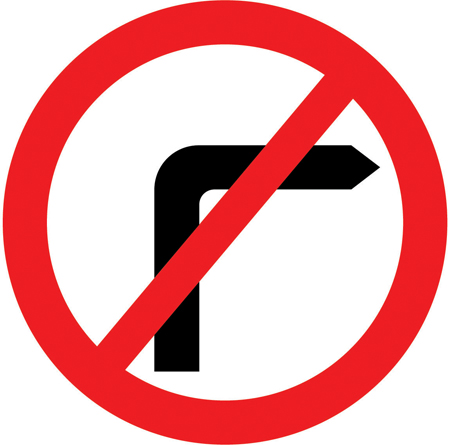
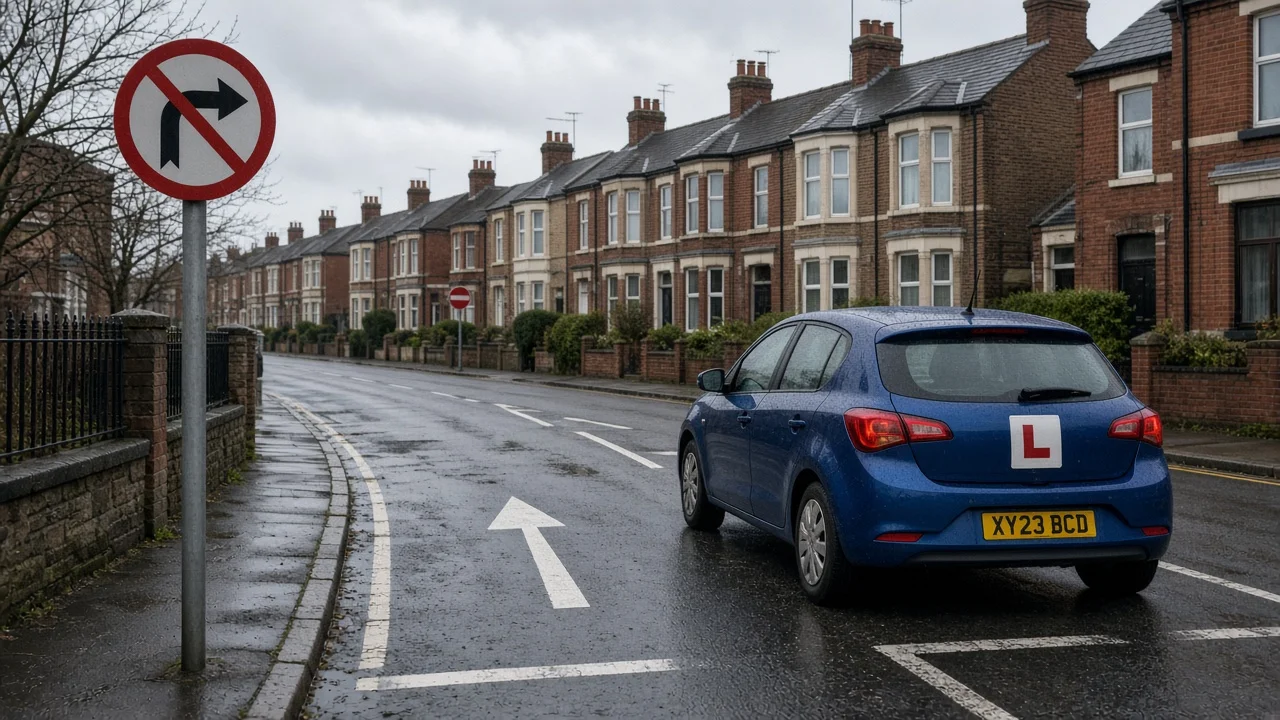
Sign image © Crown copyright, reproduced from GOV.UK traffic sign images under the Open Government Licence v3.0.
What the No right turn Sign Looks Like
The regulatory disc is white with a thick red border. A black arrow curves to show a right turn, and a red diagonal bar cancels that movement. There is no pictogram of a car; the arrow alone tells you which manoeuvre is banned.
Posts often sit on the left before the mouth of a junction, at the same height as other prohibition circles. At night the retroreflective ring is easier to spot than the arrow, so slow enough to read the symbol before you commit to a lane.
Supplementary plates may add “Except buses” or time bands. A small diagram plate can show which arm is affected when several exits share one approach. If two signs face you, one for left and one for right, obey the movement each cancels.
Learners confuse it with “no entry”, which uses a horizontal white bar on red for wrong-way traffic. They also mix it with “turn right ahead” direction plates, which are blue positives on separate posts. The prohibition always uses the red circle with a slashed arrow.
On one-way systems the plate may guard an exit that would put you into oncoming flow. Read the whole approach: filter arrows painted on the carriageway should match what the circle allows.
Direction bans target a single manoeuvre at a junction. “No entry” stops every vehicle class from entering a carriageway the wrong way. Pair the slashed right arrow with left-turn bans and U-turn bans when you revise regulatory circles for the car theory test.
What the No Right Turn Sign Means
Traffic authorities use the order where right turns would cross tram tracks, block a bus gate, feed traffic into a pedestrian zone, or create dangerous merges on fast distributor roads. It applies to every motor vehicle unless a white plate exempts a class.
Rule 143 in The Highway Code reminds you to follow lane and route signs. A turn ban is a route sign in negative form: your permitted paths are whatever remains legal after you subtract the banned movement. Cutting the corner across hatched markings still counts as a right turn if you enter the prohibited arm.
The restriction binds you even when the road looks quiet. One-way streets can hide oncoming cycles or delivery vans until you are mid-turn. Examiners treat an illegal right turn as a serious fault because you chose a path other road users cannot predict.
The order normally applies from the sign to the junction it faces. Turning right into a side road before you reach the plate is lawful only if that side road is not part of the banned movement shown on a diagram plate. When in doubt, continue ahead and loop back using lawful turns.
Sat-navs may still suggest a right turn at the junction. The plate overrides the app. Programme a habit of scanning both kerbs on approach, especially after dual carriageways where you might join a slip road from the right-hand lane.
Large vehicles need extra swing room. A lorry driver may straddle lanes while turning left yet still breach the order if the rear wheels track into the banned arm. Car drivers should not assume a wide arc from a heavy vehicle grants them permission to follow.
City centres place the circle before gyratory systems where right turns would send you against bus lanes. Leeds, Bristol and central London approaches often combine the plate with ahead-only white arrows on the carriageway.
Near schools, a right turn into a residential close may be banned while left access stays open for residents. Watch for parents stopping in the left lane; your legal path might be straight on into a signalised crossing.
At complex crossroads, two stages of lights can make it tempting to turn right on a late amber from the wrong lane. The ban still applies on red-and-amber if your wheels would enter the prohibited arm.
If you miss the plate and realise mid-junction, continue straight or left as soon as it is safe rather than reversing against flow. Loop the block on lawful routes instead of backing into oncoming traffic.
Motorcyclists filtering must not use a banned right turn as a shortcut between queues. The order applies to all motor vehicles, including mopeds unless local exemptions say otherwise.
Highway Code rules 143, 160 and 178 (direction signs and junctions)
No right turn vs Similar Signs
| Sign | Meaning | Legal or warning? |
|---|---|---|
| No right turn | Right turn forbidden at this junction | Regulatory red circle |
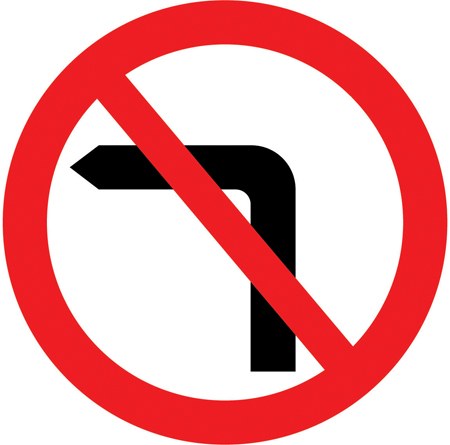 No left turn | Left turn forbidden at this junction | Regulatory red circle |
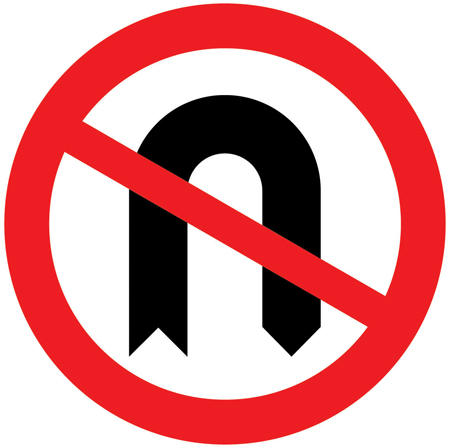 No U-turn | Cannot turn to face the opposite way | Regulatory red circle |
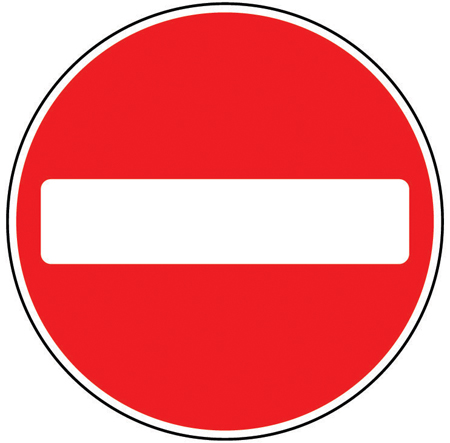 No entry | Wrong way; all vehicles must not enter | Regulatory red circle |
Rules and Penalties
Police can issue fixed penalties for disobeying a traffic sign, including turn bans. Points are possible when the manoeuvre is judged careless, especially if you force another driver to brake.
Civil enforcement cameras are less common on plain turn bans than on bus lanes, but urban safety schemes increasingly record junction offences. A penalty notice may arrive by post if your turn was captured on CCTV.
On a practical driving test, turning right where the plate forbids it is usually a serious fault. The examiner expects you to read the approach signs while you still have time to choose the correct lane.
Insurance claims after an illegal turn often place fault on the driver who entered the prohibited arm, even when the other party was speeding. The sign is treated as clear notice that your path was unlawful.
Check the latest theory test pass mark and book when you are ready via our booking guide.
No right turn in Practice
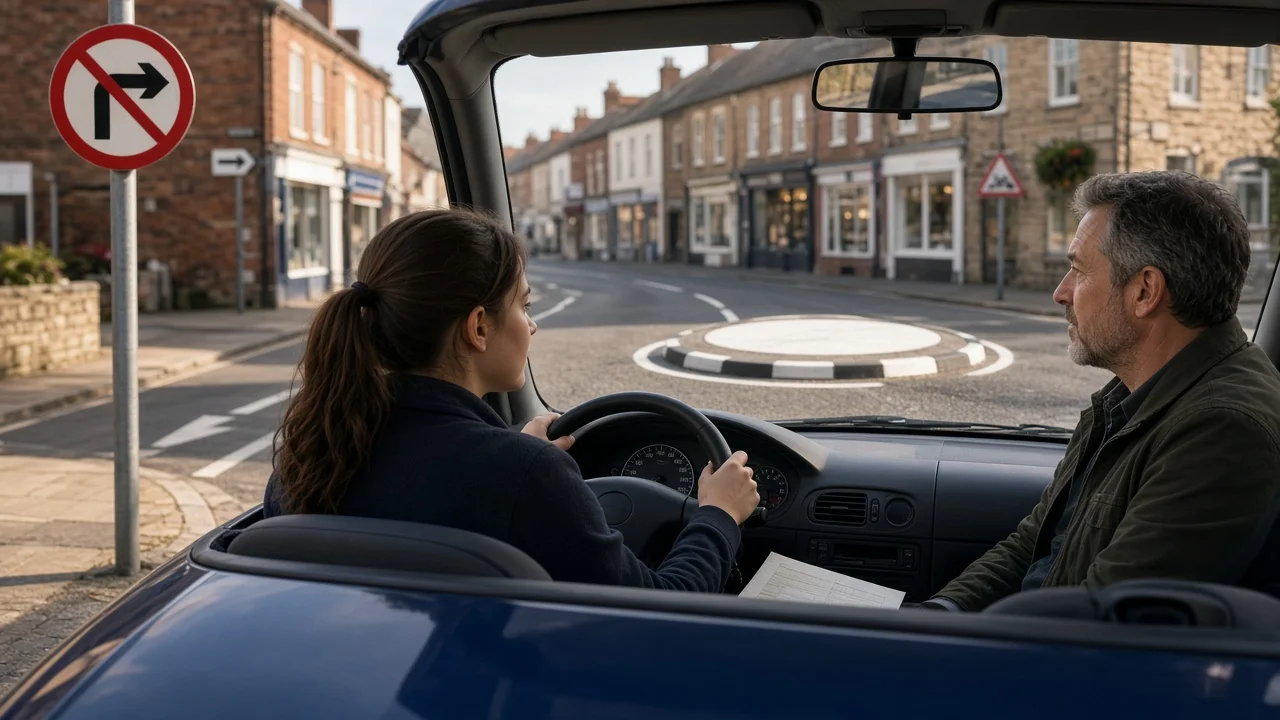
Sam approaches a crossroads in Norwich where a no right turn sign stands beside an ahead-or-left arrow painted on the lane. Rush-hour traffic fills the main road to the right. His passenger points at a gap and tells him to turn right into a retail park.
Sam checks the plate again, confirms the slashed arrow, and continues ahead through the lights. He uses the next signed left turn and a mini-roundabout to reach the car park legally. The extra minute avoids a serious fault on his test the following week.
Another driver at the same junction turned right across a cycle lane inside the banned movement. A camera-equipped bus almost collided with the car’s nearside door. Sam’s decision to obey the plate kept him clear of that conflict.
In a later mock theory session he sees the same symbol beside a diagram of a T junction. He picks “No right turn” and rejects “No entry” because the pictogram shows an arrow, not a horizontal bar.
How This Sign Appears on the Theory Test
Multiple-choice items often show the slashed right arrow with a short junction story. The correct option states that right turns are forbidden while other movements may still be allowed.
Picture drills pair this plate with no left turn and no U-turn symbols. Learn the arrow direction each cancels rather than memorising words on the stem.
Scenario questions describe sat-nav instructions that conflict with road signs. Signs win: choose answers that keep you on a lawful path even if the route looks longer.
The car theory test has fifty questions; you need forty-three correct within fifty-seven minutes. A single sign recognition slip rarely fails you alone, but turn bans appear regularly in the road and traffic signs category.
Take a free mock theory test and filter questions on road and traffic signs. Pair that with the warning signs guide for triangle symbols.
Related Road Signs
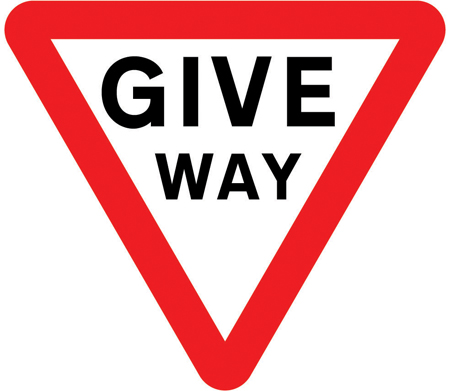
Give way sign
Yield at the junction; still obey turn bans.
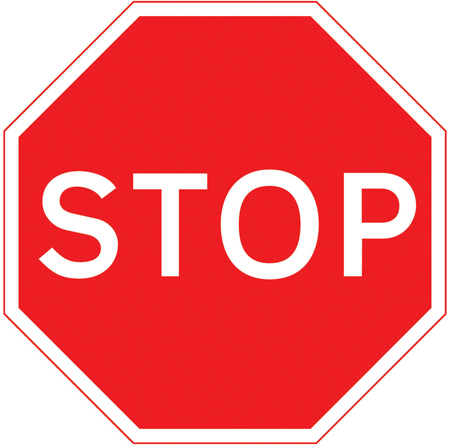
Stop sign
Mandatory halt before you choose a legal direction.
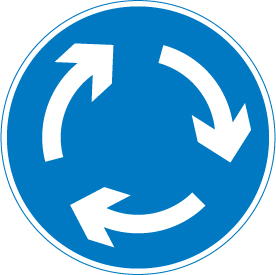
Mini roundabout sign
Circulate left; right turns may still be banned on entry.
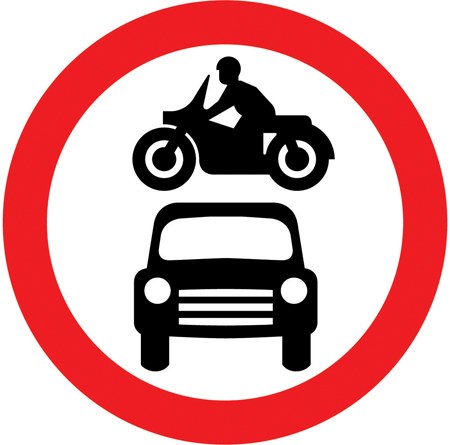
No motor vehicles
Whole-route motor ban, not just one turn.
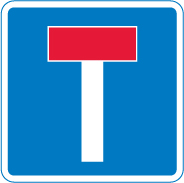
No through road
Layout information; does not cancel turn plates.
Test Yourself on UK Road Signs
Read the slashed arrow before you choose a lane. If right is forbidden, plan a straight or left path early so you never rely on a last-second swing across other traffic.
Frequently Asked Questions
Can I turn right if the road looks empty?
No. The order applies whenever the sign is in place, regardless of traffic volume. Use another lawful route.
Does the no right turn sign ban all vehicles?
It bans the manoeuvre for motor traffic unless a supplementary plate exempts buses, taxis or other classes. Cycles may still turn if no separate cycling ban exists.
How is this different from no entry?
No entry forbids driving into a carriageway the wrong way. The slashed right arrow only forbids turning right at a junction you may otherwise enter.
What if my sat-nav says turn right?
Follow the sign on the road. Recalculate the route after you pass the junction on a permitted path.
Will this appear on my theory test?
Yes. Expect image questions showing the slashed right arrow. Revise it alongside other red-circle prohibitions.