
Last updated: October 2026 · Checked against Highway Code
Keep Right Sign: meaning, rules and what to do
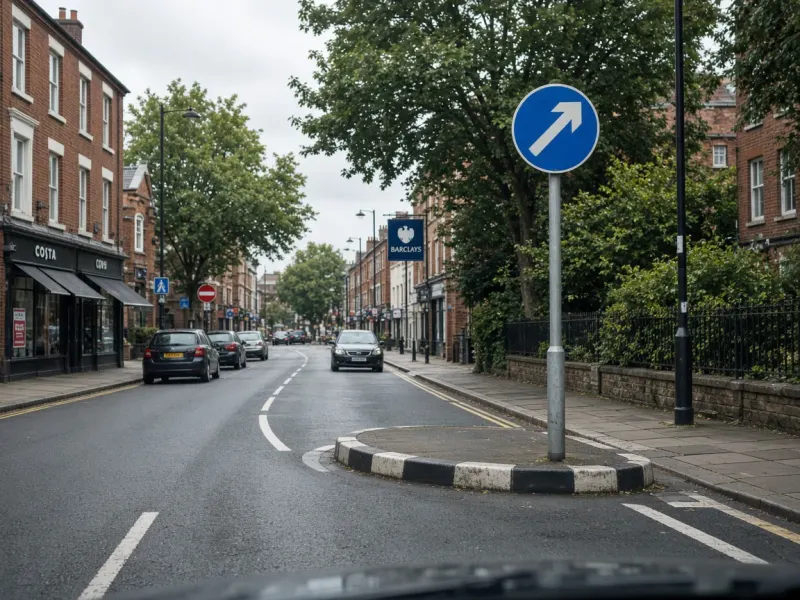
The official plate is a blue circle with a thick white border and a white arrow that bends to the right, ordering you to pass on the right-hand side of a traffic island, refuge, hatch marking, or other obstruction ahead.
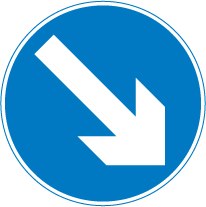
Sign image © Crown copyright, reproduced from GOV.UK traffic sign images under the Open Government Licence v3.0.
What the Keep right Sign Looks Like
The regulatory disc matches other UK mandatory blues: saturated blue field, narrow white rim, and a single white arrow graphic. On the keep right plate the arrow curves toward the right, showing traffic flowing clockwise around a central obstacle when you view the sign from the approach.
Posts stand on the nearside verge or on a lamp column just before a painted traffic island, pedestrian refuge, or narrow central hatching. You may see the same symbol repeated after a side road joins, so drivers who merged late still read the order before the wheels reach the marking.
Learners often mix it up with the mirror-image keep left circle, with pass either side where both flanks are legal, and with blue direction arrows on rectangular signs that merely name a route rather than ordering a path around an obstacle. The curved mandatory arrow always means pass on that side of the obstruction, not “turn right at the next junction”.
Road markings usually reinforce the plate: white hatched areas you must not enter, solid kerbs on refuges, or studs on raised islands. If paint is worn but the upright circle is clear, treat the sign as binding and follow the island shape rather than straightening the line through the hatch.
At night, retroreflective white arrows catch headlights before you can read side-street names. Reduce speed on unfamiliar urban dual carriageways where refuges sit between fast lanes, because a late lane change to honour the island is harder when traffic is tight on your left.
Pair the plate mentally with keep left, which bends the arrow the other way, and with pass either side, which shows two arrows and allows either flank. Red-ring turn bans and no-entry bars prohibit movements; this blue circle only routes you around a physical feature in the carriageway.
What the Keep Right Sign Means
Traffic authorities install the order where a central island, refuge, or hatch narrows usable width but still allows two-way or multi-lane flow if everyone passes the same side. The mandatory path prevents head-on conflicts on the wrong flank and keeps pedestrians on refuges out of the tyre tracks.
Rule 143 in The Highway Code groups circular signs that give orders. Ignoring the keep-right route is failing to comply with a traffic sign, not a minor lane drift. That matters for fixed penalties after a camera or officer sees you cross a hatch, and for insurance if you sideswipe a vehicle that obeyed the island.
The order starts at the sign and continues through the marked obstruction until the island ends, the hatch closes, or a new sign cancels the layout. It does not by itself forbid turning left or right at a junction beyond the refuge unless separate plates add those bans.
Cycles may use the same gap as motor traffic unless a parallel cycle track or toucan crossing invites a different line. Read any supplementary rectangle that exempts buses or restricts hours before assuming the island geometry is the only rule.
Large goods vehicles need the full arc around wide islands. Car drivers should not squeeze alongside an articulating trailer on the wrong side of the hatch; hold back until the long vehicle completes the mandatory path.
Temporary works sometimes copy the layout on metal stands beside plastic barriers. Treat any official blue mandatory arrow as binding until an end plate or open diversion order replaces it. Sat-nav lane guidance may ignore narrow refuges; trust the plate and the paint at the kerb.
City dual carriageways with bus stops on refuges repeat the circle on every approach. Watch for passengers stepping off behind the island while you steer right; mirror checks matter as much as the sign itself.
Outside schools, islands slow traffic and give children a two-stage crossing. Even when the road looks empty at pick-up time, the mandatory path still applies; cutting left across the hatch to reach a parking bay is a common driving-test fault.
Rural villages use the same symbol at pinch points where a build-out or flower bed sits in the centre of a narrow bridge. Meet oncoming traffic by slowing early and passing right of the feature, not by straddling the hatch.
When you drive for the practical test, examiners notice whether you follow island routing without last-second swerves. A smooth arc with clear lane position scores better than braking hard because you stared at shop fronts instead of the nearside post.
Wet leaves and diesel spills make white hatch paint slippery. A controlled arc beats a straight line that sends you into oncoming wheels on the forbidden side of the island.
Highway Code rules 143, 130 and 163 (mandatory signs, control devices and overtaking discipline)
Keep right vs Similar Signs
| Sign | Meaning | Legal or warning? |
|---|---|---|
| Keep right | Pass on the right of the island or obstruction | Regulatory blue circle |
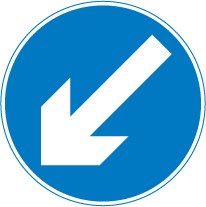 Keep left | Pass on the left of the island or obstruction | Regulatory blue circle |
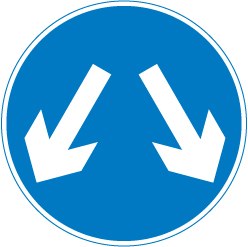 Pass either side | Either flank of the obstruction is permitted | Regulatory blue circle |
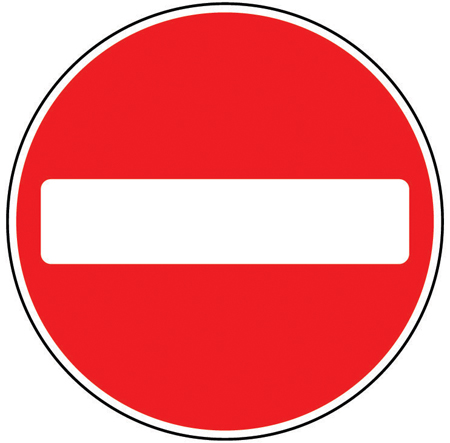 No entry | Do not enter the carriageway beyond the plate | Regulatory red circle |
Rules and Penalties
Police can report you for failing to comply with a traffic sign if you drive on the wrong side of a hatch or refuge against the mandatory arrow. Fixed penalties and points depend on the offence code and whether your line endangered others.
Bus lanes and camera corridors sometimes sit beside refuges where a wrong-side shortcut would cross a forbidden marking. Photographic evidence does not require an officer at the roadside; appeals need proof that signage was missing or contradicted by a lawful temporary scheme.
Collisions on refuges often turn on hatch crossings. Insurers may reduce compensation when dashcam footage shows you ignored a visible blue mandatory plate while the other driver followed the island.
Driving tests treat cutting the wrong side of a marked island as a serious fault when oncoming traffic or pedestrians must react. The fault stands even if contact never happens.
Pedestrian refuges are not parking slots. Stopping on the hatch blocks the lawful path and can earn waiting or obstruction penalties separate from the sign breach.
Check the latest theory test pass mark and book when you are ready via our booking guide.
Keep right in Practice
On a wet evening in Bristol, learner driver Priya follows a bus route along a dual carriageway with a central refuge before a signalised crossing. A keep right mandatory circle faces her lane beside fresh white hatching around a narrow island.
She checks her left mirror, eases off the accelerator, and tracks a wide arc so her nearside wheels stay right of the paint while a cyclist on her left continues in the main lane. A van behind tries to squeeze left of the island to beat the red light; Priya holds her line rather than drifting into the hatch.
At the crossing, a family stands on the refuge. Because Priya passed on the correct side, she sees them in good time and stops at the line without blocking the pedestrian gap. The van driver who cut the hatch receives a fixed penalty notice from a bus-lane camera further along the route.
When Priya later practised sign questions on a mock theory run, she picked the answer that matched the curved white arrow on blue rather than a rectangular direction board or a barred turn symbol.
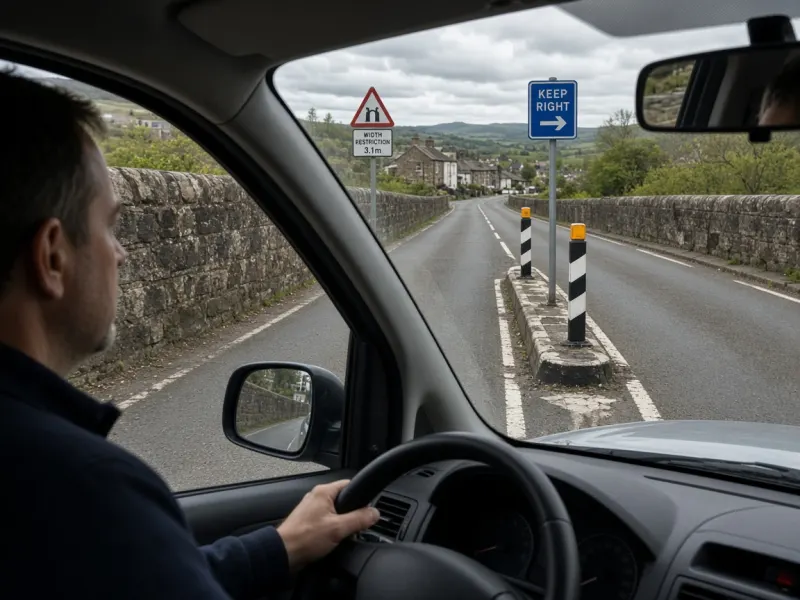
How This Sign Appears on the Theory Test
Multiple-choice items show the blue circle beside short stories about refuges, bridge pinch points, and town-centre islands. Choose the option that orders you to pass on the right of the obstruction, not the option about turning right at a junction or entering a one-way street.
Picture banks contrast keep right, keep left, and pass either side in the same item. Learn arrow curvature inside the ring; only the either-side plate shows two arrows.
Scenario questions describe a driver who shortcuts left across hatching to reach a side street. The correct answer keeps the mandatory path even when the hatch looks wide enough to cheat.
Link the symbol with road markings revision: solid hatching means do not enter. If the circle and the paint disagree because of wear, follow the upright mandatory sign and report faded markings to the council after your journey.
Hazard perception clips may show traffic stacking at a refuge while a car swerves left across the hatch. Spotting the plate early helps you hold lane position and avoid mirroring the developing hazard.
Take a free mock theory test and filter questions on road and traffic signs. Pair that with the warning signs guide for triangle symbols.
Related Road Signs
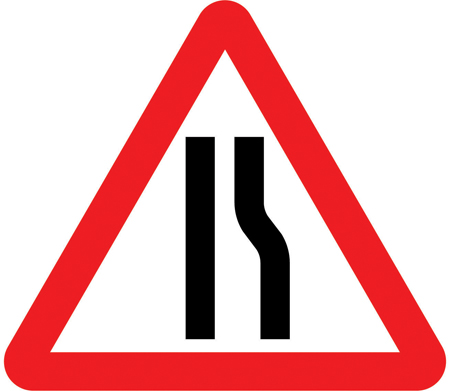
Road narrows both sides
Warning triangle before width tightens; no mandatory flank.
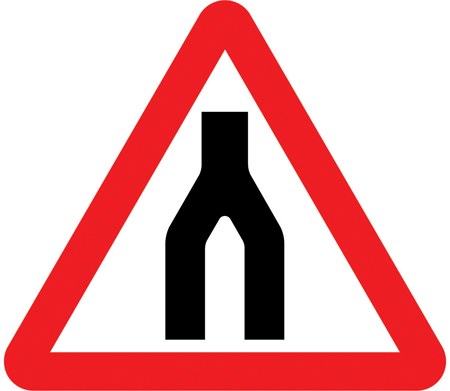
Dual carriageway ends
Opposing flow returns; pair with careful island routing.
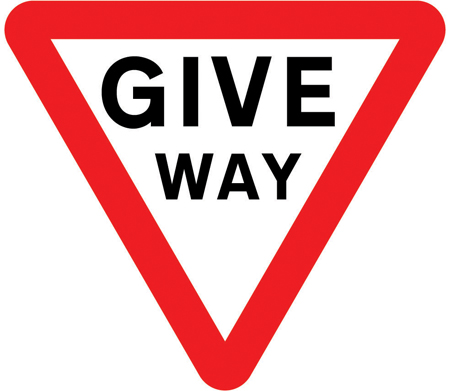
Give way sign
Yield duty at junctions, separate from island routing.
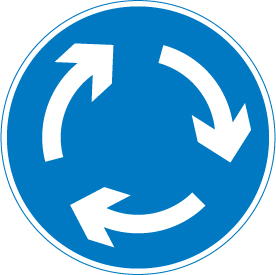
Mini roundabout sign
Circulate clockwise at a painted disc junction.
No entry
Blocks wrong-way entry, not refuge path choice.
Test Yourself on UK Road Signs
Treat the curved white arrow as a fence around the island: stay right, keep the hatch clear, and rehearse mandatory blues on a free mock theory run before exam day.
Frequently Asked Questions
What does the UK keep right sign mean?
It orders you to pass on the right-hand side of a traffic island, refuge, hatch marking, or similar obstruction. The blue circle is mandatory, not advisory.
How is keep right different from pass either side?
Keep right allows only the right flank of the obstruction. Pass either side shows two arrows and lets you use left or right when both paths are safe and signed.
Can I cross the hatch if the island looks empty?
No. The hatch is a no-driving zone unless a lawful pass-either-side plate replaces the keep-right order. Empty refuges still require the signed path.
Does the sign tell me to turn right at the next junction?
No. It routes you around a central feature in the carriageway. Junction turns follow separate arrows, filters, and turn-ban circles.
Will I fail my driving test for cutting the wrong side?
Examiners often record a serious fault if you cross the hatch against the mandatory arrow and another road user must react. Hold the correct line early.