
Last updated: October 2026 · Checked against Highway Code
Give Way Ahead: meaning, rules and what to do
This red-bordered warning triangle carries a small inverted yield symbol, telling you a dashed give-way line is coming so you can ease speed, scan both ways, and be ready to halt before you reach the junction mouth.
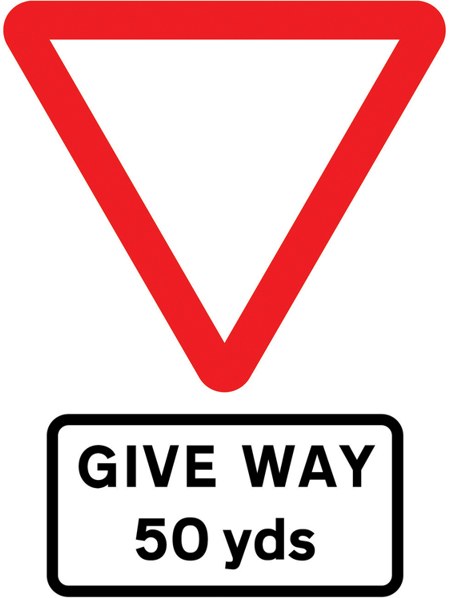
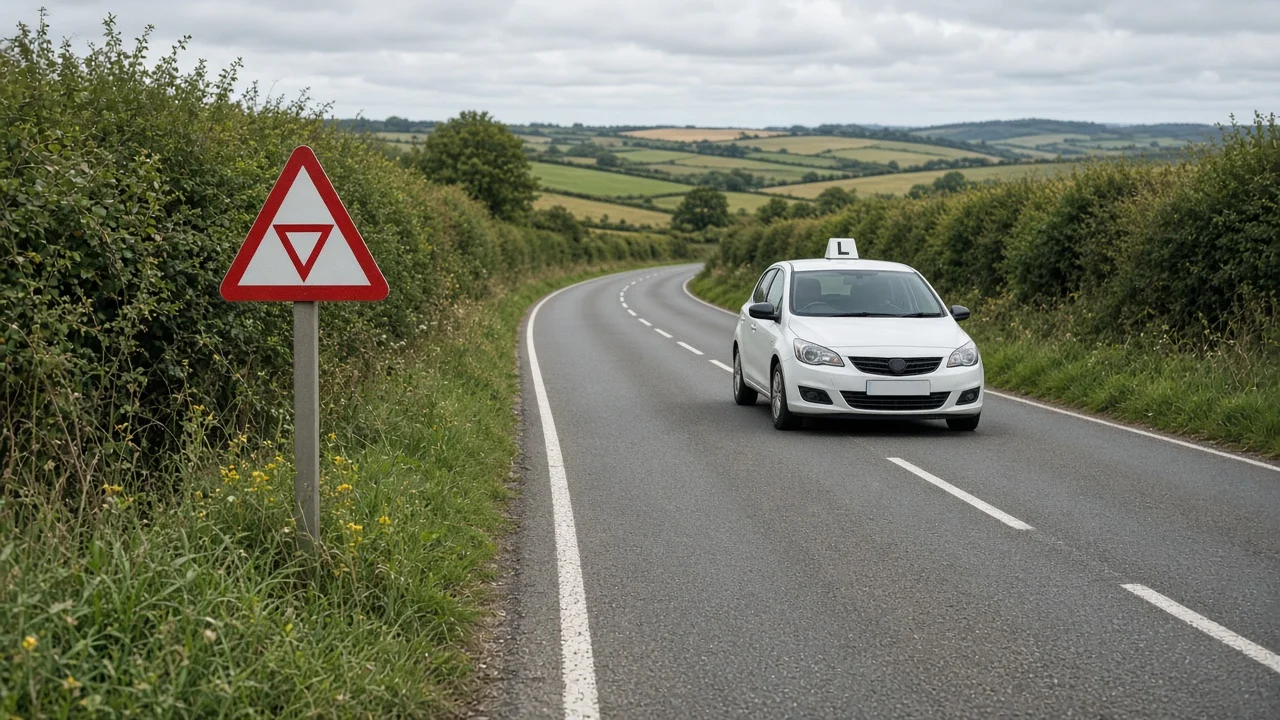
Sign image © Crown copyright, reproduced from GOV.UK traffic sign images under the Open Government Licence v3.0.
What the Give way ahead Sign Looks Like
The plate points upward with the standard hazard frame: thick red border, white centre, black pictogram. Inside sits a smaller inverted equilateral triangle with a red rim and white middle, echoing the regulatory yield order you will meet at the line. The outer shape warns; the inner symbol previews the control ahead.
Engineers mount the triangle on the nearside verge before a blind brow, a hedge gap, or a fast bend where the junction would otherwise arrive without warning. Beneath it you may see a rectangular white plate quoting distance, often in yards on older routes and in metres on newer ones. Repeat triangles sometimes appear at three hundred, two hundred, and one hundred yards on national-speed approaches.
Learners mix it up with the standalone regulatory yield triangle at the mouth, which points down and carries no red warning rim. They also confuse stop-ahead warnings that show an octagon pictogram inside the triangle. Crossroads and T junction boards describe geometry only; they do not promise a dashed yield line unless paired with this symbol or paint on the carriageway.
At night retroreflective sheeting keeps the red rim bright while the inner triangle can look faint until your headlamps square on the post. Summer glare and spray from lorries can hide the board until you are close; treat the first sighting as the cue to cover the brake and widen following distance, not as decoration on a commute you know by heart.
The regulatory inverted triangle at the line creates the yield duty. The warning triangle only forecasts that duty. Stop-ahead warnings preview an octagon and solid bar. Side-road plates show a black T or staggered bars without naming yield paint; read every board in sequence rather than assuming the widest road always wins.
What the Give Way Ahead Means
Advance warning exists because many yield junctions sit where through traffic carries speed. Side roads joining a dual carriageway, estate exits onto distributors, and rural mouths after long straights all punish late braking. The give way ahead sign buys seconds to mirror, select a lower gear, and plan where your wheels will halt if the gap closes.
Rule 146 in The Highway Code expects you to adjust pace for every junction. The warning does not set a speed limit and it does not grant priority. It announces that broken white dashes and probably a regulatory yield triangle lie ahead, so your task is observation before the conflict point fills your windscreen.
Distance plates under the triangle are guides, not targets to slam the brakes. Use them to settle speed smoothly so you can stop behind the dashes without surprising following traffic. Harsh deceleration after ignoring repeaters is a common rear-end trigger on 60 mph lanes approaching village mouths.
Dual-carriageway bars split the emerging driver’s task into two separate gaps. A polite space in lane one can hide a fast mover in lane two. The warning time should produce lane-by-lane checks, not a single glance at the nearside mirror while the offside stream stays invisible behind a van.
Pedestrians stepping off the pavement near the junction mouth still have priority when you eventually merge. Zebra, puffin, or toucan crossings beside the mouth bind you after you yield to carriageway traffic. The warning reminds you that foot traffic may appear at the same moment you judge a gap.
Roundabout entries sometimes pair advance yield warnings with circulatory layout boards further on. The dashed line may sit at the slip mouth rather than at a classic T. Read lane arrows and splitter islands together; the warning triangle never tells you which exit to take.
Temporary roadworks can shift yield lines or add portable signals. A yellow board with the same pictogram overrides habit on a route you drive daily. Contraflows may place the warning where the old main road ran straight, so treat every visit as fresh geometry.
Gradient changes the picture. A side road dropping toward a bar lets you see over low bonnets; a side road climbing may hide an articulated lorry until your bumper crosses the crown. The warning should trigger a full stop behind the dashes when hedges block both directions, not a slow creep with the nose over the line.
Northern Ireland uses the same warning triangle and regulatory yield pairing on most public roads, with distances sometimes quoted in metres on newer plates. If you learned in one jurisdiction and test in another, rely on markings at the mouth rather than memory about which arm felt dominant last year.
When the triangle passes your mirror, cover the brake and lift your eyes toward where the dashed line will appear. If you stare only at the car ahead, you may miss a fresh queue at the mouth.
Lorries need longer to halt on gradients. Hang back on repeaters so you can see both the yield line and the trailer in front; a late merge on a downhill bar can hide the dashes until they sit under your bumper.
Open windows on blind rural mouths help you hear cross traffic when vision fails. Gravel under tyres on the stem often arrives before you see headlights through a hedge gap.
Sat nav may call for a turn at the next junction while the warning only mentions yield paint. Signal and lane position early so you are not changing lines when the regulatory triangle appears.
Following traffic on the stem pushes impatient drivers to peer early. Keep your wheels behind the dashes until the gap is real, even if horns sound behind you.
Electric vehicles at walking pace are easy to miss if you rely on engine noise. After the warning, perform a lifesaver glance before you merge from a standstill.
Wet weather lengthens stopping distance on the approach. Leave extra space before you reach the broken line so a following van on the bar is not surprised by your acceleration.
Bus stops beside the mouth create double hazards: passengers stepping between coaches and stem traffic creeping for a view. Leave a door-width buffer when passing stationary buses even if your lane feels wide.
Highway Code rules 103, 146 and 174 (junction approach and yielding)
Give way ahead vs Similar Signs
| Sign | Meaning | Legal or warning? |
|---|---|---|
| Give way ahead | Yield line warning upstream | Warning triangle |
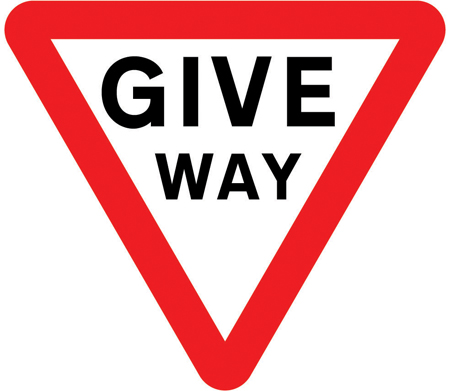 Give way | Regulatory yield at the dashes | Inverted triangle |
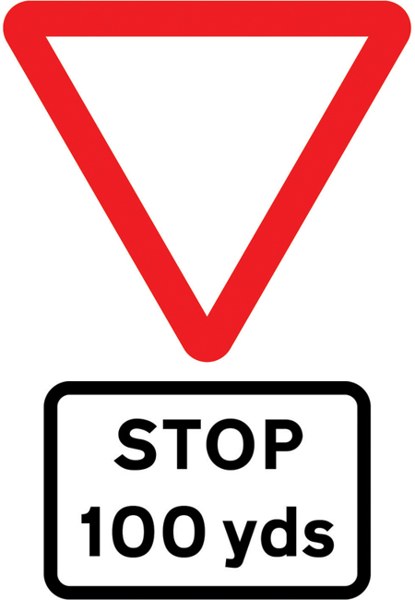 Stop ahead | Mandatory stop line warning | Warning triangle |
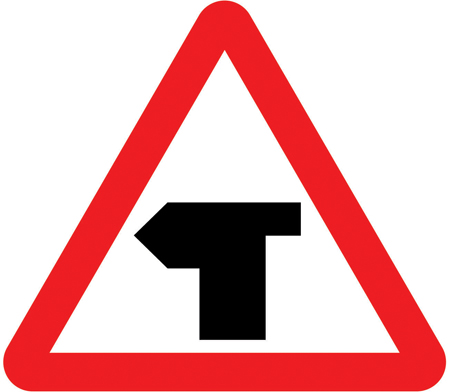 T junction | Side road meets through route | Warning triangle |
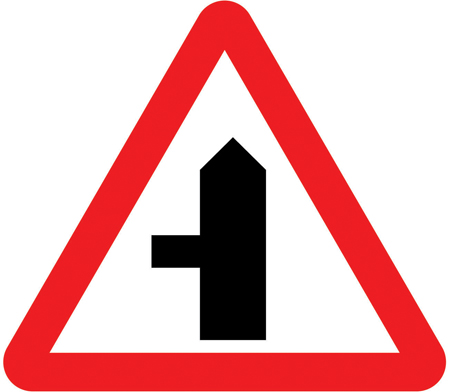 Side road left | Minor arm joins from the left | Warning triangle |
Rules and Penalties
Emerging without yielding at the dashed line causes side collisions insurers usually attribute to the entering driver. Police may investigate careless driving when injuries follow a forced merge, even when the other party was speeding.
Ignoring the warning by arriving too fast does not create a separate offence, yet it supports the same report if you cannot stop behind the dashes. Mobile patrols still stop drivers who pull out under closing gaps after barely lifting off the accelerator.
Rolling through a mandatory stop where an octagon faces the stem can support careless driving charges when others brake sharply. The yield warning never replaces a stop order where one is posted closer to the mouth.
Driving tests mark serious faults when you force priority traffic to brake, block the junction while hesitating, or peep with the nose over the dashes on blind stems. Examiners expect decisive observation fed by the advance boards.
Fixed cameras seldom enforce plain yield junctions, yet telematics policies sometimes penalise harsh braking caused by ignoring upstream warnings. Building the habit of slowing at the triangle protects both your licence and your no-claims bonus.
Check the latest theory test pass mark and book when you are ready via our booking guide.
Give way ahead in Practice
Jonah drives a semi-rural distributor at 50 mph where repeat yield warnings appear after a long straight. The first triangle sits beside a plate reading two hundred yards; he selects fourth gear and checks mirrors because the dashed line lies beyond a hedge bend.
On the stem approach he sees the regulatory inverted triangle and stops fully behind the broken line. A bus fills the outer lane while a cyclist approaches in the nearside gutter. He waits until both pass, even though a following hatchback sounds the horn.
He merges at a brisk walking pace with a right signal cancelled once his lane position is straight on the bar. Earlier in the week he had ignored the upstream warning, braked late, and stopped with his bonnet over the dashes; an examiner on a lesson marked that as a serious fault before the independent section.
Returning at dusk, he uses the warning triangles as cues to dip headlights early. Paired headlamps on the stem once meant a car ready to emerge; a single lamp warned of a moped balancing at the crown. The advance boards gave time to read intent before the yield line arrived under his wheels.
Rain pools on the bar lane. He eases throttle after merging rather than accelerating into spray that would hide a pedestrian refuge on the next arm. The warning sequence turned junction discipline into a calm routine instead of a surprise stop.
How This Sign Appears on the Theory Test
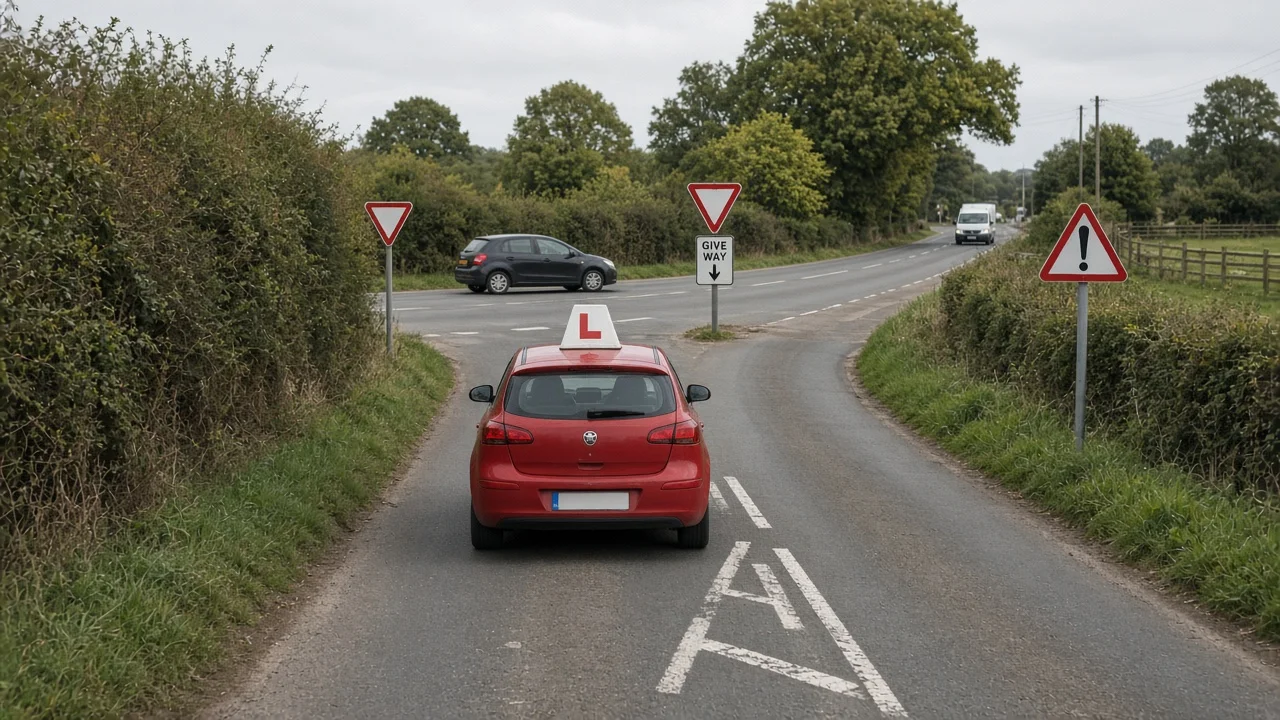
Picture items show the warning triangle with the nested inverted symbol and ask what lies ahead. Link the graphic to a yield line, not to an immediate mandatory halt unless a stop-ahead pictogram appears instead.
Contrast the board with the regulatory yield triangle that points down without a red warning rim. Questions often pair both images and ask which one creates the legal duty at the mouth.
Scenario stems describe fast approaches with distance plates. Correct answers stress slowing early and being ready to stop behind dashes, not maintaining speed until the regulatory plate appears.
Hazard perception clips may show a bonnet creeping from a minor arm after you ignored junction cues. Click when the hazard develops as the vehicle commits into your path, not when a distant triangle first flashes.
Reject answers that treat the warning as permission to merge without checking all lanes. Slowing and yielding at the line beat any option that mentions speed alone.
When revising, sketch the outer warning triangle and inner inverted symbol. Examiners expect instant recognition without confusing the pair with stop-ahead octagons inside triangles.
Take a free mock theory test and filter questions on road and traffic signs. Pair that with the warning signs guide for triangle symbols.
Related Road Signs
Give way sign
Regulatory yield order at the dashed line.
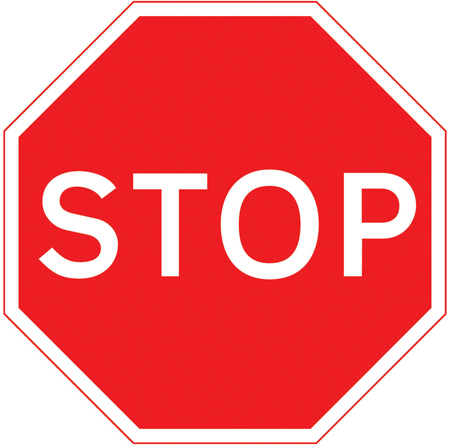
Stop sign
Mandatory halt when stop paint replaces yield dashes.
T junction sign
Geometry warning before yield controls appear.
Side road left
Minor arm from the left; yield may follow.
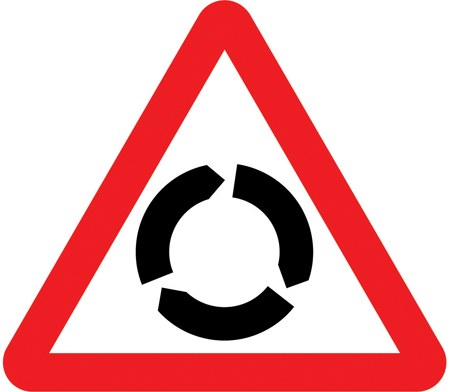
Roundabout ahead
Circulation warning where yield lines sit at slips.
Test Yourself on UK Road Signs
Let the warning triangle start your junction checklist: mirrors, gear, speed, then a full look at the dashed line. Calm merges depend on reading the yield duty before the regulatory plate fills your windscreen.
Frequently Asked Questions
What does the give way ahead sign warn you about?
It warns that a give-way line and regulatory yield triangle lie ahead. Slow down, read any distance plate, and be ready to stop behind the broken white dashes before you enter the main carriageway.
How is the give way ahead sign different from a give way sign?
The ahead board is a red warning triangle with a small inverted triangle inside. The regulatory give way sign at the junction points down on its own and creates the legal duty to yield.
Must I stop when I pass the warning triangle?
Not solely because of the warning. Stop behind the dashed line if traffic on the road you join has priority or if the gap is unsafe. You may continue without halting when every lane is clear.
What are the distance plates beneath the triangle for?
They estimate how far the yield line sits from the board, usually in yards or metres. Use them to reduce speed smoothly rather than braking late at the mouth.
Does the give way ahead sign appear on the theory test?
Yes. Questions often show the nested triangle symbol and ask you to identify an upcoming yield line. Pair it with regulatory yield and stop-ahead warnings in your revision.