
Last updated: October 2026 · Checked against Highway Code
Motorway Direction Sign: meaning, rules and what to do
Blue rectangular motorway direction signs list where each lane goes, which junction is next, and how traffic splits for towns, airports, and other motorways, so you can choose lanes before the gore tightens.
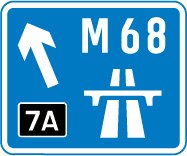
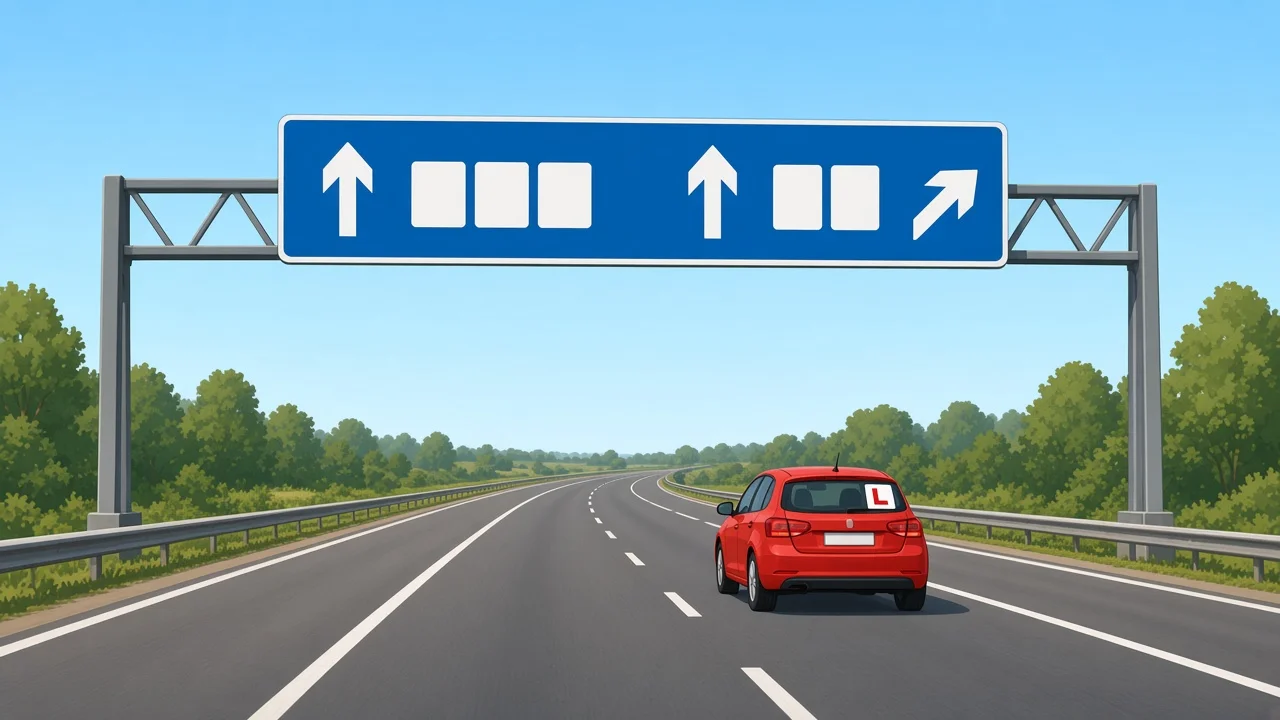
Sign image © Crown copyright, reproduced from GOV.UK traffic sign images under the Open Government Licence v3.0.
What the Motorway direction Sign Looks Like
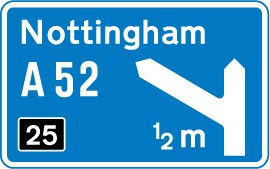
GOV.UK catalogue diagram 2910 shows the standard motorway direction layout: deep blue background, white sans-serif lettering, and black-bordered junction numbers in square panels. Fork graphics split into two or three arms when one carriageway divides for different routes.
Gantries span the full width on busy sections such as the M25, while single posts appear on slip roads and near collector-distributor lanes. Route numbers use the M prefix on blue; when a green primary panel appears, you have usually left the strict motorway blue family even if traffic still feels fast.
Confirmatory boards repeat destinations after a junction so you know you held the correct fork. Distance plates may quote miles to a town, while separate countdown markers with white bars on blue show yards to the deceleration lane, not speed limits.
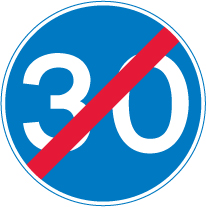
Learners confuse blue direction rectangles with mandatory blue circles that order minimum speeds or bus use. Circles regulate; rectangles navigate. Brown tourist boards near exits add attraction names but do not replace junction numbering on the main carriageway.
At night retroreflective white faces stay readable while rain and lorry spray blur smaller text. Smart motorway gantries may add variable speed numerals above the direction panel; treat each row as a separate message rather than guessing from memory of an old layout.
Green direction signs guide primary A-roads away from the motorway network. White local boards name suburbs on distributor roads. Motorway services panels use food or fuel pictograms for rests. The plain blue fork with place names and junction numbers is the core navigation grammar for motorways in Great Britain.
What the Motorway Direction Sign Means
Highway authorities place motorway direction signs where drivers must decide lanes hundreds of metres before paint and barriers force the choice. The panel answers which route each lane serves; it does not grant permission to stop on the live carriageway or use the hard shoulder for navigation.
Rule 142 in The Highway Code expects you to plan ahead and read signs in good time. On motorways that means checking mirrors, signalling early, and avoiding last-second moves across solid white lines when a fork sign shows your exit peeling left while through traffic stays right.
Junction numbers are the shared map reference for the network. Calling breakdown services or planning a return route is easier when you note the last junction number you passed, because operators and sat-nav recovery modes use the same index.
When a panel lists multiple destinations on one arm, all of those places lie along that slip or continuation. If your town is missing from the near fork, it may appear on the next junction board rather than on the opposite carriageway.
Temporary yellow diversion signs during roadworks can override ordinary blue arrows for a season. Trust the live diversion when cones shift a slip mouth, then rejoin the numbered route when a black-on-yellow board says you are back on the permanent line.
Northern Ireland motorways use the same blue direction style on most public motorways. If you revise in Belfast after practising around London, the colour grammar still separates information rectangles from red-ring prohibitions.
If you supervise learner Jake before his first motorway lesson, rehearse reading forks aloud: junction number, destination list, arrow direction, then mirror check. Examiners on nearby dual carriageways still reward that sequence even when the test route avoids motorways.
Do not hover with wheels on lane markings beside a lorry. Either pass decisively in lane two or hang back where you can see their mirrors; blue boards often appear just before merges where HGVs need the full lane width.
Countdown bars sit on the left verge before exits. Three bars mean three hundred yards to the start of the deceleration lane; begin easing off there rather than at the nose of the slip where traffic stacks.
When a smart motorway removes the hard shoulder, direction signs matter more because there is less space to recover from a late lane change. Read the gantry row for lane closures before you chase a junction number across hatched areas.
Provisional licence holders may only drive on motorways with an approved instructor in a dual-control car. The theory test still shows blue panels in stories, so pictogram and colour revision pays off before the first legal motorway hour.
After you miss an exit, continue to the next junction rather than reversing or crossing emergency access points. Many routes let you loop back via the next interchange without breaking motorway rules.
Highway Code rules 142 to 144 and 253 to 265 (motorways and direction signs)
Motorway direction vs Similar Signs
| Sign | Meaning | Legal or warning? |
|---|---|---|
| Motorway direction | Lane and route choice on motorway | Information (blue) |
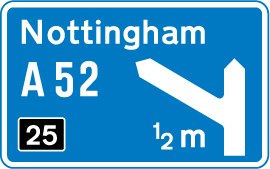 Primary direction | Green A-road route guidance | Direction (green) |
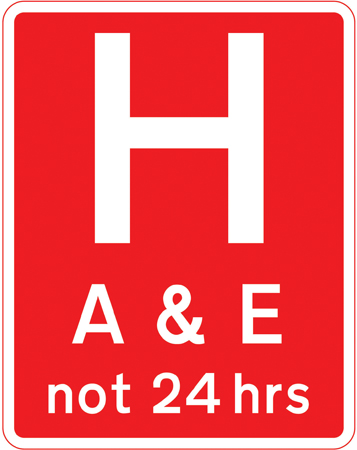 Hospital direction | H symbol toward emergency facilities | Information (blue) |
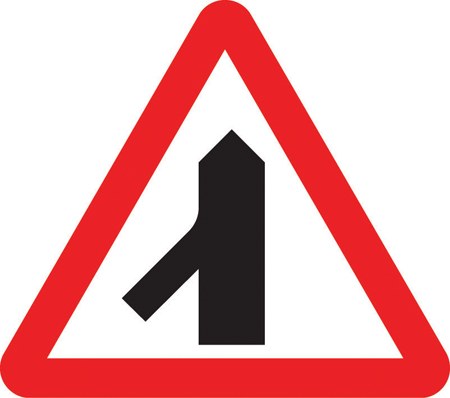 Traffic merges | Joining lane blends from the left | Warning triangle |
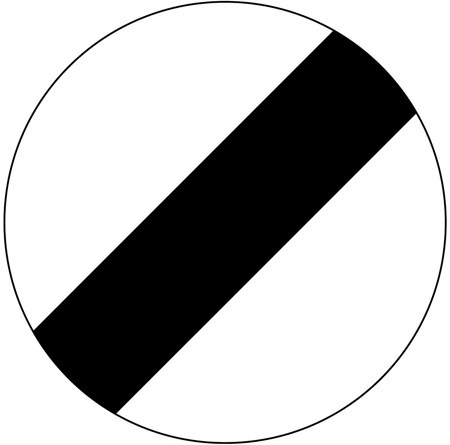 National speed limit | Default maximum for road class | Regulatory |
Rules and Penalties
Missing a signed exit is not an offence, but swerving across solid white lines or hatched gores to recover can attract police attention for careless driving when other vehicles brake hard.
Stopping on a live motorway lane to read a direction board breaks motorway rules even if traffic is slow. Use the next services, junction, or emergency area lawful for your situation.
Using the hard shoulder as an extra lane to reach a fork shown on a blue panel is illegal on conventional motorways and dangerous on smart sections where the nearside lane may be live traffic.
Fixed penalty cameras on some motorways enforce bus lane or red X violations separately from direction signage. A blue fork does not cancel a lit red X above your lane.
Theory tests rarely ask you to memorise one junction map; they test whether you understand blue direction grammar versus services, telephones, or regulatory speed circles.
Check the latest theory test pass mark and book when you are ready via our booking guide.
Motorway direction in Practice
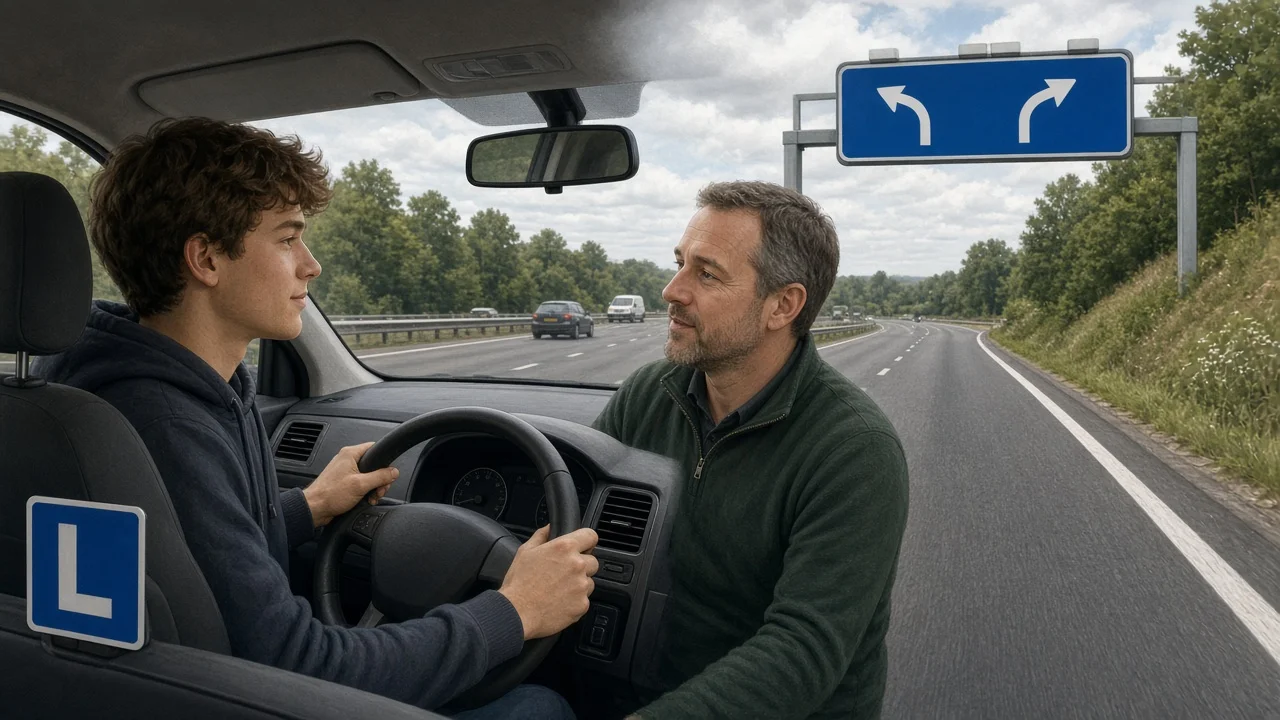
Jake is on a motorway lesson with his instructor, practising junction discipline on the M25 near a busy interchange where several blue forks appear in quick succession. Sat-nav audio says “keep left in two miles” while a gantry already lists Junction 12 with arrows splitting for the M3 and the A308.
Jake reads the motorway direction sign aloud: junction number in the panel, destinations on each arm, then checks the nearside mirror before drifting left into the deceleration lane. He avoids crossing the solid white line that separates through traffic staying on the orbital from traffic leaving on the slip.
A hatchback ahead hesitates, then swerves left at the last moment across the gore. Jake holds his lane speed steady and leaves a gap rather than copying the move. His instructor notes that the blue board gave plenty of warning; the risk came from late steering, not from the sign being unclear.
On the slip road Jake matches the speed of traffic merging from a shorter acceleration lane, glancing at a confirmatory blue panel that repeats his town name so he knows he chose the correct arm. He does not stop on the taper to re-read the gantry; the countdown bars already told him the exit was imminent.
In a later mock theory session Jake sees a cropped photo of a blue fork with junction numbers and picks the answer that describes lane choice for motorway destinations, not a minimum speed order or a hazard warning triangle. Linking the image to his M25 slip story made the pictogram feel familiar instead of abstract.
How This Sign Appears on the Theory Test
Navigation items show blue panels with junction numbers and ask which lane or exit matches a named town. Treat the fork as route information, not a command to stop or a speed limit.
Distractors swap in green primary boards, brown tourist signs, and mandatory blue circles. Read background shape and colour before you tap.
Scenarios describe a driver crossing hatched lines after ignoring a fork. The lawful pattern is to plan from the direction sign earlier, not to force a late cut across the gore.
Some stems pair a direction panel with countdown markers. Remember that white bars on blue measure distance to the exit, not miles per hour.
Car candidates need forty-three correct answers from fifty questions within fifty-seven minutes. Practise motorway filters on a free mock theory test so blue rectangles stay distinct from gantry red X symbols.
When two answers both say “check mirrors”, prefer the one that includes early lane choice tied to the direction arrows, not only lifting off the accelerator while staying in the wrong lane.
Take a free mock theory test and filter questions on road and traffic signs. Pair that with the warning signs guide for triangle symbols.
Test Yourself on UK Road Signs
When the panel is blue with white place names and junction numbers, you are choosing routes, not obeying a prohibition disc. Practise reading forks on a free mock theory test, then compare your answers with the regulatory signs hub so direction boards, countdown markers, and gantry signals stay separate under exam pressure.
Frequently Asked Questions
What does a blue motorway direction sign mean?
It tells you which destinations and junction numbers belong to each lane or arrow shown. It is navigation information, not a speed limit or hazard warning on its own.
How do junction numbers on blue signs work?
They identify the next exit or interchange on the motorway network. Operators and maps use the same numbers, so noting the last junction you passed helps if you need directions after a breakdown.
Is a motorway direction sign the same as a minimum speed sign?
No. Minimum speeds use white numerals on a blue circle. Direction signs are blue rectangles with place names, route numbers, and arrows.
When should I change lanes for a motorway exit?
Move when the direction panel and countdown markers show your exit ahead, not at the last metre of paint. Signal early, check mirrors, and avoid crossing solid white lines or hatched areas.
Will the car theory test include motorway direction signs?
Yes. Questions often show blue forks or junction panels and ask what to do next. Learn the colour and layout even if your first motorway drive happens after you pass.