
Last updated: October 2026 · Checked against Highway Code
Hospital Sign: meaning, rules and what to do
The familiar white letter H on a blue direction panel tells you which exit or fork leads toward hospital facilities, including accident and emergency when the name is listed on the same board.
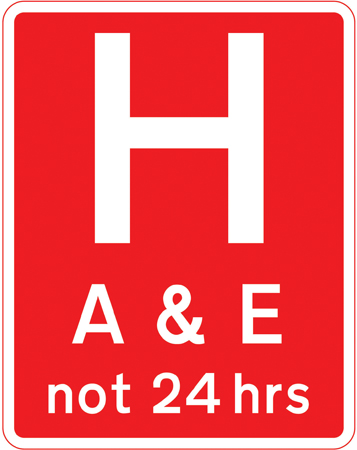
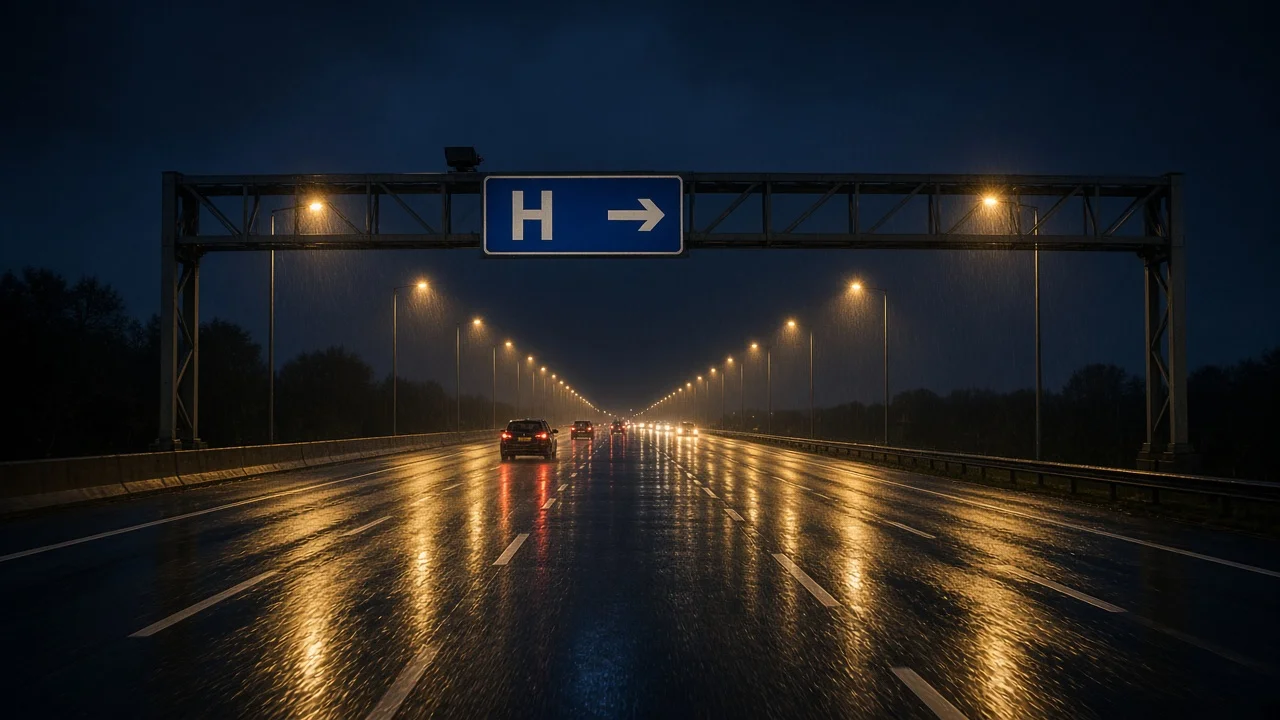
Sign image © Crown copyright, reproduced from GOV.UK traffic sign images under the Open Government Licence v3.0.
What the Hospital direction Sign Looks Like
On motorways the symbol sits on a blue rectangular direction sign with white text and arrows, often grouped with junction numbers and place names. The H is a bold sans-serif letter, sometimes inside a white square patch, matching other facility pictograms in the GOV.UK catalogue.
On dual carriageways and urban distributors the same blue board may appear on a gantry or post at a roundabout, with distances in miles or fractions of a mile. A separate arm may read “A&E” or “Emergency” while a parallel arm lists the main hospital name.
The plate is not a red warning triangle and not a brown tourist board. It does not set a speed limit by itself. Supplementary plates can show parking pictograms, no-stopping orders, or bus-only slips on the hospital spine once you leave the main road.
At night retroreflective white faces catch headlamps long before you can read smaller street names. Rain on a windscreen can blur distant gantries, so use junction countdown markers and repeaters rather than guessing from a phone map alone.
Temporary yellow diversion boards during roadworks may reuse the H beside a black-on-yellow arrow. Treat them as binding for the diversion route even when your sat-nav still shows the old slip geometry.
Motorway services use knife-and-fork or fuel pictograms on blue panels for rests and fuel, not emergency care. Emergency telephones on the hard shoulder use a separate handset symbol. Parking bays use a white P on blue. The H points to hospital routes; it does not replace no-stopping circles on forecourts or give-way lines at busy exits.
What the Hospital Sign Means
Highway authorities place hospital direction symbols where drivers need early lane choice before a fast link divides. The sign answers “which way to the hospital?” rather than “what hazard is on the carriageway ahead?”
Rule 142 in The Highway Code expects you to read direction signs in good time. For hospital exits that means moving left or right before solid white hatchings, especially when traffic is light and speeds feel high.
Named trusts can share one motorway junction. The H may appear twice on one gantry with different arrows. Pick the arm that names the campus you need, not merely the first H you see.
Accident and emergency routes are not always the same as visitor parking. Boards may send A&E traffic along a dual carriageway spur while main entrance traffic uses a quieter campus road. Read both legends before you commit across hatched gores.
Ambulance routes and bus gates on hospital spines stay subject to local orders. The blue direction panel does not exempt you from no-stopping plates, clearways, or bus lanes printed on white rectangles lower on the post.
Northern Ireland uses the same blue direction family on most public roads. If you revise in Belfast after studying in England, the H pictogram still means hospital access on the arrow shown.
If a passenger is unwell, plan the exit before panic steering. Missed motorway exits are safer to correct at the next junction than by reversing on the hard shoulder.
Sat-nav may say “hospital” without showing the same wording as the gantry. Cross-check blue boards at every fork because campus rebuilds sometimes shift A&E mouths to a new slip.
Forecourt no-stopping orders protect ambulance bays. Do not halt on yellow hatchings because the H appeared late; use signed drop-off or a lawful waiting bay.
Blue badge holders still obey red-route and clearway rules unless plates exempt them. Drop-off may be on a ring road with a short walk, which beats blocking a fire route.
Night driving reduces depth perception on unlit campus roads. Dip headlights for oncoming traffic and watch for pedestrians between parked cars near A&E entrances.
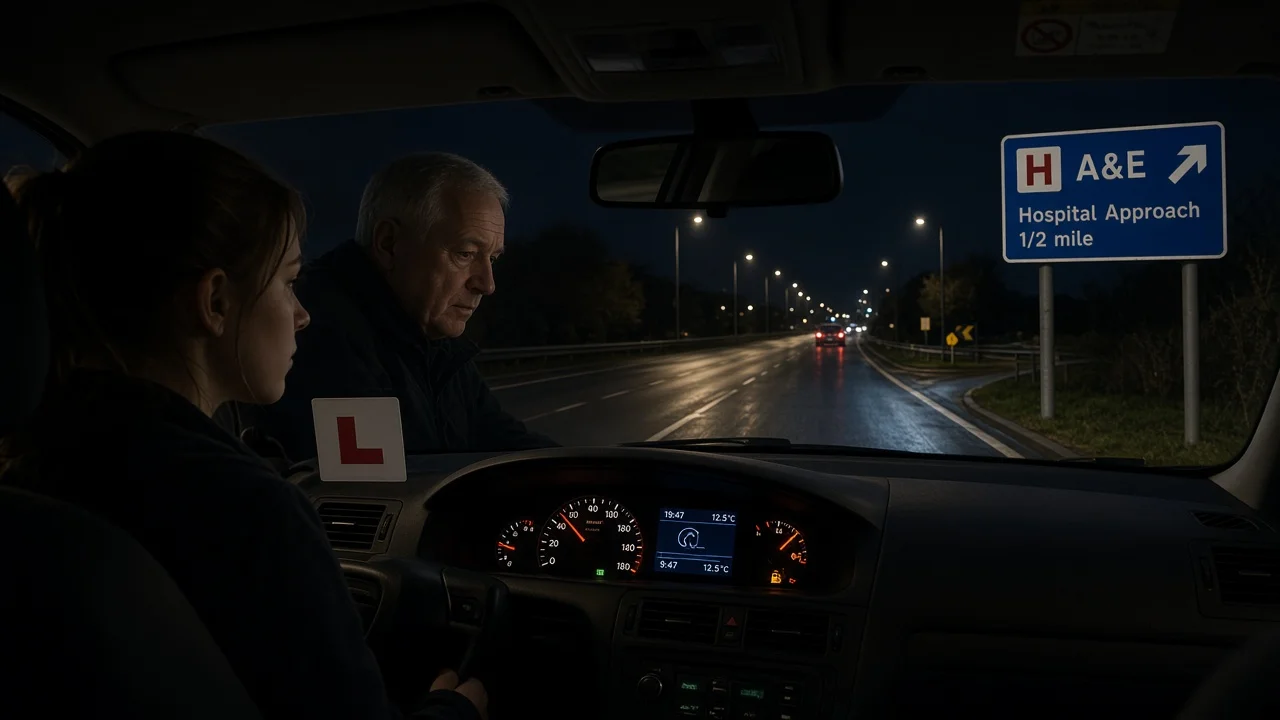
When supervising a learner on a hospital approach, rehearse calm lane changes early. Examiners on nearby routes notice harsh braking at gantry mouths even when the test route avoids the slip.
Highway Code rules 142 to 144 (direction signs and planning)
Hospital direction vs Similar Signs
| Sign | Meaning | Legal or warning? |
|---|---|---|
| Hospital direction | Route to hospital facilities on arrow shown | Information (blue) |
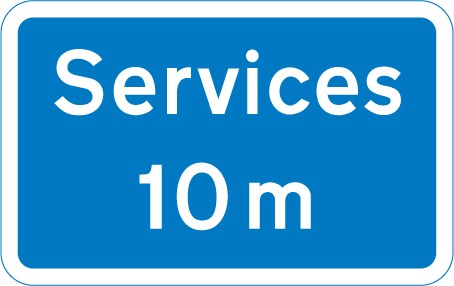 Motorway services | Rest, fuel and food on motorway | Information (blue) |
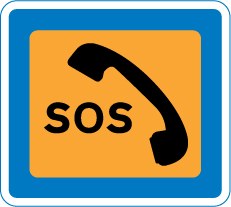 Emergency telephone | SOS point on motorway hard shoulder | Information (blue) |
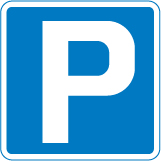 Parking | Signed parking place ahead | Information (blue) |
Rules and Penalties
Missing a signed hospital exit is not an offence, but sudden lane changes across hatched areas can attract police attention for careless driving when other traffic must brake.
Stopping on a motorway hard shoulder without a genuine emergency breaks motorway rules even if you were hunting an H board you passed. Use the next lawful exit or an emergency telephone.
Parking on ambulance keep-clear markings can bring penalty charge notices or removal, regardless of why you stopped. Direction symbols do not override no-stopping orders on the spine road.
Using a bus lane to reach an A&E mouth because the queue looked shorter can produce fines where cameras operate. Read white rectangles beside the blue panel before you filter left.
Theory tests rarely quote “diagram 827” aloud; they show blue boards and ask which symbol matches emergency hospital access versus services or telephones. Learn pictogram families, not one junction map.
Check the latest theory test pass mark and book when you are ready via our booking guide.
Hospital direction in Practice
Una is on a late-night driving lesson near Coventry when her instructor asks her to follow signs toward University Hospital rather than the sat-nav voice alone. Rain streaks the windscreen, and the M6 ahead shows a blue gantry with two white H arms: one names “A&E” with a left arrow, the other names “Main entrance” straight ahead.
Una checks mirrors, signals left in good time, and drifts into lane one while lorries pass in lane two. She ignores a tempting filter that only lists a services pictogram, because her instructor has drilled the difference between a meal stop and an emergency campus route.
On the dimly lit spur she slows for give-way markings where a bus lane crosses the hospital approach. A taxi cuts across the hatchings; Una holds her line and lets it pass rather than swerving toward the kerb where a no-stopping double-bar plate faces the forecourt.
They reach the A&E drop-off bay without using the hard shoulder or blocking ambulance access. In a mock theory session later that week, Una spots the same H beside a services fork and picks the answer that follows the A&E arrow, not the knife-and-fork panel.
Her instructor notes that night-time glare from wet signs rewards early lane discipline. Una adds the blue H to her revision cards next to emergency telephone and parking symbols so facility pictograms stay distinct under exam timers.
How This Sign Appears on the Theory Test
Navigation items show blue motorway panels with mixed pictograms. Select the arm with the H or named hospital when the scenario describes emergency care, not the services or telephone symbols.
Distractors swap in red warning triangles about pedestrians near hospitals. Triangles warn of people on the road; blue rectangles only direct you along a chosen route.
Some stems mention a passenger who feels faint. The safe answer still uses lawful exits and forecourt rules; the H does not permit stopping on live motorway lanes.
Car candidates need forty-three correct answers from fifty questions within fifty-seven minutes. Practise sign filters on a free mock so pictogram recognition stays automatic.
Pair hospital boards with give-way and no-stopping revision, because campus mouths often stack several orders on one post.
Take a free mock theory test and filter questions on road and traffic signs. Pair that with the warning signs guide for triangle symbols.
Related Road Signs
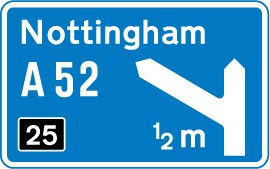
Ring road sign
Orbital routes that often list hospital exits.
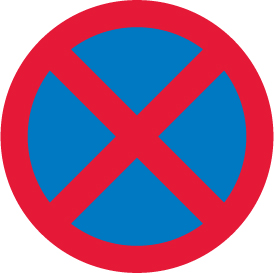
No stopping sign
Forecourt spines where ambulances need clear access.
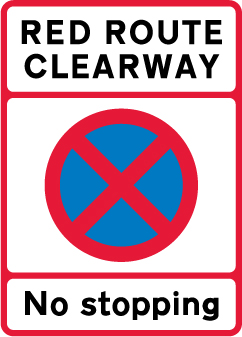
Urban clearway
Stopping bans on approaches to busy sites.
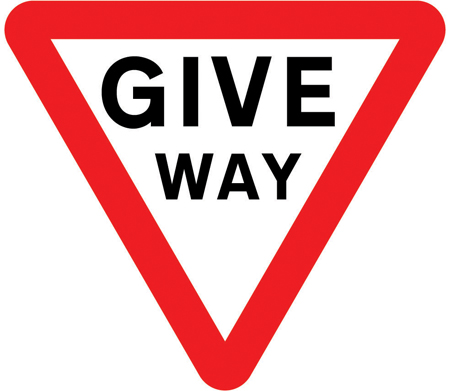
Give way sign
Yield lines at campus junctions after the slip.
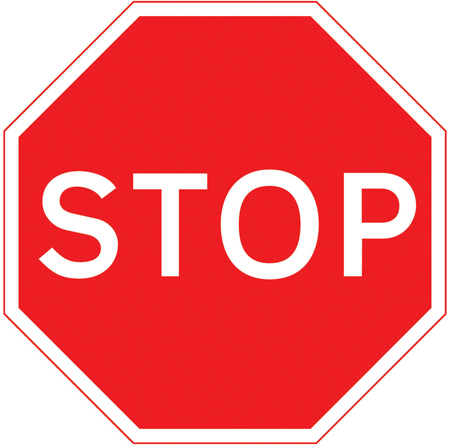
Stop sign
Full halt where side roads meet the spine.
Test Yourself on UK Road Signs
Treat the white H as a navigation cue: read the full blue panel, choose lanes before hatchings tighten, and keep forecourts clear for emergency traffic. Rehearse facility pictograms on a free mock theory test, then compare them with the regulatory signs hub so services, telephones and hospital arms never blur together under pressure.
Frequently Asked Questions
What does the H on a blue sign mean?
It marks a direction toward hospital facilities on the arrow shown, often with place names or A&E wording on the same board. It is information, not a speed limit or hazard warning.
Is the hospital symbol the same as motorway services?
No. Services panels use food or fuel pictograms for rests. The H points toward hospital access. Emergency telephones use a handset symbol on the hard shoulder.
Can I stop on the motorway when I see the H?
You must use the next lawful exit or an emergency telephone. The direction symbol does not allow stopping on live lanes or the hard shoulder for a non-emergency.
Does the sign always mean A&E?
It means hospital access on that arrow, which may be A&E, main entrance, or a named site. Read every line on the panel before you turn.
Will the theory test use this symbol?
Yes, often in navigation questions that mix blue pictograms. Learn which panel matches emergency hospital access versus services, parking, or telephones.