
Last updated: October 2026 · Checked against Highway Code
Minimum Speed: meaning, rules and what to do
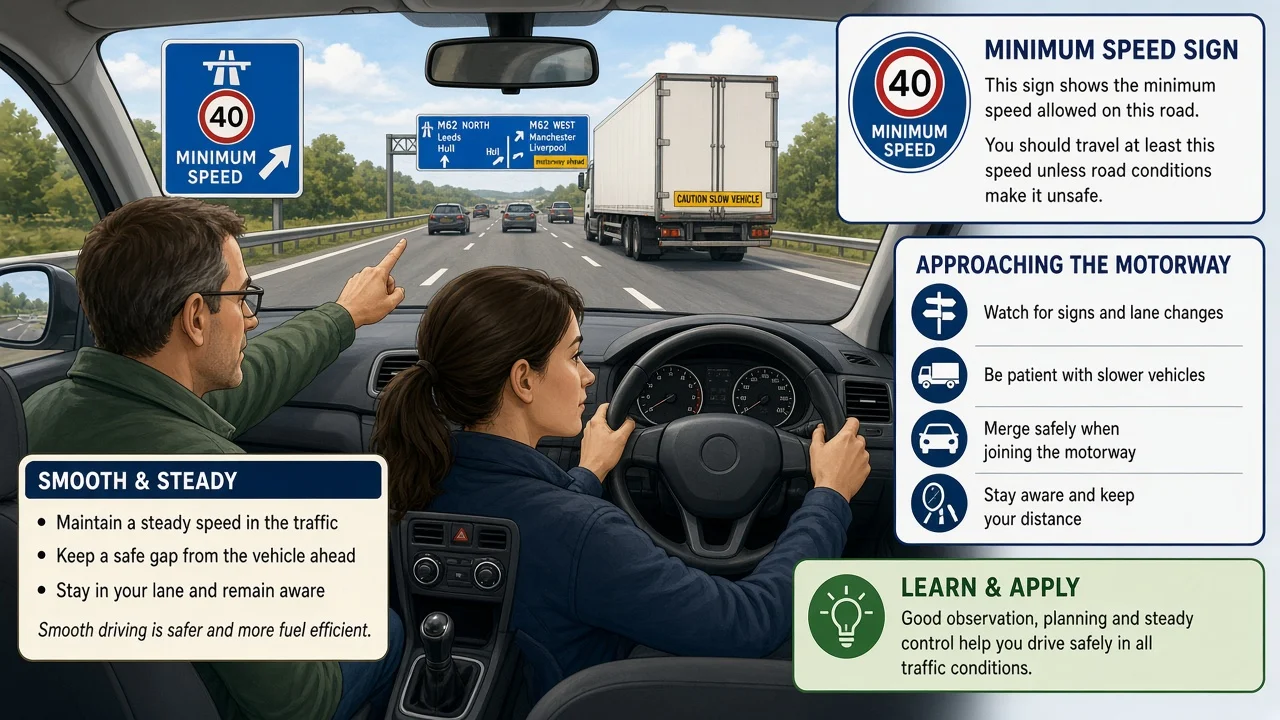
The blue circular plate with a white number is the UK order that you must not drive slower than the speed shown on that length, most often on motorways, long tunnels and some slip roads where stopping or crawling would block the flow.
Sign image © Crown copyright, reproduced from GOV.UK traffic sign images under the Open Government Licence v3.0.
What the Minimum speed Sign Looks Like
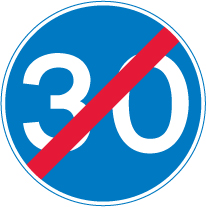
The GOV.UK mandatory plate is a solid blue disc with a bold white numeral at the centre. There is no red ring and no triangle border. The colour matches other mandatory instruction circles such as turn ahead arrows, which tells you this is something you must do rather than something you must avoid.
Common values on British roads include thirty, forty and fifty miles per hour. The artwork does not always print the letters mph, but the figure always means miles per hour in Great Britain. Repeaters may appear on long tunnel approaches or after sharp bends where drivers might otherwise brake too hard.
Do not confuse the blue circle with a red-ring maximum limit. Maximum caps use black digits on white inside a red border. Learners who drill only urban thirty plates sometimes tap the wrong answer when a mock shows a motorway scene with a blue forty. Shape and colour come first, then the number.
End of minimum speed plates copy the same blue field but add a white diagonal bar across the numerals, similar grammar to end-of-restriction signs for maximum limits. Until you pass that cancelled plate, the floor speed still applies even if traffic ahead is patchy.
Temporary versions at roadworks are rare for this order but can appear on portable stands when a contraflow needs steady movement. Treat any blue minimum plate as binding until a lawful end sign or diversion cancels it.
Think floor not ceiling. A red-ring seventy tells you the fastest you may go; the blue circle tells you the slowest you may go on the signed length when conditions allow. Queues, fog and debris still override the number, but you should not wander along at twenty-five in lane two when fifty is posted and traffic is moving freely.
What the Minimum Speed Means
Traffic engineers use minimum speeds where sudden braking would cause rear shunts, where ventilation in a bore needs steady flow, or where a climbing lane would clog if lorries dropped too far below the main stream. The order starts at the post you pass and continues until an end plate, a junction outside the zone, or a fresh sign replaces it.
Rule 124 in The Highway Code groups speed limits, including both maximum and minimum orders where signed. Rule 125 reminds you that limits are ceilings, not targets, and that you must be able to stop within the distance you can see. For a minimum, the parallel duty is to keep pace when it is safe so following drivers are not surprised by a rolling roadblock.
The law expects you to maintain at least the posted speed when traffic, grip and visibility allow. If everyone ahead is queuing for an incident, you naturally drive below the floor without committing an offence. The problem is choosing to stay far under the flow when lanes are clear, which frustrates following traffic and can trigger careless driving attention from police.
Motorway slip roads occasionally carry a short minimum so joining traffic matches main-line speed before merging. Tunnel mouths on the Mersey, Tyne and Dartford approaches pair advance warnings with blue numerals so drivers do not coast in with headlights off and brakes cold. Inside the bore, lane changes and stopping are restricted anyway; the plate sets the rhythm before the walls close in.
Large goods vehicles and coaches may be governed below the legal maximum by tachograph rules and company policy, yet they still must not crawl far under a posted minimum when the carriageway is open. A laden lorry at twenty-five in a fifty minimum lane forces cars to brake hard or undertake illegally.
Smart motorway sections can show variable maxima on gantries while a fixed blue repeater still marks a floor on a link road or tunnel spur. Read the plate at the kerb and the matrix above your lane together. A red X still closes a lane even if a minimum plate remains on the verge.
Towing combinations and novice drivers are not exempt from keeping reasonable pace. If your outfit cannot reach the posted floor on a gradient, use a lower route or leave at the previous services rather than holding thousands of vehicles. The sign does not create a right to block lane three at thirty miles per hour when the limit is fifty.
Northern Ireland uses the same blue-circle artwork on public roads. Penalties follow local procedures, but DVSA theory materials match GB symbols. Read regional news for temporary tunnel or bridge orders during storms.
Repeaters help on long straights but are not always present. If you entered a bore without noticing the first plate, the floor still applies. Sat-nav speed alerts rarely mention minimum orders; trust the retroreflective blue disc you pass at the portal.
You meet this order on motorway links, tidal river tunnels, and some urban motorways where a dip or bend would otherwise collect slow traffic. The M25 Dartford approach, Mersey tunnels and Tyne tunnel corridors are classic revision examples even if your local lessons stay on thirty zones.
Before entering a signed bore, select dipped headlights, cancel cruise if it hunts between gears, and open a gap so you can hold the floor without riding the brakes. Examiners on routes that pass through tunnels watch for coasting well under the flow when lanes are clear.
If your car struggles on a long climb, plan an earlier lane change to the left rather than fading speed in lane two. HGVs may pass you legally on the right on motorways; holding the centre lane far below the floor is poor lane discipline as well as a sign breach.
Electric cars can maintain steady speeds quietly. Drivers behind may not realise you have slowed on a shallow downhill. Glance at the speedometer, not only the energy display, when a blue forty repeater appears.
Breakdown inside a minimum-speed tunnel is dangerous. Use hazard lights, stay in the vehicle if safe, and use the emergency telephone. Walking in live lanes is worse than briefly blocking flow; the plate never forces you to drive through an obstruction.
Pair revision with maximum-limit drills. A mock may show red seventy and blue fifty in the same stem asking which applies to how fast you must not go below. Colour memory beats guessing from the number alone.
Highway Code rules 124 to 126 (speed limits and stopping distances)
Minimum speed vs Similar Signs
| Sign | Meaning | Legal or warning? |
|---|---|---|
| Minimum speed | Do not drive slower than the number shown when safe | Regulatory (white number on blue) |
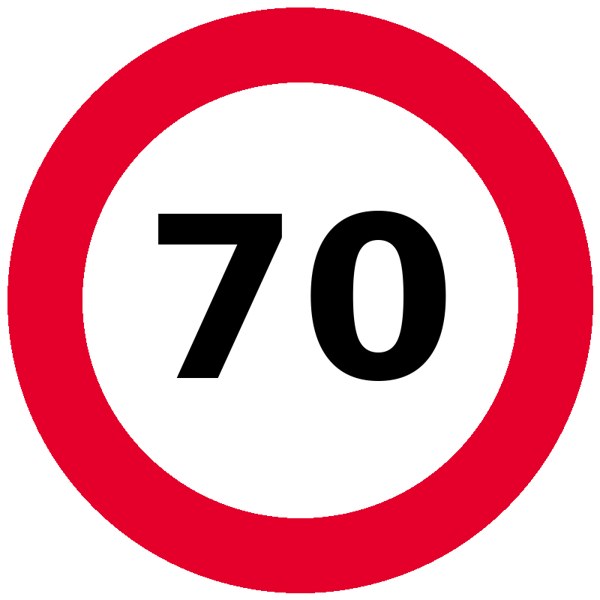 70 mph limit | Mandatory maximum of seventy miles per hour | Regulatory (number in red ring) |
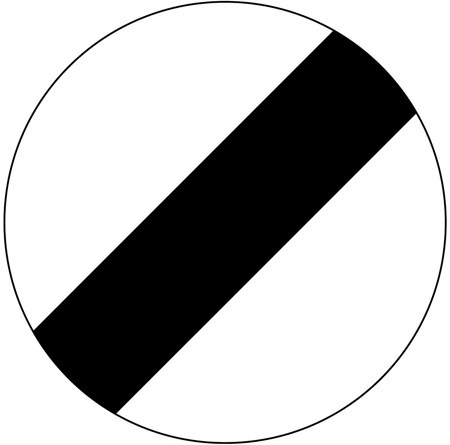 National speed limit | Default maximum for road type, no floor speed | Regulatory (white slash on black) |
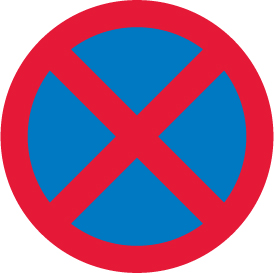 No stopping | Halting forbidden on the signed length | Regulatory red circle |
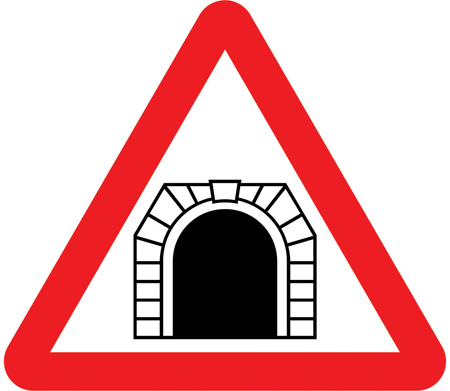 Tunnel ahead | Warning before enclosed road; prepare lights and gap | Warning triangle |
Rules and Penalties
Driving far below a posted minimum on a clear carriageway can support a careless driving report, especially if you force heavy braking behind you. Police may also use failing to comply with a traffic sign where your speed shows deliberate disregard for the plate.
Blocking a motorway live lane after a breakdown without using the hard shoulder or an emergency refuge can bring fixed penalties and points separate from any minimum-speed issue.
Average-speed cameras measure maxima, not minima, but tailgating a slow driver in a minimum zone often leads to secondary speeding or careless charges when the follower swings past at an unsafe margin.
Fleet telematics flag chronic under-speed in lane two on trunk routes. Employers carrying duty-of-care policies may treat tunnel approaches as mandatory refresher routes.
Civil claims after rear-end shunts in tunnels sometimes cite a driver who rolled far under the signed floor without an obstruction ahead, shifting blame toward the slow motorist even when the striking car was too close.
New drivers should not treat the blue circle as permission to ignore maxima elsewhere. You must still obey red-ring limits and gantry orders above your lane.
Check the latest theory test pass mark and book when you are ready via our booking guide.
Minimum speed in Practice
Amira joins the M62 eastbound on a damp evening. A blue circle with fifty in white stands on the slip where it meets the main carriageway, and matrix signs show lane one clear ahead.
She merges at forty-eight miles per hour with dipped headlights already on, checks the mirror, and settles in lane one behind a coach that is holding fifty-one. Traffic in lane two flows faster, but she avoids hovering beside the coach where spray cuts visibility.
Inside the next tunnel link a car ahead slows to thirty without brake lights. Amira drops to match the queue, leaving a four-second gap. The minimum order does not require her to hit fifty into stationary traffic.
Once the obstruction clears, she returns to fifty before the end plate with the diagonal bar through the numerals. Only then does she plan a lane change to pass the coach where overtaking is legal and sight lines are open.
How This Sign Appears on the Theory Test
Car theory papers include fifty multiple-choice questions; you need forty-three correct within fifty-seven minutes. Items may show the blue circle and ask the slowest lawful speed or how it differs from a red-ring plate.
Hazard perception needs forty-four out of seventy-five clips for a car licence in Great Britain. Clips reward smooth pace in tunnel traffic rather than sudden braking when lanes are moving.
Picture questions sometimes hide the plate on a gantry leg. Look for enclosed road lighting, reflective walls and matrix signs before you answer.
Wrong options often quote maximum limits for minimum questions. Eliminate red-ring answers when the stem asks what you must not drive below.
Scenario text may mention fog or roadworks. The safe answer allows slower speeds when you cannot keep the floor safely, not stubborn adherence that hits the car ahead.
Link revision to blue mandatory signs in general. Turn ahead circles share the colour code; only the pictogram changes.
Take a free mock theory test and filter questions on road and traffic signs. Pair that with the warning signs guide for triangle symbols.
Related Road Signs
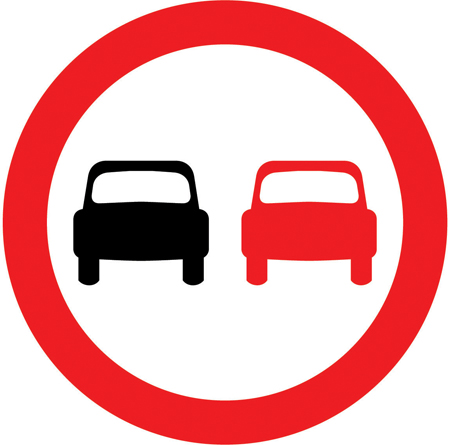
Test Yourself on UK Road Signs
When the blue circle appears, read the white number as a floor for free-flowing conditions, then adjust for queues, weather and your vehicle. Revise mandatory blues alongside red maximums, run a free mock theory test on sign recognition, and notice how tunnel and motorway layouts repeat the same order at every portal.
Frequently Asked Questions
What does a minimum speed sign mean in the UK?
It is a mandatory lowest speed in miles per hour on the signed length when you can drive safely at that pace. The blue circle with a white number creates the order until an end plate cancels it.
Can I drive below the minimum speed in heavy traffic?
Yes when traffic, weather or an obstruction ahead means you cannot keep the posted pace safely. The floor applies to free-flowing conditions, not to driving into stationary queues.
How is a minimum speed sign different from a 70 mph limit sign?
The minimum uses a white number on a blue circle and sets a floor. Maximum limits use black digits in a red ring on white and set a ceiling.
Where am I likely to see a minimum speed sign?
Most often on motorways, tunnel approaches, some slip roads and long dual-carriageway links where steady speed reduces rear-end risk. They are uncommon on ordinary residential streets.
Will the minimum speed sign appear on the theory test?
Yes. DVSA materials include the standard GOV.UK blue-circle artwork. Questions test the floor speed, contrast with maximum limits, and safe behaviour in queues.