
Last updated: October 2026 · Checked against Highway Code
Cycle Route Sign: meaning, rules and what to do
The cycle route sign UK drivers notice on distributor roads is usually a blue rectangular information panel with a white bicycle pictogram, a route number, and an arrow that tells cyclists where the signed corridor continues. It guides pedal traffic; it does not ban cars, create a mandatory cycle lane, or replace the red triangle that warns motorists when riders share the carriageway ahead.
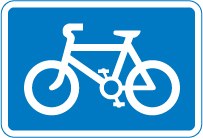
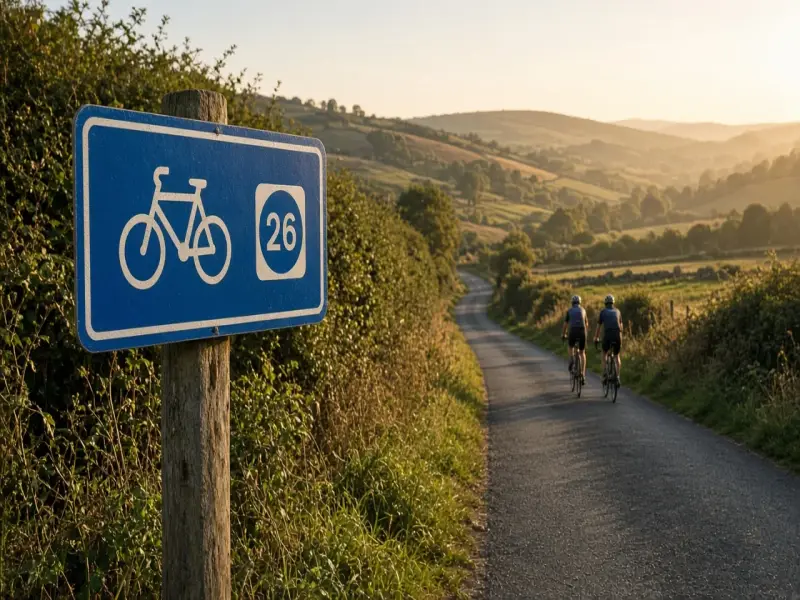
Sign image © Crown copyright, reproduced from GOV.UK traffic sign images under the Open Government Licence v3.0.
What the Cycle route Sign Looks Like
GOV.UK information layouts use a blue field with white legends: a bicycle in profile, often a route number such as 41 or 1, and a white chevron or arrow showing the continuation. Panels may be square on a finger post or rectangular on a verge mast beside a junction where a traffic-free link rejoins tarmac.
National Cycle Network signing follows Sustrans coordination: numbered routes stitched from canals, old railways, and quiet lanes since the network launch in the mid-1990s. The familiar blue and white boards do not always say “NCN” in full; the number inside a red square or beside the bike is the clue that you are on a mapped corridor, not a casual leisure path.
Repeaters appear after side turns on long-distance spines such as the Bristol and Bath Railway Path approaches or the Hull to Hornsea chalkland link. Drivers see the blue panel while cyclists read the same post for confirmation. White supplementary plates may quote miles to a town, “Shared path”, or “Dismount” where a toucan mouth narrows.
Learners confuse the blue direction panel with the red-bordered warning triangle that shows a bicycle alone, with the mandatory blue circle that orders cycles only on a track, and with brown tourist boards that promote viewpoints without naming a numbered route. Shape and colour grammar first: blue rectangle informs; red triangle warns; blue circle regulates.
Temporary yellow boards during sportives may echo a route number while diversions run. Permanent blue artwork should match the symbol set you revise for the theory test even when event marshals add handwritten arrows on plastic stands.
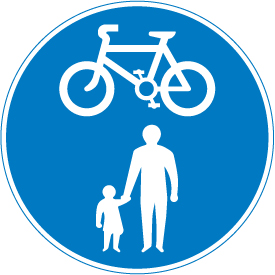
Cycle route ahead warning triangles tell motor traffic to expect riders on the carriageway soon. Cycle-only mandatory circles allocate a strip to pedal cycles. Shared-use entry plates may pair pedestrian and bicycle symbols. The blue numbered direction panel helps riders stay on the corridor; drivers should still apply Rules 163 and 211 whenever the signed line meets the road you drive.
What the Cycle Route Sign Means
Highway authorities and route partners erect blue cycle direction panels where a National Cycle Network or local numbered link turns off a B road, crosses a roundabout exit, or continues through a village on a parallel path. The board does not grant cyclists priority over every junction; it marks the line on the map that maintenance crews and gritting schedules treat as the official route.
Rule 142 in The Highway Code expects early reading of direction signs. For motorists that means noticing the blue panel before you overtake a queue or swing left across a path mouth. The sign names a corridor; it does not invite you to drive in the cycle strip or to ignore give-way markings painted beside the kerb.
Sustrans and councils publish route cards online, yet live posts still matter where phone signal dies in valleys. Tara’s instructor on the worked drive below drills the habit of glancing at verge fingers after every roundabout because sat-nav rarely announces “NCN 41” in the same breath as a fuel stop.
Some overlaps run on-road for hundreds of metres without coloured paint. The blue panel at the start does not shorten your duty to leave passing room. A rider following route 1 along a coastal A road is still traffic; the information board simply tells them they have not strayed from the signed spine.
Path mouths beside the panel may be shared with walkers, horses on bridleways, or families with tag-alongs. “Shared path” rectangles refine the message. Drivers must not block those entries when dropping passengers; parking enforcement and careless obstruction rules still apply on the approach lane.
Route numbers can change when councils reroute around flood closures or new housing estates. The pictogram family stays constant even when the digit on the plate updates. Theory items test the bicycle-on-blue meaning, not whether you memorised every mile of route 57.
Night riding depends on reflectivity on the blue face and on riders using lights. The panel does not light the path for you. Dip headlights when oncoming cyclists approach on a shared overlap and reduce speed where the arrow points into unlit woodland.
Northern Ireland and Scotland use the same information colour code on most public roads. If you revise in Belfast after studying in Yorkshire, the numbered blue panel still marks a cycle corridor on the arrow shown, separate from motorway direction blues.
Before you supervise learner Tara near Bristol, rehearse naming the plate aloud: blue field, white bike, route number, arrow direction. That ritual separates information boards from the red triangle she last saw on a mock test screenshot.
Sportive weekends multiply riders on numbered corridors. Treat every summer Saturday on a signed overlap as unpredictable density even when no extra temporary sign is out.
Do not follow a group ride into a traffic-free gap unless your vehicle class is allowed. The blue panel guides cyclists; a white “No motor vehicles” circle on the same post still binds cars.
Passing places on narrow lanes matter when a route rejoins tarmac. Tara’s examiner on a Somerset lesson noted whether she waited for oncoming traffic before overtaking a pair climbing toward a blue repeater.
Delivery drivers must not use a cycle path mouth as a shortcut to a shop loading bay. The direction board is not a slip road for vans unless plates exempt access at stated hours.
After rain, shared exits dump mud on the carriageway. Expect riders to steer around skid patches and leave them room without honking as intimidation.
If you cycle the same corridor, dismount plates at toucan mouths are binding even when the blue number panel suggests a continuous route. Walk when the rectangle says so.
Report faded blue faces to the council street lighting team. Sun-bleached numbers confuse both drivers and riders, and complaints help secure replacement sheeting before the autumn evenings draw in.
Highway Code rules 61, 142, 163 and 211 (cycles, planning and vulnerable road users)
Cycle route vs Similar Signs
| Sign | Meaning | Legal or warning? |
|---|---|---|
| Cycle route | Direction along a numbered cycle corridor | Information (blue direction) |
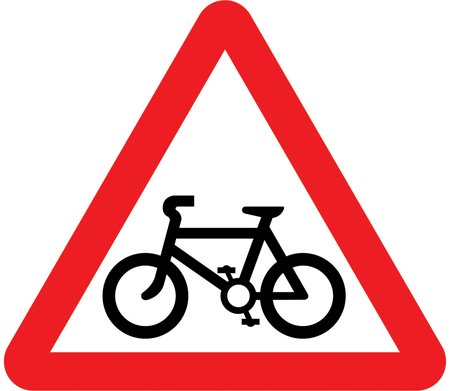 Cycle route ahead | Cyclists likely on or crossing the road | Warning triangle |
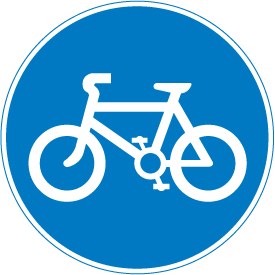 Cycle only | Mandatory pedal cycle route | Regulatory blue circle |
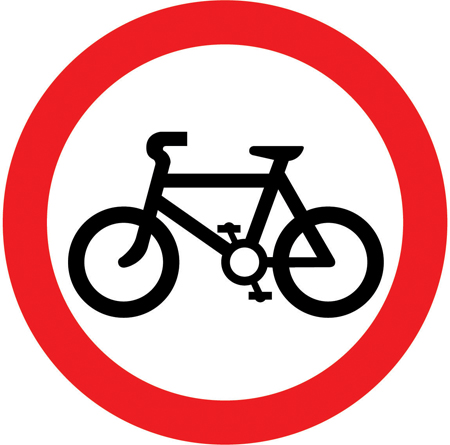 No cycling | Pedal cycles prohibited | Regulatory red circle |
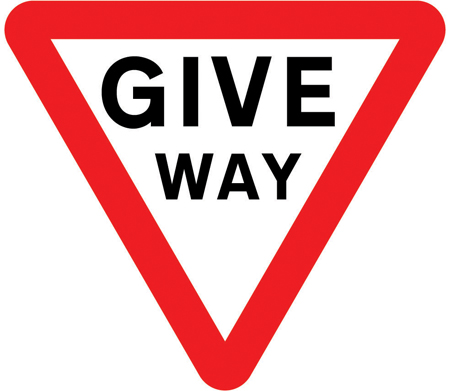
 Give way | Yield at the marked line | Regulatory triangle |
Rules and Penalties
The blue direction panel itself does not carry a fixed penalty tariff. Enforcement follows how you drive once you know a signed corridor crosses your path: close passes, turning across committed riders, or blocking path mouths can support careless driving attention.
Stopping on double yellows beside a blue finger post because a passenger wanted a photo still risks a civil parking charge. The tourist-style information colour does not waive kerbside orders on the main road.
Driving in a mandatory cycle-only strip after you passed a blue number board remains a separate offence if ground markings and circles forbid motors. Navigation colour and regulation colour must be read together on the same mast.
Theory tests punish answers that treat every bicycle symbol as a warning triangle. Learn the rectangle versus triangle silhouettes before exam day.
Insurers take cycle collisions seriously even when criminal charges are not pursued. Dashcam showing you had space to wait behind a route group weighs heavier than arguing you never noticed the blue panel.
Check the latest theory test pass mark and book when you are ready via our booking guide.
Cycle route in Practice
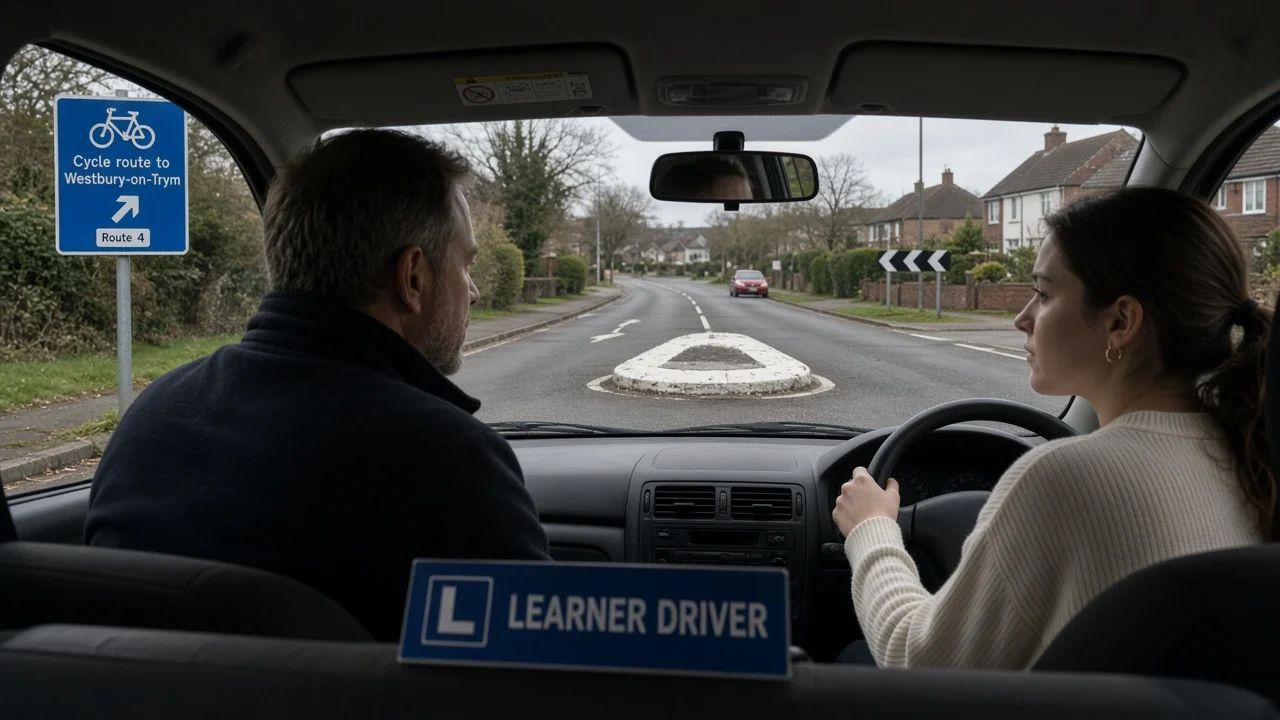
Tara is on a Thursday lesson with her instructor, practising semi-rural routes between Keynsham and the Bristol and Bath Railway Path approaches before her theory retake. Rush-hour spillback makes the A4 distributor feel tight, and her instructor asks her to read information signs instead of staring at the sat-nav arrow alone.
Before a mini-roundabout she spots a blue verge panel: white bicycle, red square with the number 41, and a left-pointing chevron toward a tree-lined gap. Tara checks the nearside mirror, signals left in good time, and holds the lane without cutting the gore when a van behind closes quickly.
She does not turn into the gap because the lesson car may not use the traffic-free link. She notes the panel for hazard memory: riders may cross the roundabout exit she is about to leave. At the give-way line she pauses for a pair on hybrid bikes following the same number plates toward the path mouth.
Half a mile later a red triangle with a bicycle alone appears before a blind bend. Tara eases off the throttle, recalling that the blue board named the corridor while the triangle warns that riders may be on the tarmac ahead. She overtakes only on a straight with a full car width of clearance.
That evening her mock app shows a cropped blue panel with only the bike pictogram. She selects the answer describing a cycle route direction sign, not “cyclists crossing” or “no cycling”, and ties the JPEG to the Keynsham scene she drove in daylight.
How This Sign Appears on the Theory Test
Picture items show the white bicycle on blue with or without a route number. Link the layout to navigation along a cycle corridor, not to a motor ban. Reject red triangles unless the stem clearly shows warning artwork.
Scenario questions describe a driver who ignored a path mouth beside a numbered blue panel and turned across a rider. The safe pattern is mirror, yield, and treat the corridor as foreseeable once the finger post was visible.
Distractors swap in mandatory cycle-only circles, no cycling bars, and park-and-ride P plus bus bands. Read colour and shape before you tap.
Hazard perception on suburban distributors rewards early easing when small shapes move from a signed gap, even if the blue board itself is off-screen in the clip.
Car candidates need forty-three correct answers from fifty questions. Filter revision on information signs alongside vulnerable road user chapters so blue panels and red triangles stay in separate mental folders.
Take a free mock theory test and filter questions on road and traffic signs. Pair that with the warning signs guide for triangle symbols.
Related Road Signs
Test Yourself on UK Road Signs
When the blue panel shows a bicycle and route number, cyclists receive a map line and drivers receive a courtesy heads-up that the corridor intersects the carriageway you share. Pair this page with the cycle route ahead guide for triangle warnings, then run a free mock theory test until rectangles and red borders feel automatic under time pressure.
Frequently Asked Questions
What does the blue cycle route sign mean for drivers?
It marks the direction of a signed cycle corridor, often a National Cycle Network number. It does not ban cars by itself, but it tells you where riders may enter or cross the road so you can mirror early and leave room.
How is this different from the cycle route ahead triangle?
The blue rectangle guides cyclists along a route. The red warning triangle tells motor traffic that cyclists are likely on or crossing the road ahead. Many corridors use both: blue fingers at junctions and triangles before awkward overlaps.
Do National Cycle Network signs always show the letters NCN?
Not always. Many posts show only a route number beside the bicycle pictogram. The blue and white layout and number square are the practical clues that you are on the mapped network rather than a generic path.
Can I drive on a path beside the blue panel?
Only when regulatory plates and ground markings allow your vehicle class. The information board guides cyclists; separate no motor vehicles or access-only plates still control whether cars may enter.
Will the theory test include this sign?
Yes. Items often crop the bicycle on blue and ask what the panel indicates. Learn the information rectangle, then contrast it with warning triangles and mandatory cycle-only circles.