
Last updated: October 2026 · Checked against Highway Code
Cycle Only Sign: meaning, rules and what to do
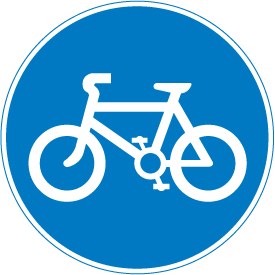
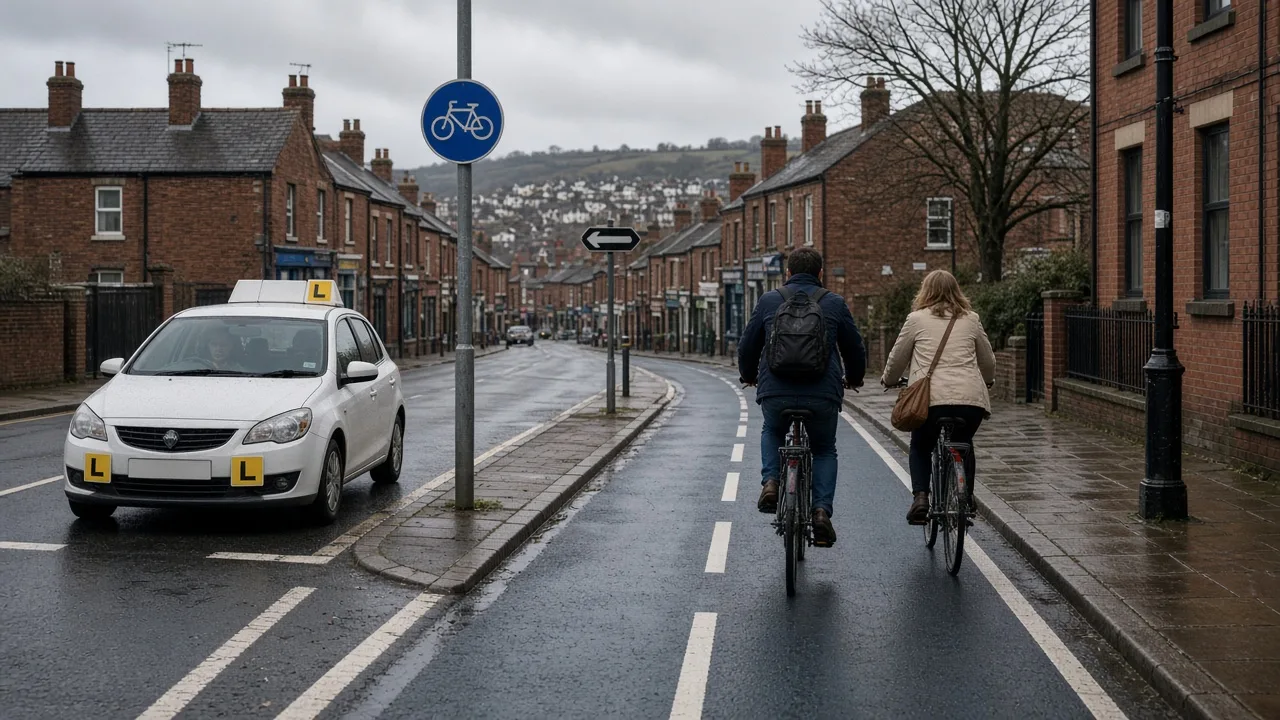
The blue mandatory circle with a white bicycle tells you that only pedal cycles may use the path or lane ahead unless a supplementary plate widens the allow list. Drivers must not treat the strip as a queue bypass, and cyclists must not assume every blue bike symbol bans cars on the whole street.
Sign image © Crown copyright, reproduced from GOV.UK traffic sign images under the Open Government Licence v3.0.
What the Cycle only Sign Looks Like
The face is a solid blue disc with a thin white border and a white bicycle pictogram in profile, wheels and handlebars clear against the blue field. There is no red ring and no diagonal bar; the order is positive permission for cycles on that facility rather than a warning triangle about riders on the open road.
Dimensions follow the Traffic Signs Regulations and General Directions family for mandatory route plates. On urban posts the circle may sit above a rectangular panel listing hours, “Except for access”, or distance to the end of the segregation. Ground markings often repeat the order with a solid white line drivers must not cross.
Installations guard contra-flow cycle tracks beside one-way streets, riverside paths that leave the carriageway, short cuts through parks linked to commuter corridors, and the cycle side of some bus gate layouts. Repeat plates appear after side paths join so late entrants see the allow list.
Learners confuse it with the red circle and barred bicycle that forbids riding, with the red triangle that warns motorists about cyclists ahead, and with blue rectangular direction panels that name National Cycle Network numbers without creating a motor ban. Colour plus symbol family matters: blue circle orders; red circle prohibits.
Temporary versions on metal frames copy the GOV.UK artwork during festivals or roadworks when a signed diversion keeps cycles off the main carriageway. Treat any official blue bicycle circle as binding for your vehicle class until an end plate or a clearly different order applies.
No motor vehicles uses a red ring with car and motorcycle pictograms to ban engines while walkers and cycles may continue. No cycling does the opposite for riders. Pedestrian-only blue plates name foot traffic positively. The cycles-only circle is an allow list for pedal cycles on the signed facility; it does not by itself turn every adjoining carriageway into a Dutch-style woonerf unless paired plates say so.
What the Cycle Only Sign Means
Highway authorities install the plate where separating cycle movement from general traffic reduces conflict: approach lanes to toucan crossings, protected strips past schools, and links between greenways and city centres. The order begins at the sign and runs along the signed length until an end plate, a break in markings, or a junction where no matching circle faces your direction.
Rule 140 in The Highway Code reminds drivers to give cyclists at least as much room as you would a car when overtaking, and Rule 239 stresses that you must obey traffic signs. For motorists the practical reading is simpler: do not drive or park in the cycle facility when the blue bicycle circle and solid white line say cycles only, even when the lane looks empty during a quiet lunch hour.
Rule 61 encourages cyclists to use cycle routes when convenient. Where this mandatory plate appears, riders should stay inside the signed corridor rather than weaving on and off to skip a red light, unless road markings show a shared section that legally rejoins the carriageway.
Electrically assisted pedal cycles normally count as cycles in theory scenarios unless a local trial plate names powered two-wheelers separately. Pure pedestrians must not walk in a cycles-only track unless a shared-use plate later appears. Mobility scooters on the carriageway follow separate local rules and are not bicycles.
The plate does not grant cyclists immunity from give-way lines or pedestrian crossings. A rider who barrels across a side road without looking can still fail a practical cycling course or attract careless cycling attention. The sign allocates space; it does not delete junction priority.
Sat-nav may still route cars down a one-way street beside a contra-flow track. Your legal duty follows the plates at the kerb, not the arrow on the screen. Ian’s instructor in the worked example below drills that habit because examiners punish last-second swerves into a cycle strip.
Loading bays sometimes sit next to cycle-only lanes with time bands on white rectangles. A van may enter during the stated window while other hours remain pedal-only. Read the clock on the dashboard before you follow a delivery driver who had lawful access ten minutes earlier.
Enforcement blends camera evidence on bus gates, civil penalty charges where councils treat lane intrusion as a moving traffic offence, and police stops when a car endangers a rider by using the strip as a sprint lane past a jam.
Before you turn into a side street during lessons, scan both kerbs for the blue bicycle circle paired with a solid white line. Naming the plate aloud helps Ian separate cyclist zones from optional advisory paint.
Contra-flow layouts feel unnatural because oncoming cycle traffic approaches from the direction you were taught to treat as wrong-way. Reduce speed, mirror early, and avoid opening a door into the track after parking legally on the main carriageway.
Taxis and private hire may hold permits on some corridors. Do not copy a black cab into the strip unless your plate shows the same exemption symbol.
Parents dropping children at school must not use a cycle-only approach as a kiss-and-ride lane. Use the signed motor drop zone or park outside the restriction even when other cars are doing the wrong thing.
Winter grit can hide white lines while the upright plate remains valid. Trust the post and slow before you steer across a boundary you cannot see under slush.
Cyclists should watch for pedestrians stepping off pavements where the track meets shop fronts. A cycles-only order does not remove the duty to give way when someone is already crossing.
If you manage a site, align ground markings with the plate after resurfacing. Faded paint confuses both drivers and riders, and complaints spike after every contractor leaves a gap.
Driving tests in cities such as Manchester, Cambridge, and parts of London increasingly cross signed cycle corridors. Examiners treat entry into a mandatory cycle lane as a serious fault when it forces a rider to brake or swerve.
Highway Code rules 61, 140, 239 and 255 (cycles, signs and pedestrian crossings)
Cycle only vs Similar Signs
| Sign | Meaning | Legal or warning? |
|---|---|---|
| Cycle only | Pedal cycles may use this route | Regulatory blue circle |
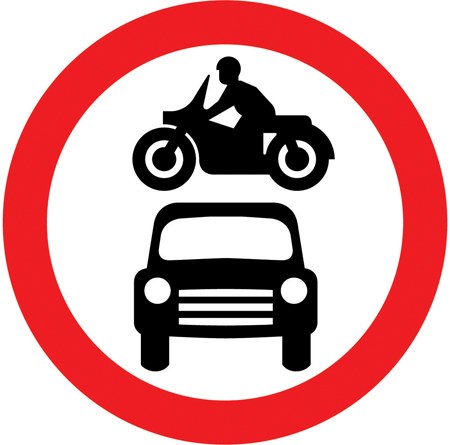 No motor vehicles | Engines banned; cycles may continue | Regulatory red circle |
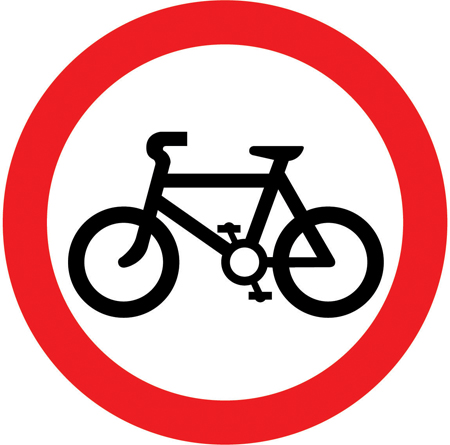 No cycling | Riding forbidden for cyclists | Regulatory red circle |
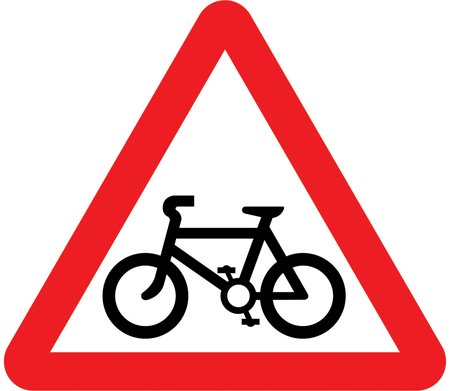 Cycle route ahead | Drivers expect cyclists on the road | Warning triangle |
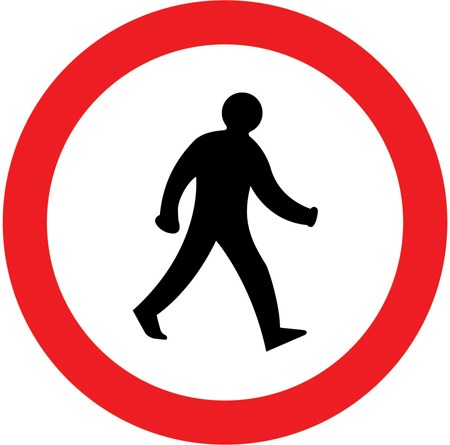 No pedestrians | Walking forbidden on the route | Regulatory red circle |
Rules and Penalties
Driving in a mandatory cycle lane when signs forbid motor traffic can support fixed penalties or moving traffic charges where local authorities enforce bus lane and cycle track cameras.
Police may stop drivers who use a cycle-only strip to pass queues on urban corridors, especially when CCTV shows a solid white line and the blue bicycle plate clearly facing the approach.
Insurance disputes after a bump in a cycle facility often turn on whether the car was lawfully in the strip. Dashcam footage that shows the plate strengthens or weakens a claim.
Theory tests pair the white bicycle on blue with short stories about one-way streets and retail fronts. Choose the answer that allows pedal cycles while keeping cars out unless a plate exempts access.
Cyclists who ride on footways beside a cycles-only track still risk pavement cycling offences. The blue circle does not push you onto the pavement; it marks where your wheels belong on the carriageway side.
Repeat motor intrusions on camera-controlled gates can bring higher charges or educational referrals in some boroughs, similar to bus lane enforcement programmes.
Check the latest theory test pass mark and book when you are ready via our booking guide.
Cycle only in Practice
Ian is midway through lessons with his driving instructor, Mo, in a northern city centre. They approach a one-way street where a blue circle with a white bicycle faces cross traffic and a solid white line separates a contra-flow cycle track from the carriageway.
Mo asks Ian to describe who may use each side. Ian names the cycle only plate correctly, then admits he nearly steered right earlier in the week to skip a bus queue outside a café. Mo has him practise stopping before the line, checking the nearside mirror, and holding lane position while two riders pass head-on in the track.
At the next junction Ian signals left. A cyclist in the track continues straight with priority on the signed corridor. Ian waits with wheels straight until the rider clears his bumper, then completes the turn at walking pace. Mo notes the manoeuvre on the app: recognition plus patience, not heroics.
That evening Ian opens a mock theory test and sees the same blue bicycle disc beside a pedestrianised side road story. He picks the option that keeps cars out of the cycle facility while allowing riders through, rejecting answers about warning triangles and barred red circles.
On the following lesson they revisit the street in rain. Ian spots the plate before the windscreen mists, repeats Mo’s phrase “blue bike means their lane, not your shortcut”, and earns a quiet nod at the kerb. The symbol now means a lived cyclist zone, not an abstract exam JPEG.
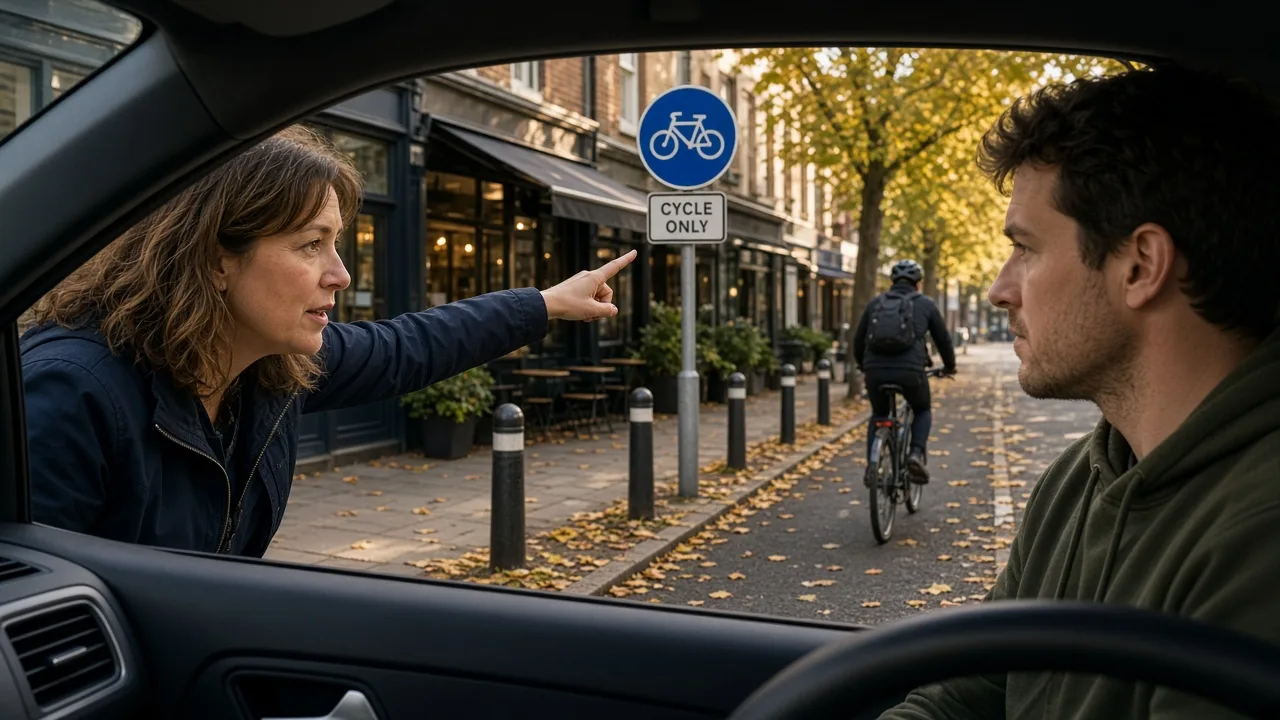
How This Sign Appears on the Theory Test
Picture items show the white bicycle on blue and ask which class may use the route. Link the disc to pedal cycles allowed, not to a motor ban on the entire city unless the stem adds a no motor vehicles plate.
Distractors swap in the red barred bicycle, the ahead warning triangle, and blue rectangular route numbers. Read shape first: blue circle equals mandatory instruction about who may use the facility.
Scenario stems describe a driver tempted to use an empty strip beside a jam. The safe legal answer keeps the car out of the cycle-only length unless a supplementary plate allows access or loading.
Hazard perception clips on urban one-way pairs reward early mirror checks when a thin silhouette approaches against the flow. Train your eyes to notice blue posts at the mouth of contra-flow tracks.
Filter revision on regulatory signs, then reread cyclist road rules in the Highway Code. Examiners assume you know that solid white lines with bicycle symbols are not optional paint for cars in a hurry.
Take a free mock theory test and filter questions on road and traffic signs. Pair that with the warning signs guide for triangle symbols.
Related Road Signs
No motor vehicles
Bans engines while cycles may still be allowed.
No cycling
Opposite order: riding forbidden for cyclists.
Cycle route ahead
Warns drivers about riders on the carriageway.
No pedestrians
Foot traffic ban on routes that may allow cycles.
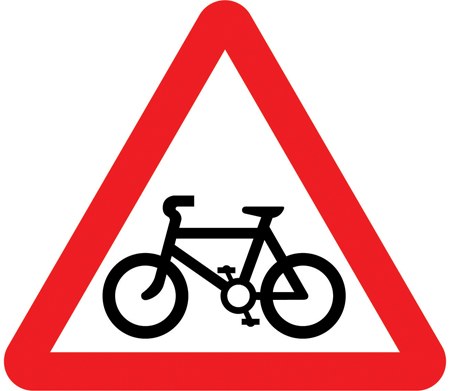
Bicycle crossing
Warning where riders cross motor traffic.
Test Yourself on UK Road Signs
Treat the blue bicycle circle as a boundary: riders belong inside the signed strip, and drivers belong outside unless plates say otherwise. Pair this guide with the blue circular signs article and a free mock theory test so cyclist zones feel as clear on exam day as they do when your instructor names the plate on a real lesson.
Frequently Asked Questions
Can cars ever drive where a cycle only plate is posted?
Only when supplementary white plates name lawful motor access, loading hours, taxis, or emergency exemptions. Without those plates, stay out of the signed cycle facility even if it looks wide enough for a car.
How is this different from the cycle route ahead warning triangle?
The triangle warns motorists that cyclists may be on the road ahead. The blue circle positively reserves a route or lane for pedal cycles. One alerts drivers; the other allocates space.
Does the plate mean cyclists have priority at every junction?
No. It defines who may use the track or path. Give-way lines, traffic signals, and pedestrians on crossings still govern priority. Ride defensively where the track meets side roads.
Can I walk my dog in a cycles-only lane?
Usually not if the order is cycles only without a shared-use plate. Use the footway or a parallel path. If a shared section is signed later, follow that allow list instead of guessing.
Will using the lane to skip traffic fail my driving test?
Entering a mandatory cycle facility when signs forbid motor traffic is commonly marked as a serious fault if it affects a rider or shows poor lane discipline. Read the plate before you steer toward an empty-looking strip.