
Last updated: October 2026 · Checked against Highway Code
Tourist Information Sign: meaning, rules and what to do
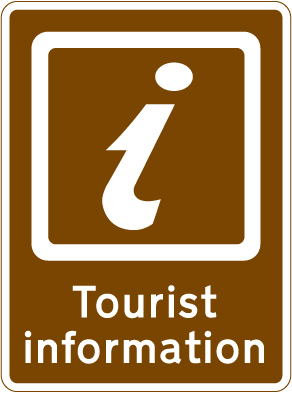
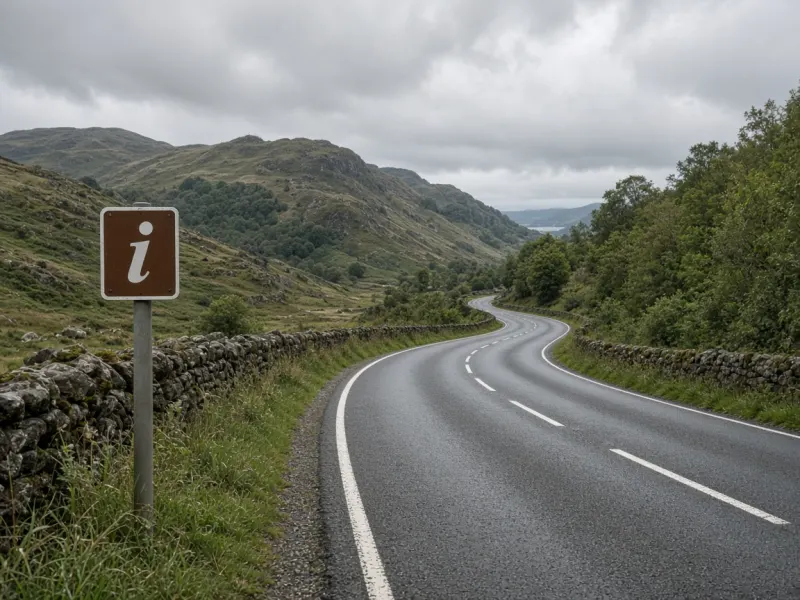
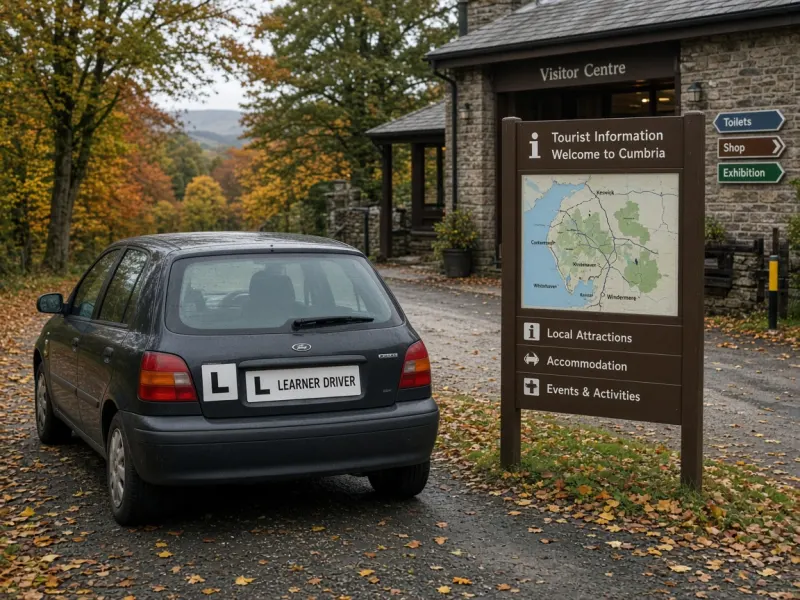
This brown direction panel carries white lettering, often showing a square frame around a lowercase italic i and the words Tourist information, plus an arrow that points you toward an official visitor centre or information point.
Sign image © Crown copyright, reproduced from GOV.UK traffic sign images under the Open Government Licence v3.0.
What the Tourist information Sign Looks Like
GOV.UK catalogue diagram 2205 shows the classic layout: chocolate-brown field, thin white border, white square outline enclosing a cursive lowercase i, then the words Tourist information in Transport-style lettering. Directional variants add a white chevron and a distance such as three quarters of a mile on the same brown face.
Brown is the colour code for tourist and leisure facilities on non-motorway roads. The board is rectangular with rounded corners, or tapers to a chevron when the arrow is part of the panel shape. White text and symbols stay high contrast against wet lakeland evenings.
The plate is not a blue motorway direction sign and not a red warning triangle. It does not show a mandatory speed roundel. Green primary-route boards may list the same town name while brown arms peel toward a visitor centre car park or lakeside pier.
Repeaters appear after side junctions on A591-style approaches where day-trippers join late. Sat-nav may say Visitor centre without showing the brown i artwork; trust the live post when phone signal dies between fells.
Service area composites sometimes embed the same italic i beside fuel and toilet pictograms on a white field. That i still means information, but the brown tourist board alone is the clue in picture items that crop the symbol next to attraction names.
Brown boards also promote named attractions such as steam railways or historic houses with pictograms instead of the i square. Blue panels with a white H point to hospitals; white boards with a blue P point to parking. The framed i combines with visitor-centre wording or distance, not emergency care or general car parks unless a separate arm says so.
What the Tourist Information Sign Means
Highway authorities publish brown visitor boards where drivers need early notice of an official visitor centre before narrow village streets clog. The board answers where to get maps and advice, not what hazard sits on the carriageway ahead.
Rule 142 in The Highway Code expects you to read direction signs in good time. For brown tourist arms that means signalling before hatched gores on busy lake roads, especially when coaches and cyclists share the same approach.
Visitor centres may share a junction with pay-and-display parking or a pier ticket office. The brown i points to the information building on the arrow shown; white parking plates on the same post still define whether you may stop on the main road.
Distances on brown panels are often fractions of a mile. They help you choose lanes before the chevron, but they do not promise empty car parks on bank holidays. Local stewards may divert you to overflow fields using temporary yellow boards that reuse the same wording.
Attraction names on neighbouring brown faces can list boat trips, museums, or viewpoints while the i arm lists the central desk. Pick the symbol that matches what your passengers need rather than the first brown rectangle you see.
Pedestrian-heavy forecourts near visitor centres stay subject to give-way lines and no-stopping orders. The tourist information direction panel does not exempt you from double yellows on the spine road outside opening hours.
Night driving keeps retroreflective white faces visible, yet glare from wet windscreens can hide smaller distance numerals. Dip headlights for oncoming traffic and reduce speed where tourists cross between parked cars without looking for learner plates.
Northern Ireland uses the same brown tourist family on most public roads. If you revise in Belfast after studying in the Lakes, the i pictogram still marks visitor information on the arrow shown.
Before you commit to a brown exit, decide whether you need the desk or merely a named attraction on the next arm. Last-second swerves across solid white lines unsettle following traffic on winding A-roads.
When you supervise learner Chloe on a Windermere lesson, rehearse naming the brown board aloud: italic i, visitor centre arrow, then scan for pedestrians near the forecourt. Examiners reward calm lane choice more than creeping toward a queue in the wrong lane.
Allow time for car park stewards at peak season. A visitor centre loop is not the place to practise clutch control in a tight queue; select first gear once and leave a gap to the car ahead.
If you miss the turn, continue to the next safe lay-by rather than reversing on a blind bend. Many centres have a second signed approach from another village arm.
Do not block coach set-down bays while you hunt for a map inside. Brown tourist wording does not cancel no-stopping plates beside a double red line on the approach.
Winter grit and fallen leaves make chevron mouths slippery. Brake before the bend, not on the zebra crossing that often sits just inside the entrance.
Electric car chargers sometimes sit in a corner of the same site with separate white plates. Follow secondary signs rather than blocking the i arm while you hunt a socket.
Out-of-town retail parks may mimic visitor wording on private boards. Council sites usually show the standard GOV.UK brown layout with the framed i rather than a shop logo alone.
Highway Code rules 142 to 144 (direction signs and planning)
Tourist information vs Similar Signs
| Sign | Meaning | Legal or warning? |
|---|---|---|
| Tourist information | Route to official visitor information on arrow shown | Information (brown) |
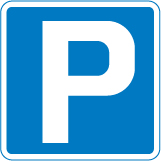 Parking | Signed car parking without visitor desk | Information (white or blue P) |
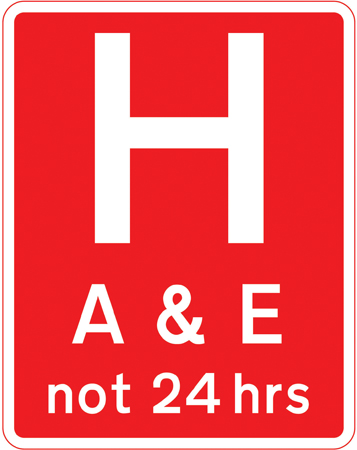 Hospital direction | Route to hospital facilities on blue panel | Information (blue) |
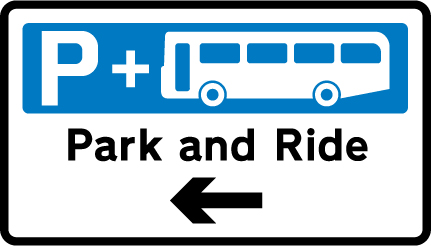 Park and ride | Car park linked to bus services | Information (white direction) |
 Ring road panel | Stay on orbital route around the core | Direction (green or white) |
Rules and Penalties
The brown direction board itself does not carry a fixed penalty schedule. Fines bite when you break orders on the approach: stopping on clearways, reversing on busy bends, or blocking coach bays.
Civil parking charges apply if you overstay paid time or leave a car in a closed overflow field overnight. Operators may tow vehicles that block fire routes even when the centre looked open at entry.
Police may stop drivers who endanger pedestrians near forecourts or who mount pavements while hunting a shortcut. Dashcam footage showing a legible tourist arm does not excuse a later no-entry plate.
Driving examiners treat wrong-lane approaches and illegal reverses as serious faults when they force others to react. Chloe’s instructor logs those moments separately from gentle navigation misses on unfamiliar villages.
Theory tests seldom quote one Lake District town name alone. They show the brown i artwork and ask what service awaits, or they pair the board with distractors about blue hospital panels or motorway countdown markers.
Check the latest theory test pass mark and book when you are ready via our booking guide.
Tourist information in Practice
Chloe is on a spring half-term lesson with her instructor, practising visitor-centre approaches around Windermere before a family holiday in the Lake District. Coaches and walkers crowd the A591 corridor, and her instructor asks her to use signed information points instead of relying on a phone map with patchy signal.
Near Ambleside she spots a brown visitor-centre board with the white framed i, the words Tourist information, and a right-pointing chevron with a three-quarter-mile distance plate. She checks the nearside mirror, signals right in good time, and drifts into the deceleration lane without crossing the solid white line that separates through traffic.
A hire car ahead hesitates, then swings right at the last moment across hatched markings. Chloe holds her lane and follows the signed arm at a steady twenty-five miles per hour. At the mouth of the visitor centre she reads a supplementary white plate for pay-and-display parking and yields to a family crossing from the coach lay-by.
She does not stop on double yellows beside the main road because the brown board appeared late. Instead she uses the marked bays, applies the handbrake, and walks to the desk while her instructor explains that the direction panel brought her to the site but kerb plates still govern how long she may wait on the highway.
On the return leg they pass the same board from the opposite carriageway. Chloe notes that the chevron now points left for inbound drivers and links the scene to a theory mock item that cropped the symbol to the i square alone. She picks the answer that describes a visitor information centre, not a motorway exit countdown or a hospital H panel.
How This Sign Appears on the Theory Test
Picture items show the brown field with the framed italic i and ask what facility the arrow indicates. Choose visitor or tourist information, not hospital care, plain parking without an i, or blue motorway markers unless the stem shows those colours.
Scenario questions describe a driver stopping on double yellows after seeing brown tourist wording. The lawful pattern is to continue to signed parking or a lay-by; the board does not cancel waiting restrictions on the main road.
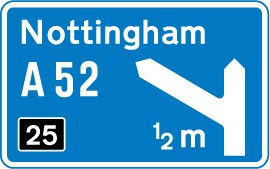
Distractors swap in green primary-route town names, park-and-ride P plus bus panels, and private retail logos on white fields. Read the official brown layout before you tap.
Navigation items may ask which lane to choose before a village fork signed for tourist information. Treat the board like any direction sign: move early, do not cut across hatchings, and ignore sat-nav if the arrow on the post points differently.
Car candidates need forty-three correct answers from fifty questions within fifty-seven minutes. Filter revision on brown tourist rectangles alongside blue facility chapters so colour families stay distinct under time pressure.
Take a free mock theory test and filter questions on road and traffic signs. Pair that with the warning signs guide for triangle symbols.
Related Road Signs
Test Yourself on UK Road Signs
When brown shows the framed i beside Tourist information, you are being directed to an official visitor desk, not to a speed limit or hospital route. Practise the pictogram on a free mock theory test, then walk a real centre forecourt before your practical test week so queues, coaches, and parking plates feel familiar.
Frequently Asked Questions
What does the tourist information sign mean?
It points you toward an official visitor information centre on the arrow shown. The brown board with the white i symbol is navigation, not a warning about hazards on the main road.
Why are tourist signs brown in the UK?
Brown is reserved for tourist and leisure facilities on direction signs. It separates visitor attractions and information from blue motorway panels, green primary routes, and white local boards.
Can I stop on the main road when I see the sign?
Only where waiting plates allow. The tourist information panel does not cancel double yellows, clearways, or bus-stop bays on the approach.
How is this different from a parking sign?
Parking signs focus on leaving your car, often with a blue P. Brown i boards highlight the visitor desk or information point, though parking may be signed separately on the same post.
Will the theory test show this sign?
Yes. Items often use the brown board with the framed i and ask what service awaits. Learn the colour and symbol, not just one holiday town map.