
Last updated: October 2026 · Checked against Highway Code
Parking Sign: meaning, rules and what to do
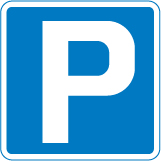
The parking sign UK drivers recognise is a blue square with a white capital P: an information plate that points you towards a parking place, car park, or marked bay area ahead. It does not cancel yellow lines, time limits, or pay-and-display charges by itself; it tells you where lawful parking may exist once you read every plate, machine label, and road marking on the ground.
Sign image © Crown copyright, reproduced from GOV.UK traffic sign images under the Open Government Licence v3.0.
What the Parking place Sign Looks Like
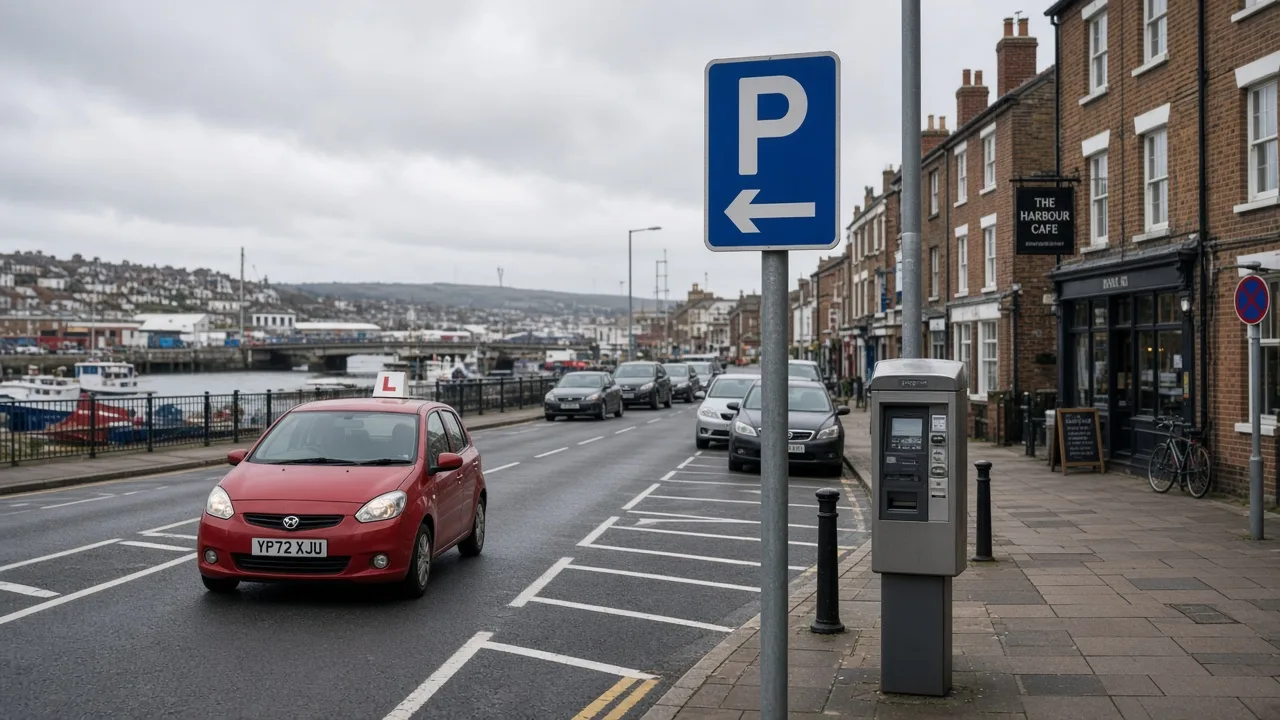
The standard GOV.UK parking place symbol is a blue square with a thick white border and a white letter P centred in the field. On direction boards the P may sit beside arrows, distance plates, or the words “Car park”. On small repeater posts it can face traffic entering a side street where bays begin after the junction.
Colour coding follows information signs: blue background for motorist services, white legend, no red ring. That separates the plate from regulatory no-waiting circles with red bars, which forbid stopping rather than inviting you towards a facility. Brown tourist signs may also mention parking near attractions, but the blue P is the core traffic-sign family for general parking places.
Supplementary rectangles often list “Pay and display”, “Residents only”, “Disabled badge holders”, or clock hours. Read them before you commit, because the P alone does not quote price, maximum stay, or whether cashless apps are accepted. At night, retroreflective blue sheeting catches headlights while bay markings may be harder to see in rain.
Learners confuse the information P with a prohibition sign or assume any blue panel grants free parking. Others mix it up with park-and-ride direction boards that combine transport pictograms with parking guidance. The plain P marks a place; separate white bay lines and ticket machines define the contract once you stop.
Multi-storey entrances, hospital forecourts, and retail parks repeat the symbol on gantries and bollards. Temporary event signage sometimes copies the P on yellow boards; treat official blue plates as navigation cues and check whether event stewards added extra payment rules on the day.
No-waiting and no-loading orders use red-ring regulatory circles to ban kerb use on a length. The blue P information plate directs you towards permission elsewhere. Park-and-ride panels describe combined parking and public transport. Pair the P with ground markings: dashed lines, solid white boxes, and disabled bay symbols tell you which slot is lawful for your vehicle class.
What the Parking Sign Means
Highway authorities install parking place signs where off-street capacity, marked on-street bays, or pay-and-display zones help drivers leave the running carriageway without blocking traffic. The plate is advance notice: a facility or bay group lies ahead or beside the route the arrow indicates, not an automatic right to stop wherever you like on the approach road.
Rule 239 in The Highway Code expects you to park only where signs and markings allow, with headlights and parking lights used correctly at night. Rule 240 adds that you must not park where you would obstruct traffic, block crossings, or endanger others. The information P helps you find those lawful spaces; it does not override keep-clear zigzags, bus stops, or double yellow lines on the main road.
Pay-and-display bays use white box markings on the carriageway, a ticket machine or phone payment code on the kerb, and often a secondary plate repeating hours and charges. Your session must cover the entire time the wheels are stationary in the bay, including the minutes you spend walking to a shop. Display the ticket face-up on the dashboard or confirm the app shows the correct vehicle registration before you walk away.
Disabled badge bays carry a wheelchair symbol on the surface and stricter plate text. Blue Badge holders may use them when the badge and clock rules match; other drivers face swift enforcement. Parent and child bays, loading slots, and electric vehicle bays each need their own legend even when a general P sign pointed you towards the car park entrance.
Maximum stay limits protect turnover in town centres. ANPR cameras at car park exits compare entry and exit times; on-street civil enforcement officers scan dashboards and apps. Overstaying by five minutes can still produce a PCN where grace periods are narrow. Set a phone reminder when the paid window nears its end.
Residents’ permit zones may show a P on the approach while only permit holders may use marked bays during restricted hours. Visitors should read every white plate at the zone mouth rather than assuming the information symbol means public parking. RingGo, PayByPhone, and council apps list bay codes that must match the bay your nearside wheels occupy.
Red routes, clearways, and school keep-clear markings remain forbidden even if a distant P sign visible on a side road offers relief. Turn into the signed facility or bay area instead of pausing on the main carriageway while a passenger “just nips in”. Hazard lights do not convert a illegal wait into parking.
Before your driving test, practise reading bay plates with your instructor on real high streets. Examiners notice when learners stop in permit bays, forget to pay, or block driveways while hunting for change.
Car parks with barrier entry often issue a ticket at the gate; pay at a kiosk before leaving. Confusing that flow with on-street pay-and-display is a common mistake on first visits to hospitals and shopping centres.
Reverse into bays where layout allows so you exit with clear sight lines. In angled bays, follow the painted chevrons; stopping across two slots counts as a contravention even when you paid for one hour.
Motorcycles may use some car bays when plates permit; others demand a specific marked space. Do not share a disabled bay without entitlement because the bike is small.
Electric cars should use designated bays with charging points when signed; occupying them without charging may breach local orders. Petrol cars in EV bays attract complaints and tickets in many cities.
When visiting unfamiliar towns, note the bay code on the kerb before opening the parking app. Paying for zone 4 while your wheels sit in zone 5 fails enforcement checks even though both streets showed the same blue P on approach.
Delivery drivers sometimes confuse loading allowances with general parking. Slashed yellow kerbs and “no loading” circles still apply on the same street as pay-and-display bays one slot away.
If a machine is broken, councils often publish a fallback phone number on the sticker. Photograph the fault reference before you leave; guessing that payment is optional rarely wins an appeal.
Highway Code rules 238 to 243 and 239 to 242 (waiting, parking and lighting)
Parking place vs Similar Signs
| Sign | Meaning | Legal or warning? |
|---|---|---|
| Parking place (P) | Parking facility or bays ahead | Information (blue square) |
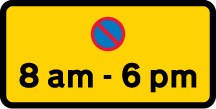 No waiting | No parking or waiting on the signed length | Regulatory (single red bar) |
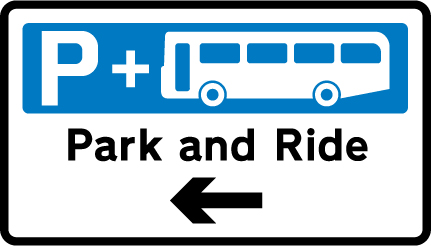 Park and ride | Parking linked to public transport | Information panel |
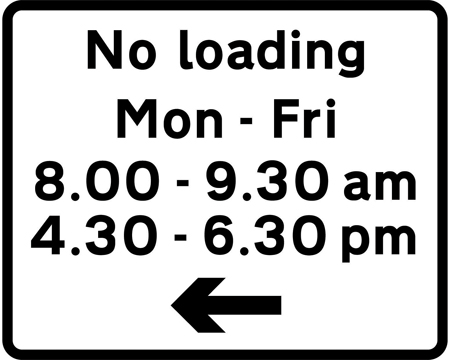 No loading | Goods loading ban at the kerb | Regulatory plate |
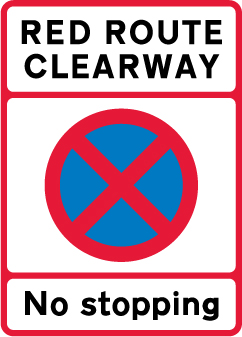 Urban clearway | Timed stopping ban on busy streets | Regulatory clearway |
Rules and Penalties
Penalty charge notices follow civil parking enforcement in most districts. Typical on-street contraventions include failing to pay, displaying an expired ticket, parking outside bay markings, and overstaying a maximum period. London and some city centres charge higher rates for bus lane and disabled bay abuse.
Deliberate misdisplay of tickets, using someone else’s badge without the holder present, or forging permits can escalate beyond a PCN into fraud investigations. Treat payment and badge rules seriously even on low-stakes shopping trips.
Private car parks on retail sites use separate contract law with parking charge notices. Read terms on entry signs; the blue public-information P on the highway may point towards them, but enforcement follows the operator’s stated rules.
Driving examiners may mark a serious fault if you stop in a bus stop, on zigzags, or in a bay without paying during a manoeuvre that required a lawful stop elsewhere. Naming the blue P aloud during lessons helps you link navigation symbols to bay behaviour.
Appeals succeed when machines failed with proof, bay markings were worn beyond recognition, or plate times were wrong on the council website. Capture photos of signs, bay numbers, and app screenshots the same day you receive a notice.
Check the latest theory test pass mark and book when you are ready via our booking guide.
Parking place in Practice
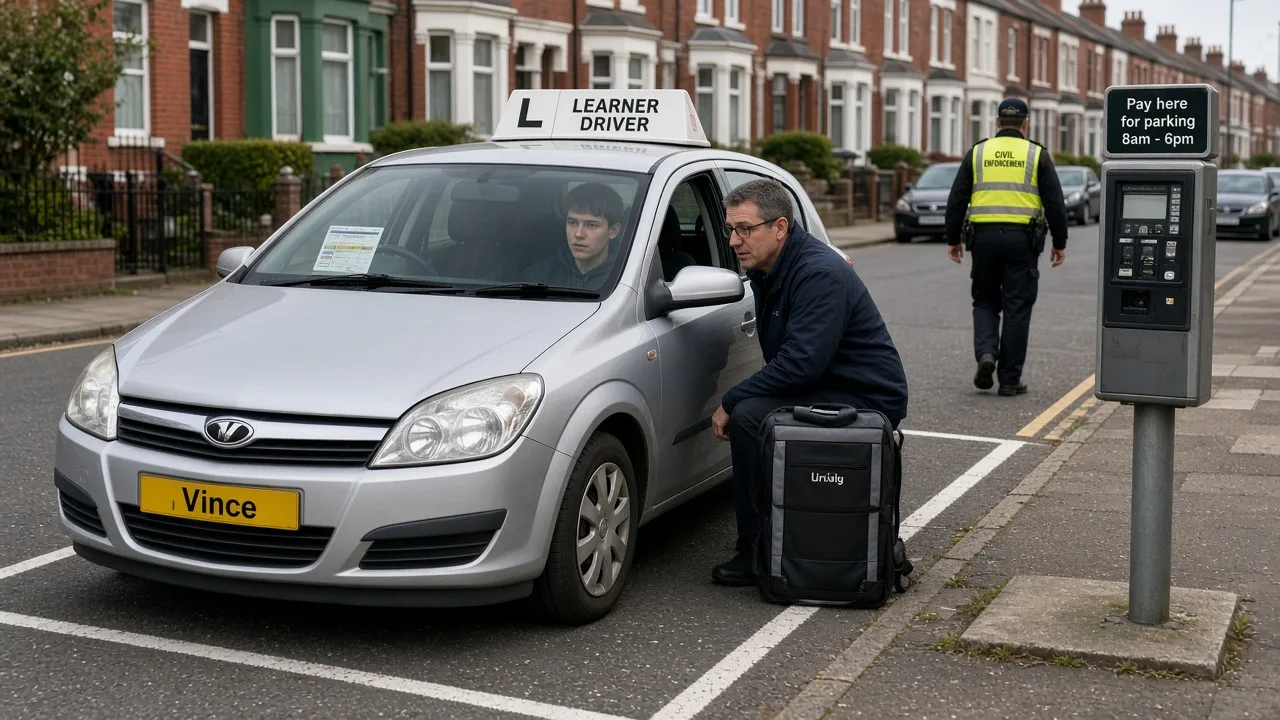
Vince, a learner in Bristol, follows his instructor towards the Harbourside for bay-parking practice. A blue P on a direction board points left towards a row of pay-and-display slots while double yellows continue straight ahead on the main road.
He signals early, turns into the side street, and reads a white plate: “Mon–Sat 8am–8pm, max 2 hours, pay and display”. Bay markings show white boxes with a ticket pictogram on the kerb. Vince stops fully inside one box, applies the handbrake, and walks to the machine with his instructor.
He pays for ninety minutes, returns, and places the ticket on the dashboard with the expiry time visible through the windscreen. While he practises parallel adjustments one bay along, a civil enforcement officer passes and scans the windscreen; the valid ticket satisfies the check.
Earlier that week Vince had stopped on the main road beside the same P board because the side street looked full. His instructor explained that the information plate never cancelled the double yellows on the distributor route. That mistake would have risked a PCN even if hazard lights were on.
On a mock theory item later, Vince picks the answer that links the blue P to a lawful parking place ahead while a separate question asks about no-waiting bars on the same diagram set. He passes the sign recognition block comfortably.
How This Sign Appears on the Theory Test
Picture questions show the blue P among other information boards. Choose answers that describe a parking place or car park direction, not a speed limit or mandatory lane order. When a stem mentions the parking sign UK schedule uses for facilities, link the square P to payment and bay rules, not to a prohibition circle.
Scenario stems may mention pay-and-display, disabled bays, or residents’ permits. The scored option usually requires payment or entitlement even when the P symbol appeared on the approach.
Distractors swap in no-waiting circles or clearway plates. Count red bars and read bay legends before you tap submit on touchscreen mocks.
Navigation items pair the P with arrows and distances. “400 yds” on a plate matters as much as the symbol when deciding whether you have time to change lanes.
Hazard perception training rewards easing off when brake lights bunch near car park mouths, even though clips rarely show the sign itself. Expect pedestrians crossing between parked cars after you follow a P towards bays.
Link revision to our regulatory signs filter on the mock theory test, then revisit yellow-line chapters so waiting bans do not contradict what the information plate suggested about nearby facilities.
Take a free mock theory test and filter questions on road and traffic signs. Pair that with the warning signs guide for triangle symbols.
Related Road Signs
No waiting sign
Kerbs where the P does not permit stopping.
Waiting restrictions
Plates and lines that limit kerb use near bays.
No loading sign
Goods bans beside passenger parking slots.
Urban clearway
Timed stopping bans on busy approaches.
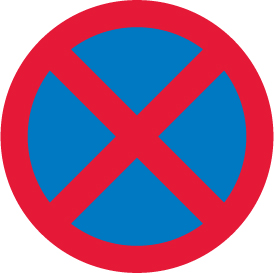
No stopping sign
Stricter halt bans than ordinary waiting orders.
Test Yourself on UK Road Signs
Treat the blue P as a pointer, not a blank cheque: find the bays, read every charge plate, pay before you walk away, and keep the wheels inside the markings. That habit protects your wallet on council streets and keeps practical tests free of parking faults. A free mock theory test helps you separate information parking plates from red-ring waiting bans under exam time pressure.
Frequently Asked Questions
Does the blue P mean parking is free?
No. The symbol marks a parking place or car park direction. Charges, permits, and time limits come from white plates, machines, and bay markings beside the facility.
Can I stop on double yellows if I saw a P nearby?
Not unless a specific bay or exemption plate covers that exact length. The information sign points towards lawful spaces; it does not cancel yellow lines on the main road.
What must I show in a pay-and-display bay?
A valid ticket visible on the dashboard or an active app session linked to your registration and bay code for the whole time you are parked.
How is park and ride different from a plain P sign?
Park-and-ride panels combine parking with public transport information. The standard P plate marks general parking places without naming a bus or tram link unless extra legends appear.
Will the theory test ask about parking payment?
Items test recognition of the symbol and sensible behaviour: use signed bays, obey restrictions, and do not block traffic. Scenario answers often expect lawful payment or permit use where bays are controlled.