
Last updated: October 2026 · Checked against Highway Code
40 mph Sign: meaning, rules and what to do
The circular plate with a red border and the number forty in black on white is the fixed maximum for that length of road until another regulatory order replaces it. You will meet it on suburban dual carriageways, ring-road sections, and A-roads between villages where councils want a steady pace without dropping straight to thirty.
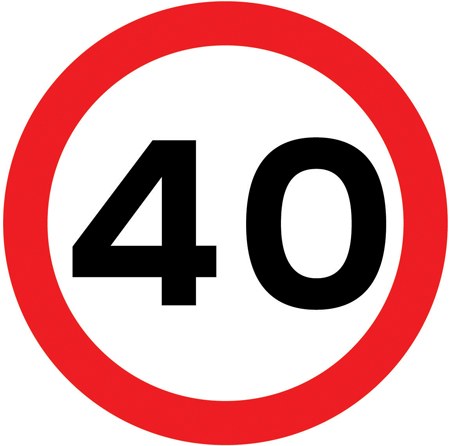
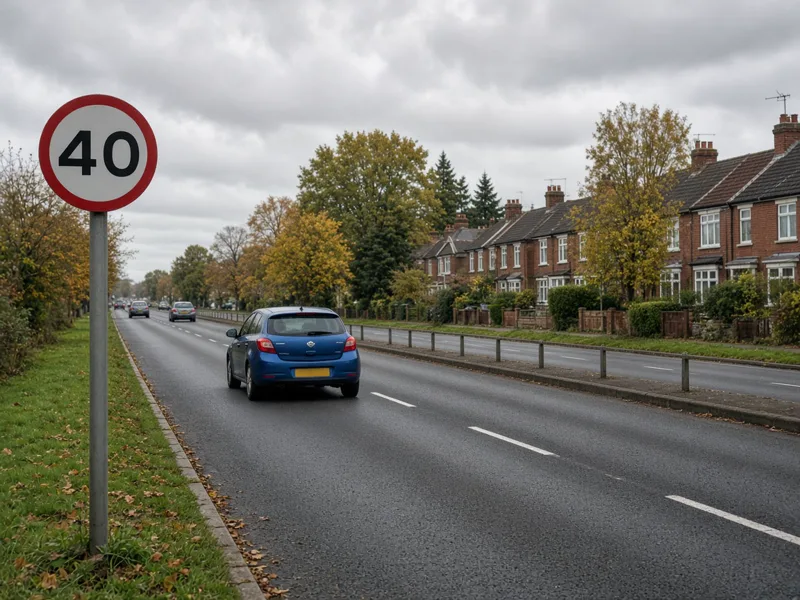
Sign image © Crown copyright, reproduced from GOV.UK traffic sign images under the Open Government Licence v3.0.
What the 40 mph limit Sign Looks Like
The GOV.UK regulatory disc is a perfect circle with a thick red ring, white centre, and bold black digits reading 40. Unlike warning triangles or blue direction boards, this shape always gives an order. DVSA theory materials use the same artwork, so learners should recognise it on screen and on a lamp column without hesitation.
Highway authorities mount the plate on verge posts, pedestrian guard rails, and advance boards at the mouth of a distributor road, a ring-road slip, or a former national-limit stretch that has been reclassified. You may see a pair facing each direction on a dual carriageway, or a single post where traffic joins from a thirty side street.
Do not confuse it with the national speed limit sign, which is a black disc with a single white diagonal slash and never shows a number. A blue circle with a white digit is a minimum speed order, which is uncommon on ordinary public roads. A black diagonal bar on white marks the end of the posted forty zone rather than setting a new speed by itself.
Temporary versions at roadworks copy the same red-ring layout on yellow backing. Cones and narrow lanes do not relax the order until you pass an end plate or a fresh limit. Sat-nav speed icons sometimes lag by one junction; trust the plate at the kerb when the map disagrees.
Supplementary rectangles may show distance, time bands, or camera symbols bolted beneath the main disc. Read every panel on the post before you assume the forty cap is unconditional. A small repeater on the left every few hundred metres reinforces memory but is not required for the law to apply.
Numeric limits from twenty through seventy share the same red-ring grammar. The national limit slash restores defaults without a digit. Minimum speed uses blue. Pair the roundel with road width, central reservations, and the last plate you passed when you join from a side road that only showed street lamps.
What the 40 mph Sign Means
Forty miles per hour sits between urban thirty and the national limit on many single carriageways. Traffic engineers choose it where housing is still close but carriageways are wider, where ring roads need flow without motorway speeds, or where a village bypass should feel calmer than open A-road running. The roundel is the legal switch: before it you obey whatever limit already applied; after it your maximum drops or rises to forty until cancelled.
A signed forty applies to the carriageway the plate faces until an end-of-restriction sign, a higher or lower numeric limit, or a lawful change in the traffic order. Side roads keep their own limits unless zone plates say otherwise. Turning off a sixty national-limit road onto a distributor may drop you to forty before you see housing, so read entry boards rather than guessing from skylines.
Rule 124 in The Highway Code lists speed limits for each road and vehicle class. Rule 125 states that the limit is the absolute maximum and is not a target: rain, pedestrians near bus stops, and tight sight lines can require far less than forty. Rule 126 discusses stopping distances; at forty you travel about eighteen metres per second, so a late brake at a zebra crossing can still fail to stop in time.
Dual carriageways through towns often carry forty even when the central reservation and two lanes each way feel like faster roads. Camera enforcement on these corridors is common because drivers assume national limit speeds. Average-speed pairs measure compliance over hundreds of metres, so a brief spike before braking may still fail the check.
Goods vehicles, buses, and cars towing trailers obey the same numeric plate as ordinary cars unless a separate plate shows a lower figure for heavy traffic. The sign does not grant priority at roundabouts or relax give-way rules. It only states the highest lawful speed for that stretch.
Leaving a forty zone needs an end plate or a new order, not simply driving onto a road that feels faster. National limit slashes sometimes sit on the same post as the end bar. Read top to bottom before you accelerate.
Northern Ireland uses the same circular artwork on public roads. Penalty bands follow local procedures, but the symbol on the theory test matches Great Britain plates. Temporary event orders may copy the layout on portable stands during festivals or road closures.
Ring roads around cities such as Nottingham, Coventry, or parts of the M25 approach network use forty on sections where interchanges are frequent. Learners should call out the first roundel after a slip road rather than matching traffic that may already be speeding.
Driving instructors use these roads to practise lane discipline and early mirror checks before exits. Examiners watch whether you notice a fresh forty when merging from a thirty industrial estate and whether you stay at or below the cap without constant reminders.
Buses and cyclists may legally hold the nearside lane below forty. Overtaking on a short dual section rarely saves meaningful time; patience keeps you inside both the law and your sight lines past lay-bys and junctions.
Electric cars are quiet at thirty-five. Pedestrians crossing between parked vans may not hear you approach a bus stop. Cover the brake where railings channel foot traffic toward the carriageway.
Before your theory appointment, mix sign photos with scenarios that mention wet leaves, school peaks on nearby parallel roads, and repeaters after side streets. A picture question may show a wide road without a readable digit; lamp spacing and the last regulatory plate you passed are clues.
Fleet telematics sometimes flag repeated forty-zone breaches on hire policies. Employers with duty-of-care rules treat distributor roads as high-risk even when fines stay in the lower bands.
Highway Code rules 124 to 126 (speed limits and stopping distances)
40 mph limit vs Similar Signs
| Sign | Meaning | Legal or warning? |
|---|---|---|
| 40 mph limit | Do not exceed forty miles per hour | Regulatory (number in red ring) |
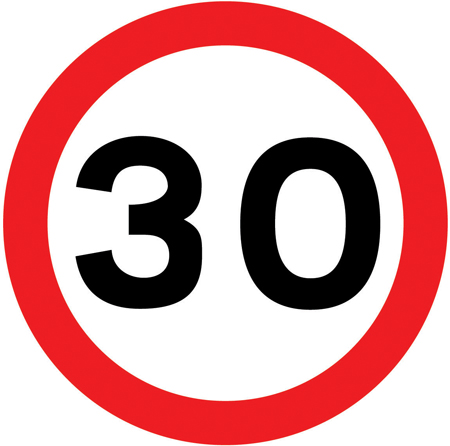 30 mph limit | Lower urban cap when posted | Regulatory (number in red ring) |
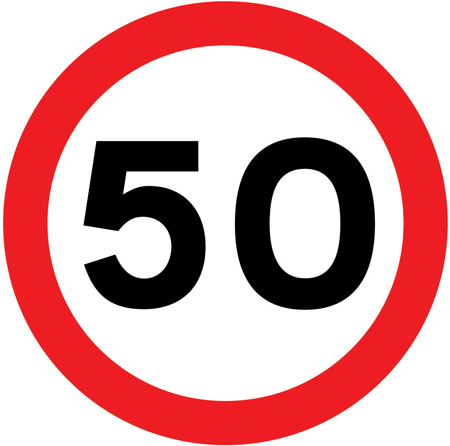 50 mph limit | Higher fixed cap on some dual sections | Regulatory (number in red ring) |
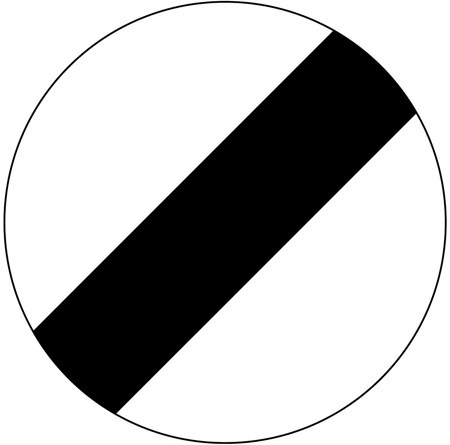 National speed limit | Default maximum for road type, no digit | Regulatory (white slash on black) |
 End of 40 mph | Leaves posted forty; read the next order | Regulatory (black diagonal on white) |
Rules and Penalties
Exceeding forty brings standard speeding penalties: fixed notices and points scaled to how far over you were, speed awareness courses in some bands, and court referrals for high readings.
Average-speed cameras on suburban duals may cover whole corridors between junctions. Staying at forty-one for most of the measured distance can still produce a notice even if you brake hard at the second post.
New drivers who reach six points within two years of passing can lose their licence. Two moderate speeding offences on the same ring-road commute can be enough.
Police can prosecute driving too fast for conditions below forty. Spray from lorries, dusk glare, and crowds near a stadium exit still demand much lower speeds on the same plate.
Work zones may keep forty on yellow backing with cones. Ignoring the digits there carries the same risk as on permanent posts beside a school route.
Check the latest theory test pass mark and book when you are ready via our booking guide.
40 mph limit in Practice
On a damp November afternoon, Marcus leaves a national-limit single carriageway and merges onto a dual distributor marked by a red-ring plate showing 40 beside a central reservation. Terraced housing sits behind a low wall, and a repeater glints on a lamp post two hundred metres ahead.
He checks the mirror, signals early, and settles at thirty-eight miles per hour in the left lane while a bus pulls away from a stop. A cyclist ahead is still moving; Marcus holds position rather than squeezing past with oncoming traffic visible in the right lane.
Behind him, a grey SUV drifts past at fifty-two before braking for a camera gantry above the carriageway. Marcus keeps a steady pace, covering the brake where a side road feeds shoppers toward a zebra crossing without a signal.
At the next interchange he reads an end-of-restriction plate paired with a national limit slash. Only then does he plan a gentle rise toward sixty on the open single carriageway beyond, still matching grip on wet leaves rather than the new ceiling.
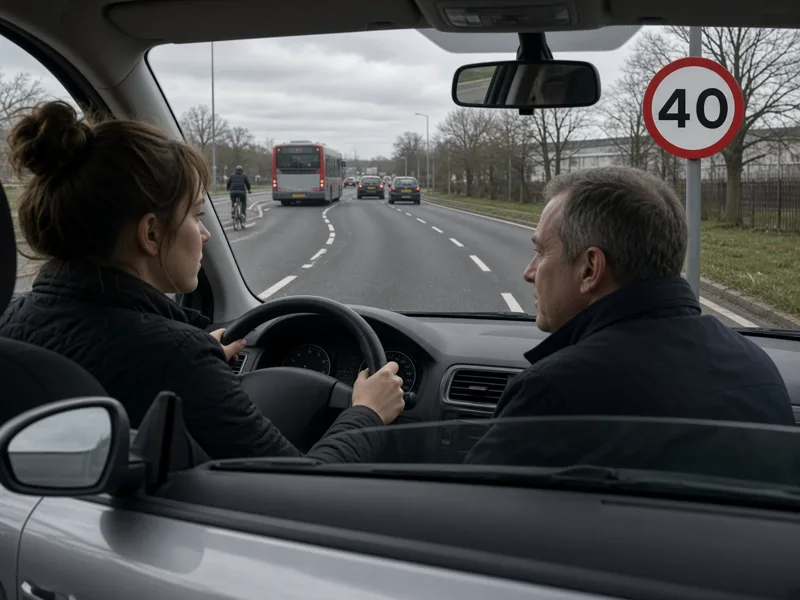
How This Sign Appears on the Theory Test
Car theory papers include fifty multiple-choice questions; you need forty-three correct within fifty-seven minutes. Sign items often show the red-ring forty and ask the maximum speed or what to do after leaving a faster road.
Hazard perception is scored separately; you need forty-four out of seventy-five clips for a car licence in Great Britain. Smooth speed control on dual-carriageway clips helps even when the roundel is only visible for a second.
Picture questions may hide the digit behind glare but show a central reservation and repeaters. Choose forty when the artwork matches the official disc and the scene describes a suburban distributor.
Wrong options sometimes quote national limit speeds on roads that still show housing frontage and a visible forty roundel. Eliminate seventy and sixty when the photo includes the numbered plate on a dual layout.
Filter mocks on road and traffic signs, then revisit stopping distances. Knowing eighteen metres per second at forty helps you reject unsafe overtaking answers on short dual sections.
Take a free mock theory test and filter questions on road and traffic signs. Pair that with the warning signs guide for triangle symbols.
Related Road Signs
National speed limit
Often follows the end of a posted forty corridor.
30 mph limit
Lower cap on tighter urban streets nearby.
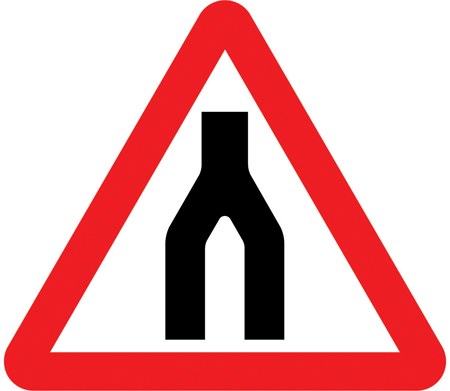
Dual carriageway ends
Layout change where forty limits are common.
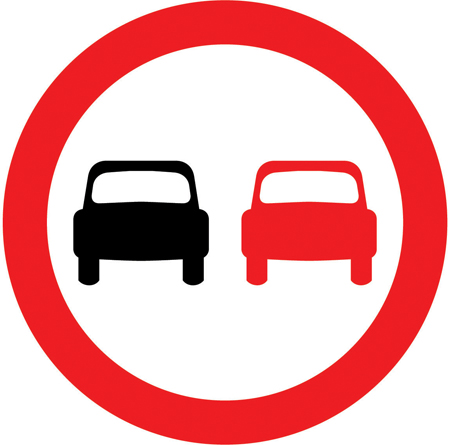
No overtaking
Passing bans on hills beside forty routes.
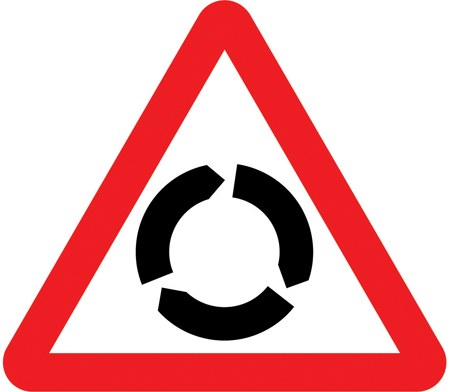
Roundabout ahead
Junction warning on ring-road approaches.
Test Yourself on UK Road Signs
Treat every red-ring forty as a ceiling for that length of road, then adjust for weather, buses, and sight lines. Revise limits with mocks, read the Highway Code table for your vehicle class, and notice how dual layouts and repeaters confirm the order between junctions.
Frequently Asked Questions
What does a 40 mph sign mean in the UK?
It is a mandatory maximum of forty miles per hour on the signed length. You must not drive faster unless a later plate changes the limit.
Where are 40 mph limits most common?
They appear on suburban dual carriageways, ring-road sections, and some A-roads between built-up areas. The roundel marks a deliberate cap between thirty and national limit speeds.
How is a 40 mph sign different from the national speed limit sign?
The forty shows black digits in a red ring on white. The national limit sign is a white slash on black and never displays a number.
What sign ends a 40 mph limit?
A white disc with a black diagonal bar marks the end of the posted forty zone. Check immediately for a new number or the national limit slash.
Will the 40 mph sign appear on the theory test?
Yes. DVSA materials use the standard GOV.UK artwork. Questions test the speed cap and how it interacts with dual carriageways and entry plates.