
Last updated: October 2026 · Checked against Highway Code
End of 30 mph Sign: meaning, rules and what to do
The white circular plate with a single black bar slanting across it tells you the posted thirty miles per hour order has finished on that carriageway. Your next lawful maximum depends on the very next plate, on whether lamps still imply a built-up default, and on whether the road is single or dual.
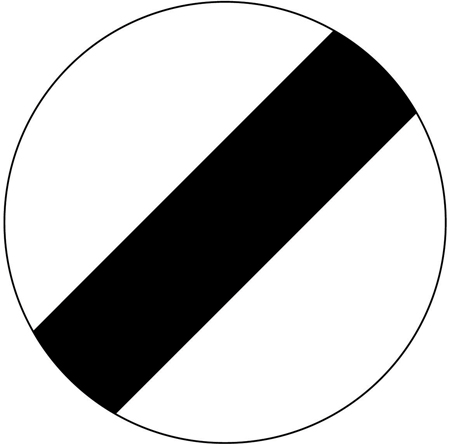
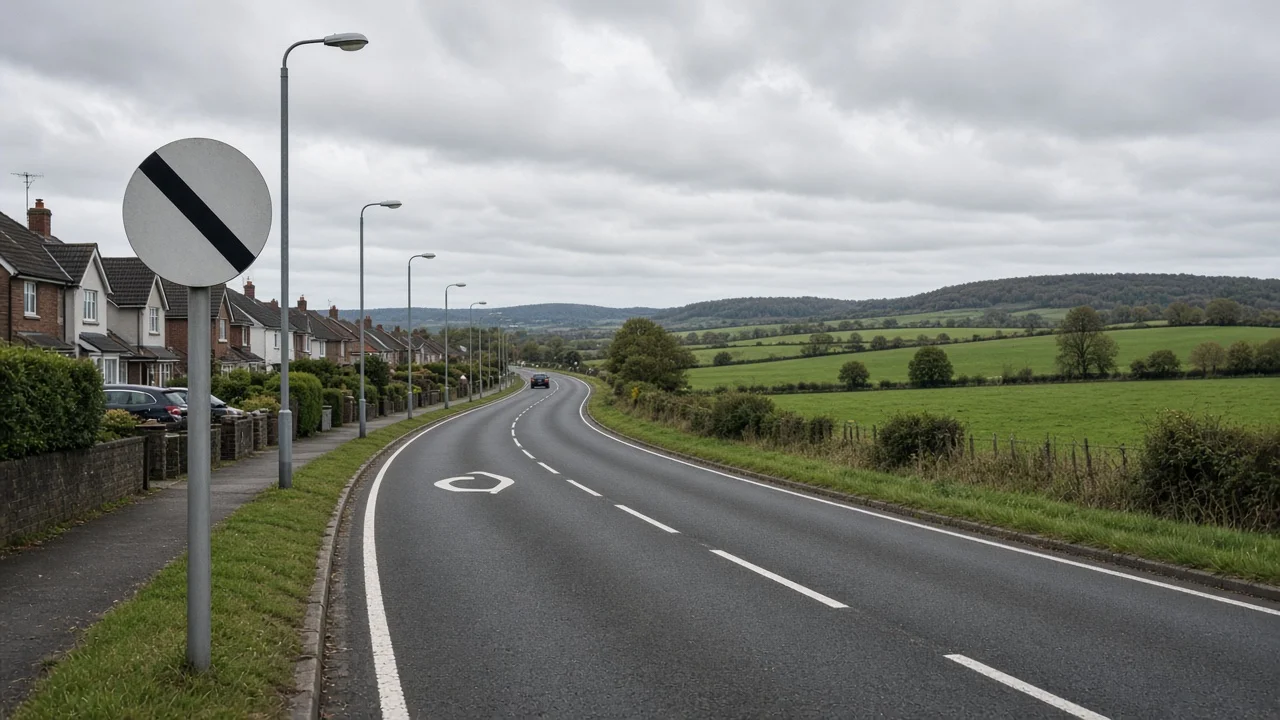
Sign image © Crown copyright, reproduced from GOV.UK traffic sign images under the Open Government Licence v3.0.
What the End of thirty limit Sign Looks Like
GOV.UK lists this regulatory disc as sign 671. It is a white circle with a broad black diagonal from upper left to lower right, like a “no” symbol without a red border. Unlike the thirty roundel, it shows no digits. Theory materials pair it with photographs at housing estate exits, bypass mouths, and industrial estate gateways.
Councils often mount the plate on the same post as the national speed limit sign, with the end bar above or below the black disc and white slash. You may also see it alone on a lamp column, then another order fifty metres ahead. Temporary versions at roadworks copy the same artwork on yellow backing until the cones end.
Do not confuse the bar with a “no entry” red circle or with warning triangles. Minimum speed plates use blue rings. A red ring with thirty still means you are inside a limit; the diagonal white disc means you have left the posted thirty that signmakers drew on the entry plate.
Repeaters for thirty disappear after this plate, which is why drivers who memorised “lamps equal thirty” sometimes accelerate too early. Read the housing density, the next regulatory face, and any zone name plate that might still bind side roads inside the estate you just left.
Every numeric end plate shares the same diagonal grammar: end of twenty, end of forty, and end of thirty differ only in the entry sign you passed earlier. The national speed limit slash restores defaults rather than ending one number. Street lighting can keep thirty miles per hour legally even moments after the white bar, so shape recognition must meet context.
What the End of 30 mph Sign Means
The order marks a boundary. Before the plate you obeyed the thirty miles per hour maximum created by the red-ring sign at the zone mouth, possibly reinforced by repeaters. After it, that specific traffic order no longer applies to the main carriageway you are on, unless another sign immediately reinstates a cap.
Leaving a posted zone is not the same as leaving a built-up area. Three or more street lamps in a row can still imply thirty miles per hour under national rules even when the diagonal bar appears. Drivers who floor the throttle at the village edge risk tickets because lighting, not only the last roundel, defines default limits.
When the national speed limit sign shares the post, cars on a single carriageway may rise toward sixty miles per hour if the road, weather, and sight lines allow. Dual carriageways may allow seventy for ordinary cars. Towing combinations, minibuses, and goods vehicles carry lower ceilings; the slash does not list them.
Sometimes planners place a forty or fifty roundel right after the end bar on a distributor road. In that case the diagonal cancels thirty only for a few car lengths before the new number bites. Average-speed camera pairs often start just beyond that sequence, so smooth acceleration beats a spike to sixty followed by hard braking.
Side roads inside the estate you left may still be thirty without their own end plate if the traffic order treated the whole zone as one signed area. Turning back into a side street can drop you back under thirty before you see a repeater. The main road exit plate does not rewrite orders on every branch.
Rule 124 in The Highway Code groups speed limits by road type and vehicle class. Rule 125 stresses that any limit is a maximum, not a target. After the end plate you still owe vulnerable road users a safe passing distance, especially where cyclists use the now-wider carriageway shoulder.
Temporary thirty limits at roadworks end with the same diagonal on portable stands. Cones may extend past the sign while surfacing finishes; trust the live restriction boards until you pass both the bar and any “end of roadworks” plate that follows.
Northern Ireland uses the same diagonal artwork on public roads. Penalty bands and course offers follow local procedures, but DVSA theory imagery matches Great Britain. Always read NI news for storm-related temporary orders that outlast the permanent post.
On lessons through suburban Manchester or Cardiff, instructors ask learners to name the last regulatory plate before changing speed. The end bar is permission to rethink your plan, not automatic permission to hit sixty beside parked cars.
Sat-nav speed icons often jump one junction late. When the white disc with the diagonal appears, trust your eyes: check mirrors, confirm the next sign, then adjust smoothly so following traffic is not surprised.
Electric cars are nearly silent at forty miles per hour. Pedestrians crossing from a bus stop just outside the old zone may misjudge your approach. Cover the brake until you know the pavement is clear.
School peaks may still demand twenty or thirty on adjoining streets even after you leave the main estate limit. Pair this plate with school warning triangles on routes you drive weekly.
Before your theory appointment, drill photo pairs: entry thirty, exit diagonal, national slash. Examiners love questions that ask what happens in the gap between the bar and the next order.
End of thirty limit vs Similar Signs
| Sign | Meaning | Legal or warning? |
|---|---|---|
| End of 30 mph | Posted thirty zone ends on this carriageway | Regulatory (black diagonal on white) |
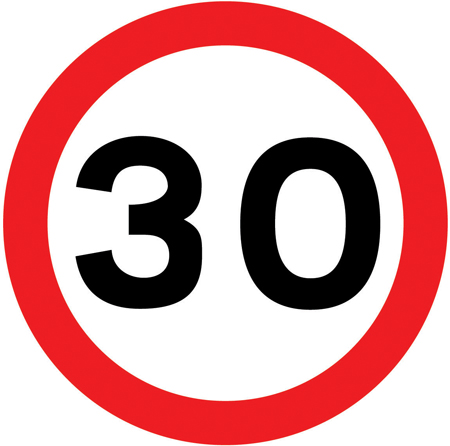 30 mph limit | Mandatory maximum of thirty miles per hour | Regulatory (number in red ring) |
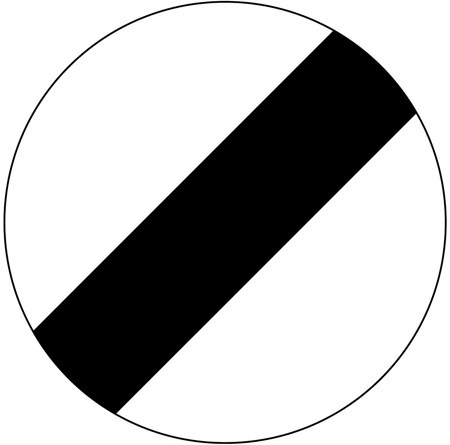 National speed limit | Default max for road and vehicle class | Regulatory (white slash on black) |
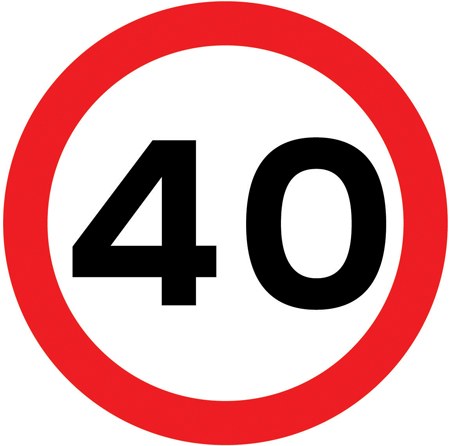 40 mph limit | Higher fixed cap that may follow the end bar | Regulatory (number in red ring) |
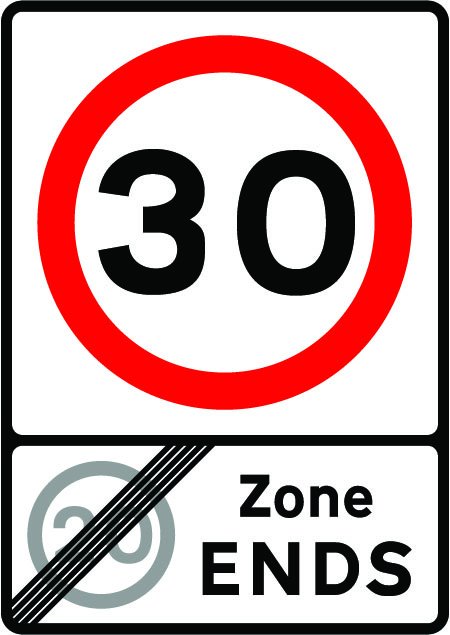 End of 20 mph | Leaves a twenty zone; read the next plate | Regulatory (black diagonal on white) |
Rules and Penalties
Speeding penalties apply to whatever limit is legally in force after the bar, not to the cancelled thirty. Accelerating to sixty beside still-lit terraces can mean a ticket even though you passed the end plate.
Average-speed cameras on bypasses often sit just beyond village exits. A smooth rise from thirty to the new lawful maximum keeps you inside enforcement windows.
New drivers who collect six points within two years of passing can lose their licence. Two moderate speeding offences after misreading lighting rules are enough.
Police can prosecute driving too fast for conditions below any posted maximum. Rain, fallen leaves, and livestock on rural singles still demand large safety margins right after the diagonal.
Fleet telematics may flag harsh acceleration at zone exits. Employers with duty-of-care policies sometimes treat village boundaries as coaching moments even when fines stay small.
Check the latest theory test pass mark and book when you are ready via our booking guide.
End of thirty limit in Practice
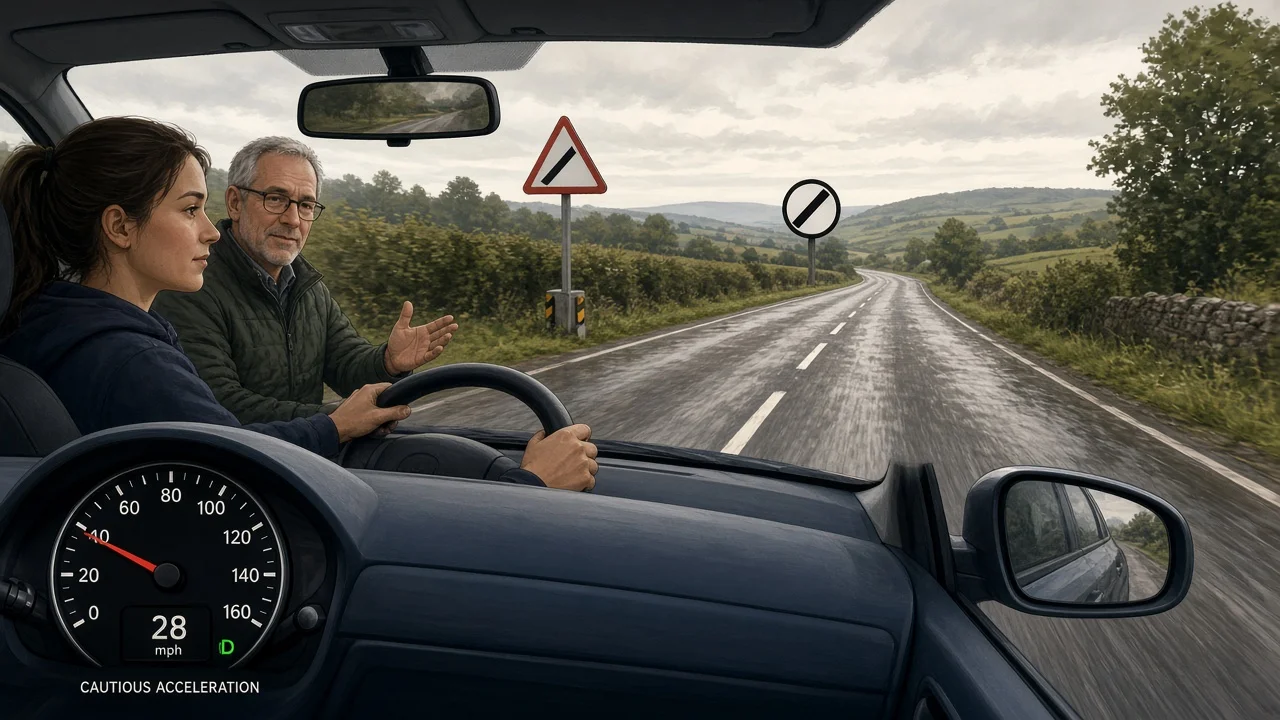
Owen drives a housing-estate distributor road signed at thirty miles per hour. Repeaters glint on lamp posts past side streets where children wait for buses. At the estate mouth he passes the end of 30 limit sign on a nearside column, with the national speed limit slash mounted beneath it on the same post.
He checks the mirror, lifts off the accelerator, and confirms the road ahead is a single carriageway with open fields. Street lamps stop three houses before the bar, so he plans a gradual rise toward fifty-five miles per hour, still below the sixty ceiling if conditions stay clear.
A tractor waits to turn right from a farm track. Owen holds the nearside lane instead of overtaking on the brow, because sight lines are short even though the cancelled thirty no longer caps him. Behind him, a hatchback surges to seventy before the slash plate is level with their bumper; a mobile camera further along the open road may record that reading.
At the theory kiosk Owen recognises the diagonal disc in a multiple-choice item asking which plate cancels a posted thirty. He rejects answers that mention blue minimum speed circles and selects the option that pairs the white bar with checking the next regulatory sign.
On a wet evening lesson the same post appears with glare. Owen dips headlights, reads the slash again, and delays acceleration until oncoming traffic clears a narrow bridge. The end plate gave headroom, but conditions kept his speed near forty until the rain eased.
How This Sign Appears on the Theory Test
Car theory papers include fifty multiple-choice questions; you need forty-three correct within fifty-seven minutes. Sign items show the diagonal white disc and ask what changed about the thirty order.
Hazard perception is scored separately; you need forty-four out of seventy-five clips for a car licence in Great Britain. Clips on village exits reward early slowing when parked cars hide pedestrians, even after the limit symbol appears.
Picture questions may crop the bar behind foliage. Look for paired national limit artwork and open road layout before you tap an answer about maximum speed.
Wrong options sometimes claim the diagonal sets a new numeric cap. Eliminate answers that quote forty or fifty unless a red-ring plate is visible in the same photograph.
Filter mocks on road and traffic signs, then revisit how lighting interacts with defaults. Knowing when lamps still imply thirty separates passes from near misses on limit-boundary items.
Take a free mock theory test and filter questions on road and traffic signs. Pair that with the warning signs guide for triangle symbols.
Related Road Signs
30 mph limit
The red-ring entry plate this diagonal cancels.
National speed limit
Often bolted below the end bar at village exits.
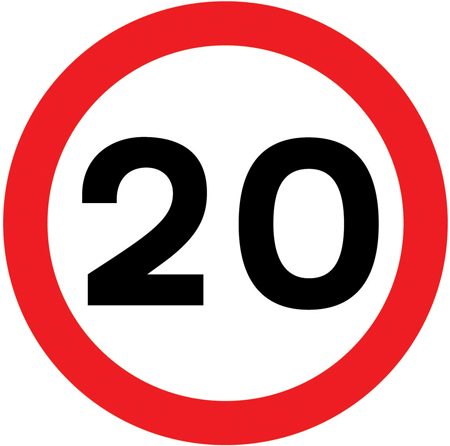
20 mph limit
Lower zones use the same exit grammar with end-twenty plates.
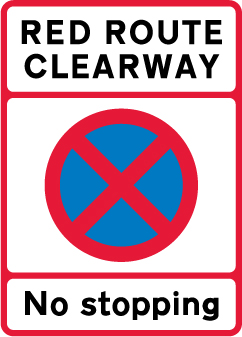
Urban clearway
Stopping bans on routes that are often thirty inside towns.
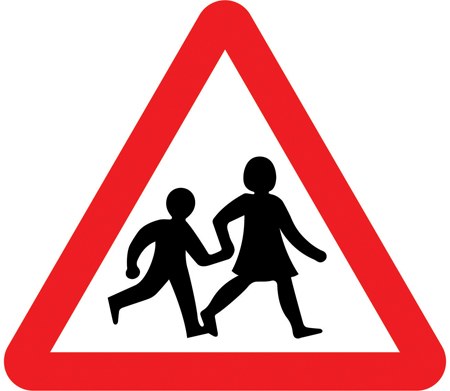
School warning
Pupils near estate mouths just beyond old thirty corridors.
Test Yourself on UK Road Signs
Treat the white diagonal as a full stop on the posted thirty you entered earlier, then read the next regulatory face and the street scene before you add speed. Revise limit pairs with mocks, keep Highway Code rules 124 and 125 fresh, and notice how lamps and housing still cap you when the roundel is gone.
Frequently Asked Questions
What does the end of 30 limit sign mean in the UK?
It cancels the posted thirty miles per hour order that began at an earlier red-ring plate on that carriageway. It does not automatically set a new number; you must read the next sign and any built-up lighting rules.
Can I drive at 60 mph immediately after the end of 30 plate?
Only if the national speed limit slash follows or another order allows it, the road is a suitable single carriageway, and conditions are safe. Lit terraces may still imply thirty even after the diagonal.
How is the end of 30 sign different from the national speed limit sign?
The end plate is white with a black diagonal and ends the earlier numeric zone. The national limit sign is black with a white slash and restores default maximums for road type rather than cancelling one posted figure.
Does the end of 30 mph sign appear on the theory test?
Yes. DVSA materials use the standard GOV.UK artwork. Questions test that the thirty order has ended and that you must identify the next lawful limit.
Why is the end plate sometimes paired with another sign on the same post?
Planners stack the national limit slash or a new numeric roundel so drivers see the full story at once. Always read every face on the post before you accelerate.