
Last updated: October 2026 · Checked against Highway Code
End of 20 mph: meaning, rules and what to do
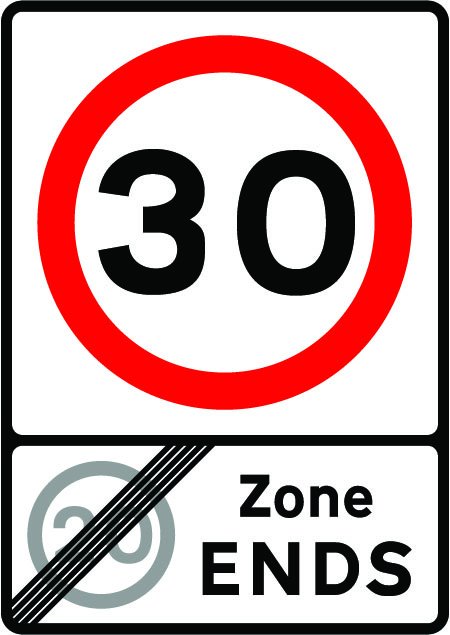
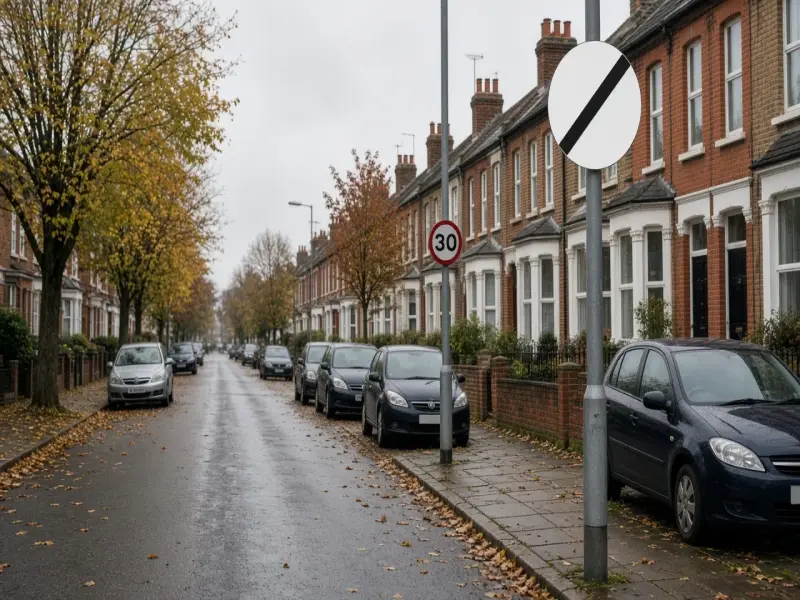
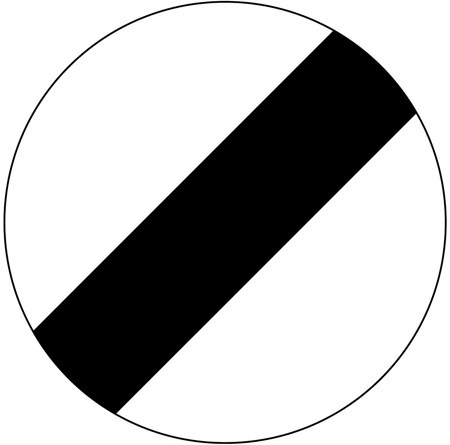
This regulatory plate cancels a posted twenty miles per hour order. It is a white disc bearing a single black bar slanting down from upper left to lower right. Passing it ends the zone you entered at a red-ring twenty roundel; you must read whatever numeric limit, national speed limit slash, or street-lighting rule applies immediately beyond, not assume thirty or sixty by habit.
Sign image © Crown copyright, reproduced from GOV.UK traffic sign images under the Open Government Licence v3.0.
What the End of twenty Sign Looks Like
The GOV.UK exit plate matches the wider family of “end of restriction” discs: circular white field, black diagonal stripe, no digits on the face. It sits on the same lamp columns and railings as the entry roundel, often at the mouth of a side road, estate exit, or village boundary where councillors chose twenty for a whole polygon on the map.
You may see the plate alone on a post, or paired with a thirty or forty roundel on the next column, or followed within seconds by the national speed limit black-and-white slash. Some authorities bolt a small “Zone” end panel beneath the disc; the artwork stays the diagonal bar even when supplementary text names twenty miles per hour.
Repeaters inside a zone copy the red-ring twenty. They do not turn into end plates at the boundary. Only the diagonal disc (or a replacement numeric order that supersedes twenty directly) tells you the zone order has finished. Sat-nav icons sometimes show a grey twenty long after the post; trust the plate at the kerb.
Do not swap this symbol for the national speed limit sign. Both use a diagonal, but the end-of-twenty plate is white with a black bar, while the national plate is black with a white slash and restores defaults rather than naming a cancelled local zone. A fresh red ring with thirty replaces twenty in one step on some arterials without a separate end disc between them.
End plates exist for other numeric limits, including thirty, forty and fifty, all sharing the white-and-black diagonal grammar. Minimum-speed blue circles end with their own cancel symbol. School warning triangles and humps may remain after the twenty order ends; engineering features are not the same as the legal cap.
What the End of 20 mph Means
Traffic law treats this post as the line where the earlier twenty order stops. Everything before that post, including side roads inside the signed polygon unless exempted on maps, stayed at or below twenty. After it, you need a new legal basis for your speed: the next roundel, a national limit plate, implied thirty where street lighting rules apply, or a rural single-carriageway default once you leave the built-up fringe.
Councils publish traffic orders that pair entry roundels with exit plates. Missing an end sign on one arm of a junction does not let you stay at twenty on a main road that was never inside the zone. Conversely, turning out of a signed estate through an exit with the diagonal means you may rise to the next lawful maximum even if side streets behind you still show repeaters.
Rule 124 in The Highway Code lists speed limits; Rule 125 stresses that any limit is a ceiling, not a target. Leaving twenty does not licence racing to the next number. Rain, parked vans, cyclists, and pedestrians near shops may keep you well under thirty seconds after the boundary. The end plate is permission to consider a higher lawful cap, not an order to accelerate.
Average-speed camera pairs sometimes straddle zone edges. Dropping from twenty-two to thirty-two just after the diagonal can still fail an average check if the second post sits inside the old zone geometry on the enforcement map. Read advance camera symbols and yellow junction markings as well as the cancel plate.
Twenty limits often wrap schools, high streets, and waterfront roads shared with buses. End plates frequently sit where humps end and the carriageway widens toward a distributor. Drivers who relax only at the diagonal may already be legal at eighteen; those who wait until a thirty roundel appears can frustrate following traffic without breaking twenty, but creeping above the next limit before it is posted is an offence.
Temporary twenty orders at festivals or roadworks copy the same entry and exit artwork on portable stands. Cones can shift the exact metre where the order stops. Treat the live end plate beside the carriageway as authoritative when it disagrees with last year’s roadworks plan on a council PDF.
Electric vehicles whisper at low speeds; pedestrians may step off kerbs expecting you to remain at twenty. Extra mirror checks in the first hundred metres after the zone help, especially outside pubs and takeaways where foot traffic ignores fresh limits.
Large goods vehicles and buses use the same exit plate. Their acceleration profile differs, but the legal moment the twenty order ends is identical. Fleet telematics may still geofence the school street until GPS crosses the post; human drivers should look up from dashboards at the diagonal.
You meet this plate where residential calm meets a faster link: estate mouths onto a thirty distributor, village twenty zones handing back to forty bypasses, or hospital campuses returning traffic to ring-road speeds. Brake and mirror before the post if you had been tailgating a bus that cannot accelerate quickly once the cap rises.
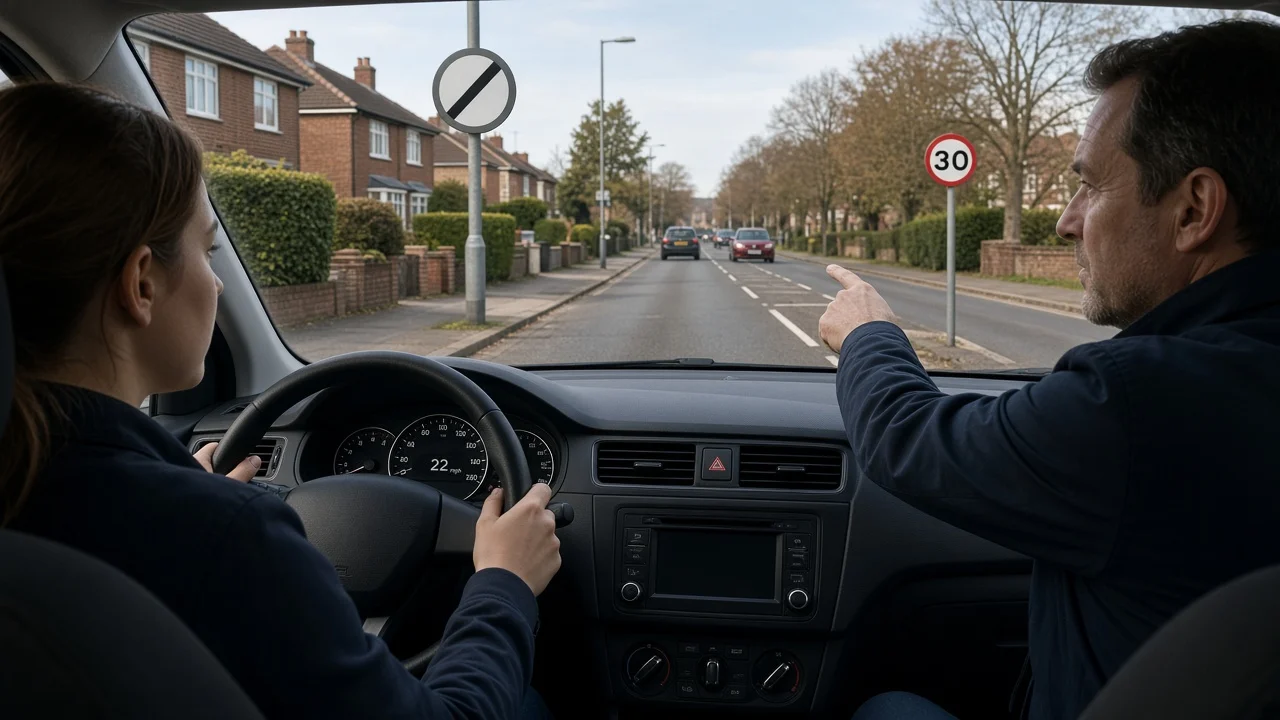
Driving instructors drill recognition here because examiners watch whether you notice the diagonal and adjust smoothly without a jerky surge. Holding twenty after a clear thirty roundel ten metres ahead suggests you did not read the sequence; jumping to forty before any fresh order suggests the opposite fault.
Cyclists may sprint once the zone ends while you are still checking mirrors. Give them room without straddling the centre line on a narrow single. Overtaking at the boundary rarely saves meaningful time and often coincides with a hidden speed camera aimed at the first straight.
Residents sometimes petition to extend twenty zones. A planning consultation is not a new limit until posts change. If the diagonal remains, the order ended at the legal post even when paint on the road still says twenty in faded community art.
Before your theory appointment, pair photo questions that show the diagonal with stems asking what happens next. Wrong options often claim the plate sets thirty automatically or that twenty continues until street lighting ends. Eliminate them by remembering the cancel symbol carries no digit.
Night driving makes white end plates glare under LEDs while the black bar vanishes at shallow angles. Slow slightly, square the headlamps on the face, and read the next post beyond before you change speed.
Highway Code rules 124 to 126 (speed limits and stopping distances)
End of twenty vs Similar Signs
| Sign | Meaning | Legal or warning? |
|---|---|---|
| End of 20 mph | Twenty zone or posted twenty order ends here | Regulatory (black diagonal on white) |
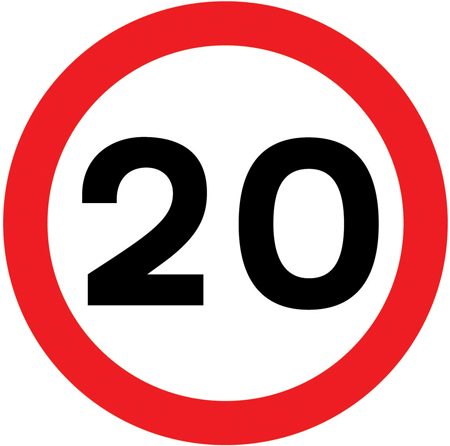 20 mph limit | Do not exceed twenty miles per hour | Regulatory (number in red ring) |
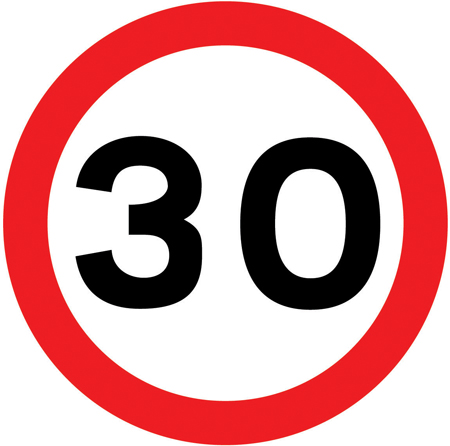 30 mph limit | Often follows immediately after a twenty zone | Regulatory (number in red ring) |
 National speed limit | Restores default max for road type | Regulatory (white slash on black) |
Rules and Penalties
Staying at twenty after the end plate is not a speeding offence, but crawling far below the next limit on a clear arterial can count as careless driving if you block a queue. The risk rises where the diagonal is paired with a thirty roundel and you hold eighteen on an empty straight.
Exceeding the next limit before you pass its sign is standard speeding: fixed penalties, points, speed awareness courses in some bands, and court for high readings. Drivers who treat the diagonal as “free speed” without reading the thirty ten metres ahead collect tickets regularly.
Average-speed systems may still measure you across the boundary. A burst to forty-five between two posts inside an enforcement corridor fails even if you saw the end plate mid-section.
New drivers who reach six points within two years of passing can lose their licence; two moderate offences near a school exit are enough.
Police can prosecute driving too fast for conditions below any posted maximum. Leaving a twenty zone onto a thirty street still demands lower speeds when ice, fog, or market-day crowds shrink safe headroom.
Check the latest theory test pass mark and book when you are ready via our booking guide.
End of twenty in Practice
On a damp February afternoon, Marcus drives home through a signed twenty zone past a primary school, humps, and repeaters on every third lamp column. His speedometer sits at nineteen; sat-nav still colours the road green for twenty.
At the estate exit a white disc with a black diagonal faces him on the nearside column. Ten metres further on, a red-ring thirty roundel glints under a tree. He checks the mirror, signals nothing because the road stays straight, and lifts smoothly to twenty-eight while scanning for children on the pavement beyond the school railings.
Behind him, a courier van holds twenty until the thirty post, then passes Marcus at thirty-four. A fixed camera on the distributor enforces the new cap; the end plate did not grant thirty until the roundel aligned with his wheels. Marcus’s staggered adjustment kept him legal through both orders.
Had he accelerated to forty before the thirty roundel, he could have been recorded at thirty-eight in a still-twenty stretch. Had he stayed at fifteen after both signs on a clear road, he might have annoyed the examiner on a test route but not broken a numeric limit.
How This Sign Appears on the Theory Test
Multiple-choice items show the white diagonal and ask what changes. Pick answers that say the twenty order ends, not that twenty becomes advisory or that thirty always applies without reading the next plate.
Picture questions hide the next sign around a bend. Choose “obey the next limit sign” when the stem mentions the end of 20 mph sign alone.
Some scenarios describe turning out of a zone side exit. Remember internal streets stay at twenty until you pass the boundary post on your route, even if the main road ahead already shows thirty.
Hazard perception clips on residential exits reward early mirror checks and gentle acceleration when pedestrians stand near bus stops just beyond the diagonal.
Filter mocks on regulatory signs, then drill pairs: entry roundel, exit diagonal, next numeric. Confusing the end plate with the national slash is a frequent DVSA distractor.
Take a free mock theory test and filter questions on road and traffic signs. Pair that with the warning signs guide for triangle symbols.
Related Road Signs
20 mph sign
Red-ring entry plate that the end sign cancels.
National speed limit sign
Sometimes follows twenty zones on rural exits.
30 mph sign
Common next limit after town twenty corridors.
School warning sign
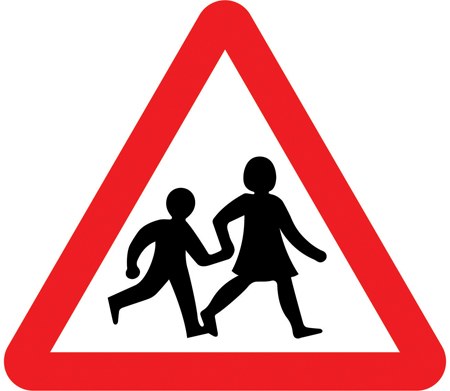
May remain near roads where twenty recently ended.
Urban clearway
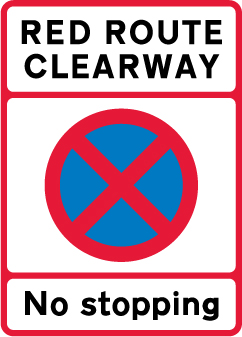
Stopping bans continue after the twenty order ends.
Test Yourself on UK Road Signs
Treat the diagonal exit plate as a checkpoint, not a finish line. Read the next regulatory plate, respect street lighting rules, and keep conditions in mind before you add speed. Practise the diagonal alongside entry roundels in a free mock theory test so exam day feels familiar.
Frequently Asked Questions
What does the end of 20 mph sign mean?
It cancels the posted twenty miles per hour maximum at that point. You must obey the next speed limit that applies, which might be shown on a following roundel, a national limit plate, or implied by street lighting rules.
Does the end of 20 mph sign set a new speed?
No. The white plate with the black diagonal only ends the twenty order. It does not display a number. Look ahead for the next sign or know the default for that road type.
Can I speed up as soon as I see the end plate?
You may increase speed only up to the next lawful limit once you are past the boundary and it is safe. Accelerating before the next order is posted, or beyond what conditions allow, can still be an offence.
How is it different from the national speed limit sign?
The end of twenty plate is white with a black diagonal and ends a local twenty zone. The national speed limit sign is black with a white slash and restores default limits by road type rather than naming a cancelled twenty area.
What if there is no sign after the end plate?
Use context: lit built-up streets may still imply thirty miles per hour, while open singles may allow national limits for your vehicle. When unsure, hold a moderate speed until a roundel or layout makes the order clear.