
Last updated: October 2026 · Checked against Highway Code
Emergency Telephone Sign: meaning, rules and what to do
The emergency telephone sign motorway drivers learn for the theory test is a blue panel with a white handset symbol, mounted beside an SOS phone on the hard shoulder or at an emergency area. It marks where you can call for help after a genuine breakdown or crash, not a rest stop for fuel or food.
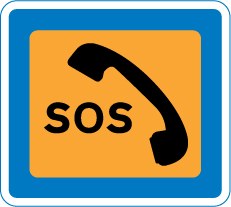
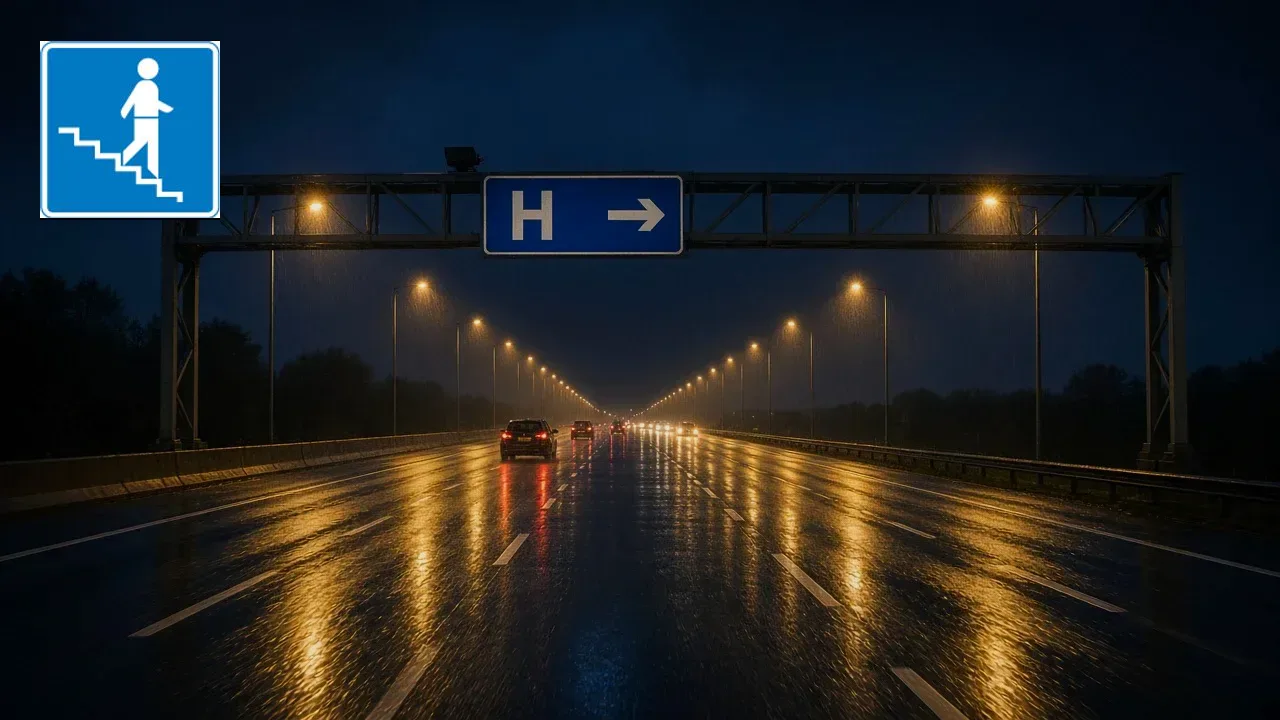
Sign image © Crown copyright, reproduced from GOV.UK traffic sign images under the Open Government Licence v3.0.
What the Emergency telephone Sign Looks Like
GOV.UK catalogue diagram 814 shows the standard layout: rectangular blue board, white border, white pictogram of a telephone handset with the receiver lifted from the cradle. On live motorways the plate sits on a post at driver eye height, often paired with a yellow marker arrow on the verge pointing towards the cabinet.
The handset cabinet is a metal box with a door, usually painted yellow or grey, with a blue face repeating the symbol. At night retroreflective sheeting on the blue panel catches headlamps long before you can read smaller text on the door. Distance plates between phones are not always present; rely on the repeating blue panels rather than guessing from memory.
On older motorways with a continuous hard shoulder, phones appear on the left verge facing traffic in that carriageway. On smart motorways without a permanent shoulder, emergency refuge areas use the same pictogram on blue, sometimes with additional white text naming the area. The symbol family matches other motorway information blues, not tourist brown or warning red triangles.
Learners confuse the handset with hospital H boards, services knife-and-fork panels, or fuel pictograms on direction signs. The emergency telephone artwork is unique: a single handset, not a fork, not a letter, not a red ring. Temporary roadworks may add yellow diversion boards, but the SOS cabinet keeps the blue and white pairing.
Marker posts on the verge carry driver location references for control rooms. When you lift the handset, the system often knows which carriageway and approximate chainage you stand on. That is why walking to the signed phone beats dialling from a mobile with a vague “somewhere near junction twelve” description during wind and rain.
Motorway services signs point to fuel, food and toilets at a formal site, usually via a slip road. Hospital direction boards show a white H on blue for medical campuses. Parking and rest area symbols invite lawful stops away from live lanes. The emergency telephone sign motorway authorities install is strictly for SOS contact when stopping on the running carriageway would be dangerous; it does not permit casual halts for calls or snacks.
What the Emergency Telephone Sign Means
National Highways and legacy highway authorities place SOS telephones where stranded drivers can reach the police or traffic officer network without blocking live lanes. The blue panel advertises the facility; the legal question is whether your stop qualifies as a genuine emergency under motorway rules, not whether the symbol looked convenient.
Rule 274 in The Highway Code lists steps after a breakdown or incident on a motorway: leave the carriageway if you can, switch on hazard warning lights, and move passengers away from traffic. Rule 275 adds that you should use the emergency telephone when you need assistance and cannot reach an exit safely. The sign is the visual anchor for that walk.
Stopping on the hard shoulder is permitted for emergencies, not for toilet breaks, map reading, or phone calls that could wait until the next services. Misusing the shoulder risks fixed penalties and endangers recovery crews who expect empty lanes beside a broken vehicle.
On smart motorways, red X signals on gantries mean the lane beneath is closed to traffic. If you break down in a live lane when no shoulder exists, Highway Code guidance stresses staying belted in with hazards on if it is unsafe to exit, and calling 999 immediately. Emergency areas signed with the handset symbol are the lawful refuge once you can reach them.
Passengers, including learners on supervised motorway lessons, should leave the vehicle on the nearside and stand behind the barrier when one exists. Animals stay inside unless a handler can control them safely; opening doors into lane one has caused serious injuries when lorries pass close to stationary cars.
Recovery operators may ask you to wait in a safe place away from the car while they work. The SOS call starts that chain: control staff can arrange traffic management and warn approaching drivers. Dialling a friend first delays professional help and keeps you near moving traffic longer than necessary.
Northern Ireland motorways use the same SOS family on compatible infrastructure. If you revise in Belfast after practising in England, the handset pictogram still means call for help at that cabinet, subject to local speed limits and hard-shoulder rules printed in the NI Highway Code.
Before your first motorway lesson, rehearse the order: hazards, nearside exit, barrier, phone. Instructors near Leeds and Manchester often use the M62 corridor because SOS posts are frequent and learners need calm repetition rather than improvisation.
When you supervise learner Grace on a damp afternoon, insist she names the difference between services one mile ahead and the handset on the verge. Examiners on non-motorway routes still expect sharp sign recognition in theory prep even when the practical route avoids the hard shoulder.
Keep a hi-vis vest in the boot and wear it before you walk to the phone. Grace’s instructor stores one in the door pocket so it is never buried under luggage when a tyre deflates without warning.
If the nearside door cannot open against a barrier, use the passenger door on the same side away from carriageway traffic. Crossing live lanes to reach a phone on the opposite verge is forbidden; continue to the next cabinet on your side or call 999 if trapped.
Mobile signal is not reliable in rural cuttings. The hard-wired SOS network exists for that reason. Save battery for updates to recovery once control knows your location reference from the marker post beside the cabinet.
Do not attempt repairs in lane one with jacks and tools spread on the asphalt. A puncture is an emergency stop; changing the wheel beside seventy-mile-per-hour traffic is not a task for the hard shoulder unless a professional has secured the scene.
Lorries create suction and spray that unsettle learners. Grace practises holding a straight line onto the shoulder early, before the steering pulls heavy on a flat front tyre, rather than braking late beside an SOS arrow she almost missed.
After a successful call, wait where control advises. Wandering back to the car for coats or chargers puts you in the risk zone again. Recovery can take forty minutes on busy bank holidays; patience beats another dash across the verge.
Highway Code rules 274 to 277 (motorway breakdowns, stopping and emergencies)
Emergency telephone vs Similar Signs
| Sign | Meaning | Legal or warning? |
|---|---|---|
| Emergency telephone | SOS handset on hard shoulder or refuge | Information (motorway blue) |
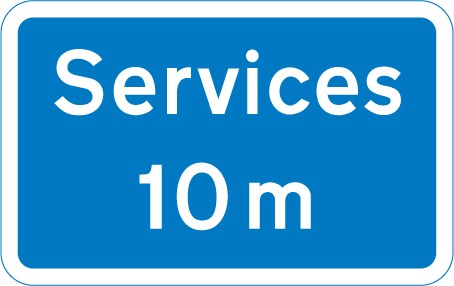 Motorway services | Fuel, food and rest via slip road | Information (motorway blue) |
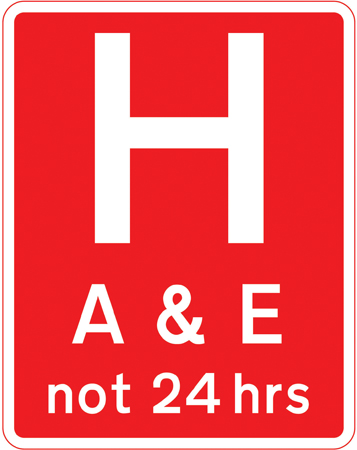 Hospital direction | Route to hospital on arrow shown | Information (blue) |
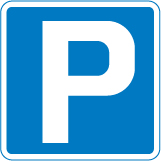 Parking place | Lawful parking facility ahead | Information (blue) |
Rules and Penalties
Using the hard shoulder when there is no emergency can result in a fixed penalty and points under motorway traffic regulations. Sitting in the car with the engine running for a comfort break beside an SOS cabinet still counts as misuse if traffic officers assess the stop.
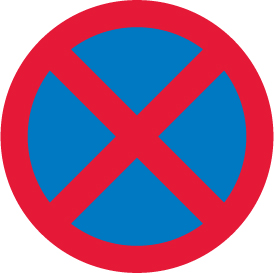
Failing to follow red X signals on smart motorways carries automatic penalties where cameras enforce lane closures. Breaking down does not excuse driving in a closed lane when you could have reached an emergency area signed with the handset symbol.
Causing danger by standing in a live lane while taking photos or fetching items from the boot can support careless driving allegations if other drivers swerve or brake sharply. Move people and pets behind the barrier before you debate insurance details.
Tampering with SOS equipment is a criminal offence. Learners should lift the handset only for genuine need during lessons; instructors explain the call flow without prank dialling, which wastes control room time.
Theory tests rarely quote “diagram 814” by number. They show blue pictogram sets and ask which facility matches a breakdown scenario. Learn the handset shape beside services and hospital distractors.
Check the latest theory test pass mark and book when you are ready via our booking guide.
Emergency telephone in Practice
Grace is midway through a supervised motorway lesson on the M62 near Brighouse when the car pulls slightly left and her instructor asks her to hold the wheel steady. A rear tyre has lost pressure fast; the instructor guides her to indicate left early and roll onto the hard shoulder without braking so sharply that the following lorry has to flash its lights.
Once stopped, Grace switches on hazard warning lights, selects park, and applies the handbrake. Her instructor reminds her that the hard shoulder is not a practice bay: they are there because continuing would damage the wheel and scatter rubber debris into lane one. Through the rain she spots a blue emergency telephone sign motorway crews mounted on a post fifty metres ahead, with a yellow arrow on the verge pointing to the cabinet.
They leave the car on the nearside, climb the shallow embankment, and stand behind the metal barrier while the instructor makes the SOS call. Grace reads the location numbers on the marker post aloud so she remembers them for the theory mock later. Traffic in lane one passes with a roar of spray; she understands why the Highway Code insists on getting away from the doors.
Control arranges a recovery window and warns approaching traffic. Grace does not cross to the central reservation to peek at oncoming lanes, and she does not walk back for her jacket when the instructor says to wait. A week later, revising signs at home, she picks the handset pictogram over a services fork in a scenario describing a puncture on the shoulder.
Her instructor notes that recognising the SOS panel early would have made the lane change calmer if Grace had seen the arrow one hundred metres sooner. They add the blue handset to her flashcards next to hospital and parking symbols so facility grammar stays distinct under exam timers.
How This Sign Appears on the Theory Test
Picture questions show blue motorway panels with mixed pictograms. Select the handset when the stem describes a breakdown on the hard shoulder and the need to call for help, not when the scenario mentions coffee, fuel, or A&E.
Distractors swap in hospital H arms, services icons, or tourist information symbols. Triangles warn of hazards ahead; the emergency telephone plate is information about equipment beside the carriageway.
Scenario items may ask what to do before walking to the phone. Lawful sequences include hazards, nearside exit, and standing behind the barrier. Answers that suggest changing a wheel in lane one or reversing along the shoulder are traps.
Smart motorway stems mention emergency areas and red X signals. Pair refuge pictograms with staying out of closed lanes, even when you feel anxious about stopping in a live lane.
Car candidates need forty-three correct answers from fifty questions within fifty-seven minutes. Practise sign filters on a free mock so SOS artwork is instant recognition, not a guess between similar blues.
Link revision to motorway rules chapters on stopping distances and fatigue. The sign appears rarely in hazard clips, yet breakdown behaviour beside fast traffic is a recurring theme in instructor briefings.
Take a free mock theory test and filter questions on road and traffic signs. Pair that with the warning signs guide for triangle symbols.
Test Yourself on UK Road Signs
Treat the white handset on blue as an SOS marker: stop only for genuine need, move people away from traffic, and use the cabinet before you wander beside live lanes. Rehearse the pictogram on a free mock theory test, then read motorway breakdown rules in The Highway Code so services, hospital and telephone symbols never blur together when a tyre fails on a wet shoulder.
Frequently Asked Questions
What does the emergency telephone sign on a motorway mean?
It marks an SOS phone on the hard shoulder or in an emergency area where you can call for help after a breakdown or crash. It is not a general rest stop symbol.
How far apart are motorway emergency telephones?
Phones are spaced at roughly one-mile intervals along many motorways, though exact spacing varies by road. Follow the blue panels and verge arrows rather than guessing.
Can I stop on the hard shoulder to use my mobile instead?
You may stop only for a genuine emergency. If you are already on the shoulder safely, walking to the SOS phone often gives operators a precise location even when mobile signal is weak.
Is the sign the same as motorway services?
No. Services signs point to fuel and food via a slip road. The handset symbol identifies emergency call equipment beside the carriageway.
Will the theory test show this symbol?
Yes. Items often mix blue pictograms and ask which matches a breakdown scenario. Learn the handset shape and the safe steps before you call for help.