
Last updated: October 2026 · Checked against Highway Code
Clearway Sign: meaning, rules and what to do
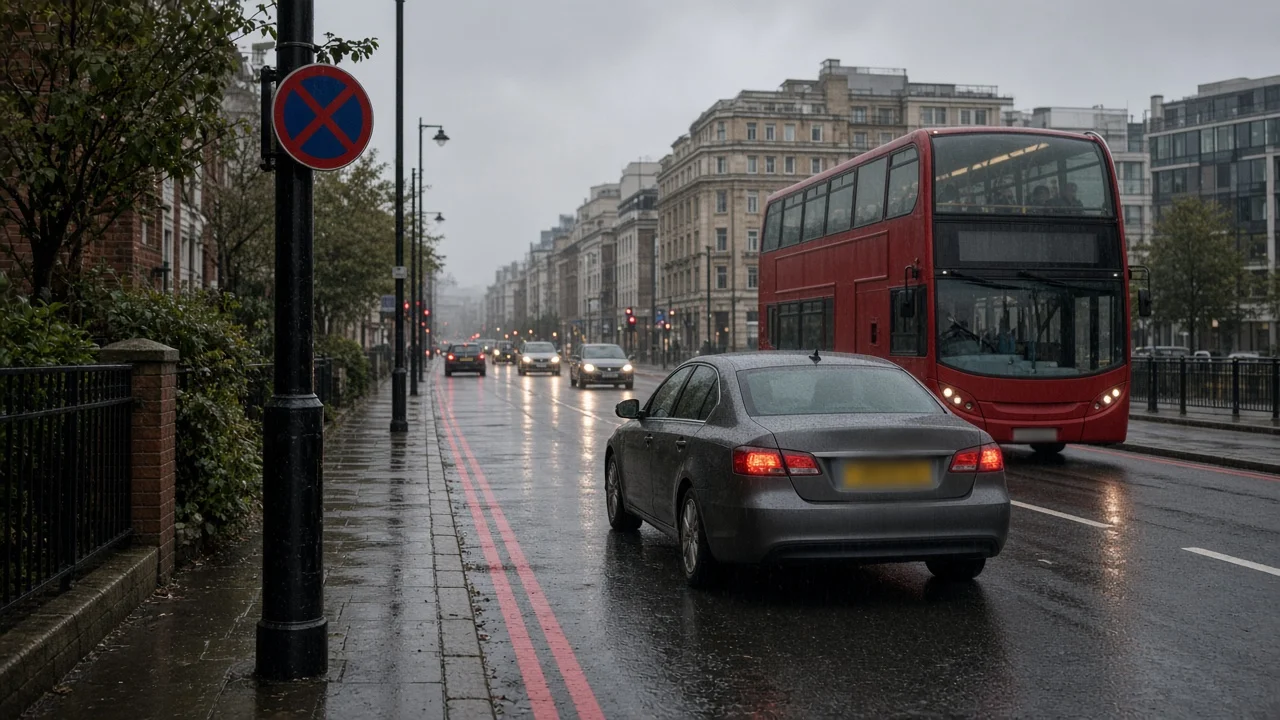
The UK clearway plate is a regulatory circle with a thick red border, a blue field, and a red cross through the centre. It marks a length where stopping is banned for all or part of the day, usually backed by yellow lines, repeat plates, or red-route markings that tell you exactly where the order runs.
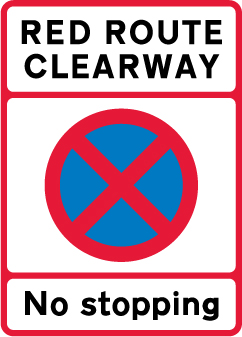
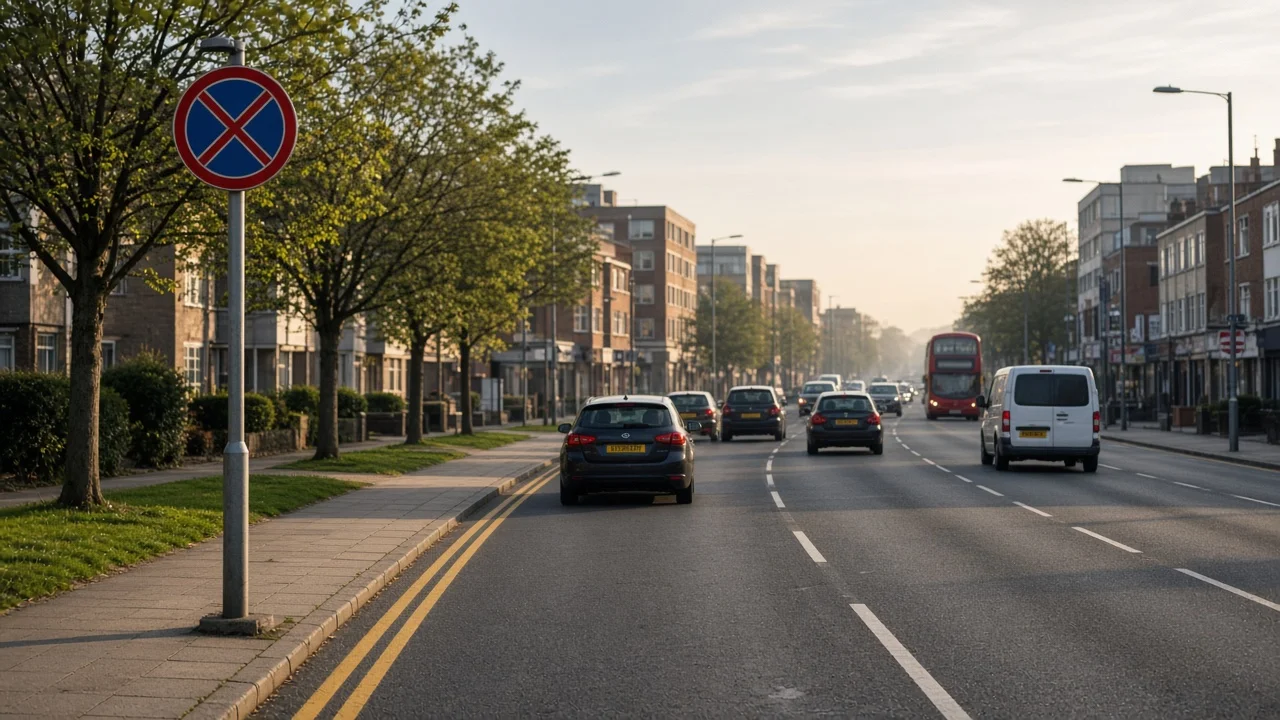
Sign image © Crown copyright, reproduced from GOV.UK traffic sign images under the Open Government Licence v3.0.
What the Clearway plate Sign Looks Like
The artwork follows the same regulatory grammar as other red-ringed orders: saturated blue centre, crisp white outer edge, bold red cross from rim to rim. Learners who drill no-stopping plates first sometimes hunt for two upright bars; the cross means clearway, not the double-bar no-stopping symbol.
Posts often sit on a rectangular white backing at the start of a restriction, with smaller repeat discs after side streets so drivers know the zone continues. A matching end plate cancels the order. Distance arrows on supplementary rectangles may point along the controlled length.
Time plates beneath or beside the circle list weekdays, morning peaks, school runs, or all-day bans on rural distributors. Faded yellow lines still bind if the order remains in force. Camera poles on bus corridors may show the cross even when paint looks sparse.
London red routes use double red lines with their own enforcement codes, yet you can still see the clearway cross where a borough order overlaps a TfL corridor. Do not assume one system replaces the other: read every face on the lamp post before you pause at the kerb.
Two red bars on blue forbid stopping at all times on that signed length. A single bar limits waiting. The clearway cross works with timed orders and yellow markings rather than replacing them. Our urban clearway guide walks through school-run plates and repeat signs on busy high streets; this page focuses on recognising the cross plate itself and obeying it beside red-route paint.
What the Clearway Sign Means
Traffic authorities use the plate where a stationary vehicle would block bus flow, tram overlap, or peak-hour queues on an arterial road. The symbol tells you a clearway order is in force on the length the signs face until an end plate, a break in markings, or a side road outside the zone.
Stopping means bringing the vehicle to rest on the controlled carriageway, engine on or off, hazard lights flashing, or a passenger stepping out while you hold position in lane. Rule 243 in The Highway Code groups clearways with other waiting controls: if plates forbid stopping between 7am and 10am, you must not halt on the marked section in that window.
Rural clearways can run twenty-four hours on fast single carriageways where lay-bys are rare. Urban clearways almost always pair the cross with clock plates and double yellow lines. Outside restricted hours, normal waiting rules return unless another order, such as double reds on a red route, still applies.
The plate regulates the carriageway the signs face, not every bay visible in a side street. Safe set-down may exist around the corner where markings end, but you must reach that pocket without stopping on the signed length first.
Emergency services may stop when necessary; private motorists should not copy them for a quick errand. Breakdowns are awkward: move off the signed length when you can, use hazards only while you are a genuine obstruction, and expect enforcement to be strict on camera corridors.
Ride-hailing pins often land on main-road kerbs. Passengers should meet drivers in side streets outside active hours. Accepting a curbside stop under a live clearway risks a penalty charge notice from a passing camera car or civil enforcement officer.
Northern Ireland uses the same cross-on-blue family on most public roads. If you revise in Belfast after studying GB plates, obey the pictogram layout the same way you would in Leeds or Cardiff.
On lessons through inner suburbs, name the cross aloud when you pass repeat plates. Instructors link the moment to mirror checks so learners do not copy a commuter who flashes hazards on a red route.
Sat-nav rarely shows clearway hours. Scan lamp posts on approach to stations and hospitals because the disc can hide behind foliage or a parked van.
School crossing patrols may step into the carriageway with a lollipop. Your queue must not inch into the yellow-lined length while children are still crossing, even if the clock has not reached the afternoon plate window yet.
Delivery drivers with permits still need to read time bands. A white van unloading at the wrong minute is not exempt because trade plates are on the windscreen.
Before you book a theory slot, run mocks that mix the cross with timetable stems. Flag any item you guess, then reread Highway Code rules 238 to 243.
Red-route double reds ban stopping at all times on that painted length in London regardless of clearway hours elsewhere. When both appear, obey the stricter control that applies to your wheels.
If supervising Priya or another learner, rehearse refusing to follow a taxi into a signed length. Examiners reward early recognition more than a hurried reverse among buses.
Night buses and early gritters sometimes pause under separate permits. Private cars cannot treat that as permission to wait for a passenger.
Highway Code rules 238 to 243 (waiting, parking and clearways)
Clearway plate vs Similar Signs
| Sign | Meaning | Legal or warning? |
|---|---|---|
| Clearway plate | No stopping on the signed length during restricted hours (or all day on some rural orders) | Regulatory cross on blue |
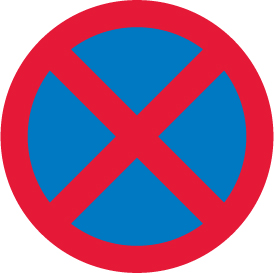 No stopping | No halting at any time on the signed length | Regulatory double red bar |
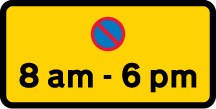 No waiting | No parking; brief pick-up may be allowed | Regulatory single red bar |
| Urban clearway zone | Timed no-stopping package with yellow lines on built-up roads | Clearway symbol plus markings |
| Red route markings | Double red lines with London-wide stopping bans when painted | Road marking plus TfL order |
Rules and Penalties
Stopping on a clearway during restricted hours is treated as a waiting offence. Local authorities enforce it with civil penalty notices. Points on your licence are uncommon for a stationary vehicle breach, but fines rise on London red routes and other premium zones.
Camera cars on bus corridors may capture your number plate without a warden present. The ticket can arrive by post days later, which surprises commuters who thought a thirty-second pause went unnoticed.
Blocking a bus gate or emergency access while stopped can trigger removal as well as the initial penalty charge notice. Courts do not accept ignorance of repeat plates as a defence.
On a driving test, stopping illegally on a signed clearway can count as a serious fault if it blocks traffic or forces others to swerve. Examiners notice hesitation at station forecourts.
Theory papers test whether you recognise the cross and obey the timetable in the stem. Choose answers that respect no stopping during active hours, not options that mention hazard lights alone.
Check the latest theory test pass mark and book when you are ready via our booking guide.
Clearway plate in Practice
Priya is eighteen, revising for her theory test while building weekday experience with her instructor, Amira. On a damp Tuesday they follow an A-road approach that becomes a red route with double red lines and a repeat clearway plate high on a pole Priya had never noticed on evening apps.
Traffic slows near a rail bridge. A grey saloon three cars ahead stops fully in the nearside lane, hazard lights ticking, while the driver leans across to hand a commuter colleague a forgotten laptop. Buses behind horn once; the saloon does not move.
Amira asks Priya to hold position short of the crown and name the signs she can see. Priya spots double reds at the kerb, then the blue disc with the red cross on a repeat plate after the last side street. White rectangles list Mon to Fri, 7am to 10am and 4pm to 7pm. The clock reads 8:12am.
Priya explains that the commuter is stationary inside an active clearway on a red route, so both the timed cross order and the double red marking forbid the halt. Hazard lights do not create a lawful waiting bay. Amira nods and takes the next side turn to a signed loading pocket where they practise a three-point turn instead of copying the saloon.
That evening Priya opens a mock question showing only the cross plate beside a timetable. She picks the option that says no stopping during the listed hours and rejects a distractor about setting down passengers with indicators on.
Before her next lesson she reads the urban clearway guide for school-run examples, then returns to this page to drill the bare plate for picture recognition. She can now tell an examiner the cross means clearway, not double-bar no stopping, and that red-route paint can tighten the rule further.
How This Sign Appears on the Theory Test
Multiple-choice items often show the cross on blue with a time plate and ask whether you may wait, load, or pick up. They rarely name the restriction in every option; instead they describe yellow lines, hours, or red-route paint.
Picture drills contrast the cross with one-bar and two-bar circles. Count symbols before you tap submit on touchscreen mocks.
Some stems mention hazard lights or a quick drop-off. Unless the scenario places you outside the signed hours or in a marked bay, the safe answer keeps the wheels rolling.
Hazard perception clips may show parked cars on bus routes. Clearway knowledge helps you predict why traffic bunches near stations even when the post is off-screen.
Filter revision by regulatory circles, then pair the cross with waiting-restriction bars in one sitting so shapes stay distinct under exam clock pressure.
Take a free mock theory test and filter questions on road and traffic signs. Pair that with the warning signs guide for triangle symbols.
Related Road Signs
Urban clearway
Timed zones, school plates and yellow lines on busy streets.
No stopping sign
Double red bars for absolute halt bans day and night.
Waiting restrictions
Single-bar orders and kerb markings for waiting limits.
No loading
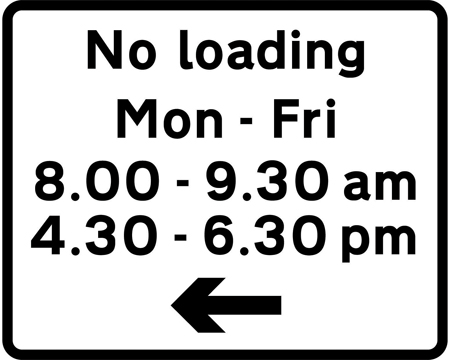
Barred lorry circle when goods movement is restricted.
Bus only
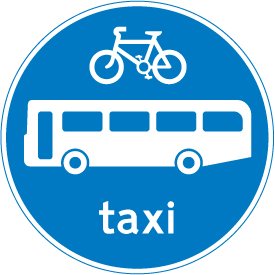
Lane plates that often sit on the same corridors.
Test Yourself on UK Road Signs
Learn the red cross on blue first, then read the timetable and markings that give it teeth. If you need to pause during restricted hours, leave the signed length or use a marked bay before you switch off. Pair this plate with the urban clearway guide for high-street detail, then run a free mock theory test to drill stopping signs beside speed roundels from the regulatory signs hub.
Frequently Asked Questions
What does the clearway sign look like?
It is a regulatory circle with a red border, blue centre, and red cross. Repeat plates often appear after junctions. White time plates state when stopping is banned.
Can I stop on a clearway to drop someone off?
Not during the hours on the plates. You must not bring the vehicle to rest on the controlled length, even briefly with hazard lights. Use a side street or bay outside the zone.
How is the clearway plate different from no stopping?
No stopping uses two upright red bars and usually bans halting at all times. The clearway cross works with timed orders and markings, so legal waiting may be possible outside the listed hours.
Does a red route override clearway hours?
Double red lines on a London red route forbid stopping at all times on that painted length. When both the cross and double reds apply, treat the location as a strict no-waiting corridor.
Will this sign appear on my theory test?
Yes. Expect photo questions that pair the cross with timetables or yellow lines. Revise rules 238 to 243 in The Highway Code and practise regulatory sign mocks.