
Last updated: October 2026 · Checked against Highway Code
Diversion Route Sign: meaning, rules and what to do
The yellow square with a thick black border and a bold black arrow is the standard UK diversion route plate. It tells you which way traffic must turn to stay on the official temporary path when the normal carriageway ahead is closed.
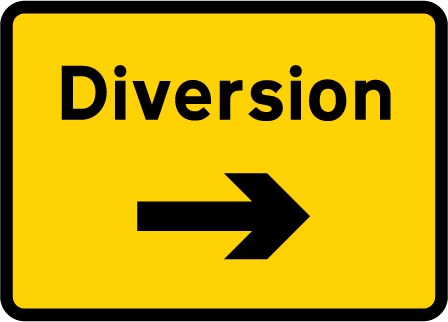
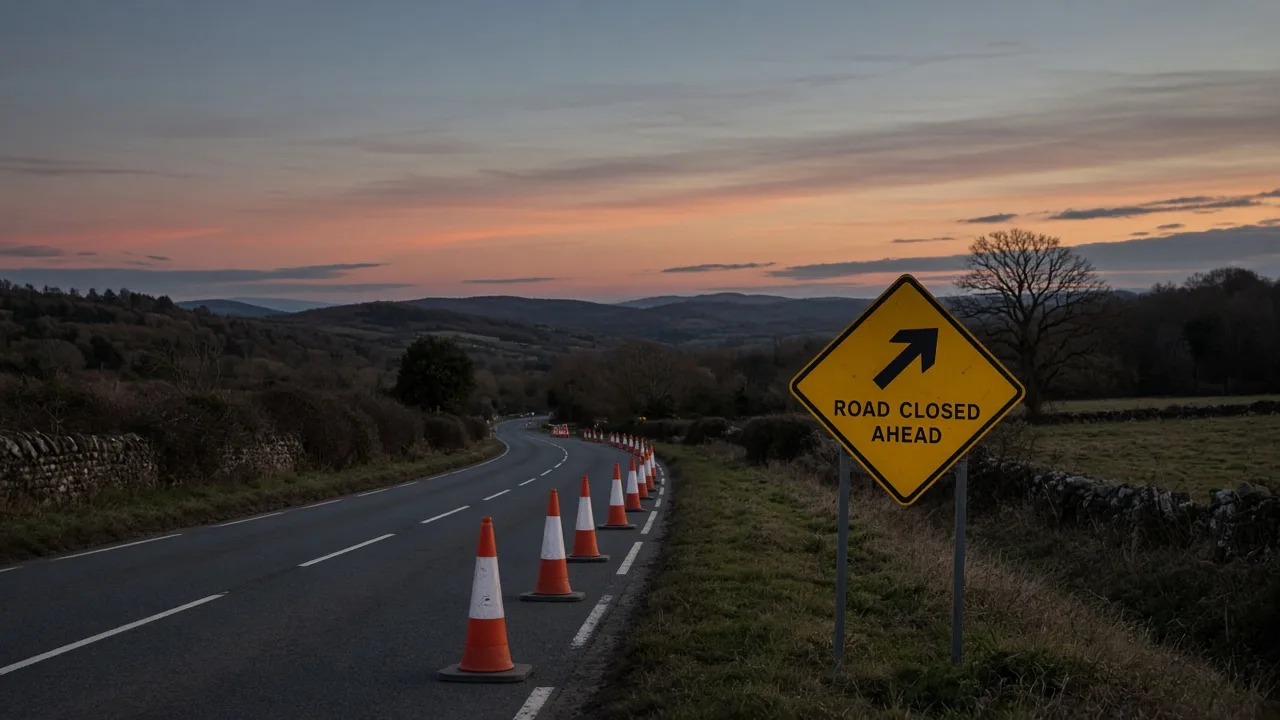
Sign image © Crown copyright, reproduced from GOV.UK traffic sign images under the Open Government Licence v3.0.
What the Diversion route Sign Looks Like
GOV.UK catalogue diagram 2710 shows a square yellow face, black rim, and a single black arrow that may point left, right, straight, or around a corner depending on the local scheme. On site the board is usually mounted on a metal frame, a lamp column, or a chapter-eight barrier beside the first cone taper.
Text is rare on the basic arrow plate; place names and route numbers often sit on separate yellow rectangles bolted beneath or ahead on the diversion line. At night retroreflective yellow sheeting keeps the arrow readable when headlamps skim wet tarmac and sodium lights colour everything orange.
Learners confuse the square with green primary direction boards, with blue motorway panels, and with red-ring prohibitions. The yellow background marks a temporary or roadworks-related instruction. A black arrow on yellow means follow this path for the diversion, not “give way” and not “no entry” unless a separate regulatory plate adds that order.
Repeaters appear at every fork where sat-nav might send you back toward the closure. Cones, temporary lights, and “road closed” barriers should match the arrow direction. If paint on the road shows a straight-ahead arrow but the yellow plate points left, obey the live diversion line.
Smaller versions appear on narrow village closures where a bridge deck is shut and traffic loops through a side street. HGVs may see an extra plate listing a longer lorry route while cars take a shorter loop. Read every face on the post before you commit across the cone mouth.
Permanent direction signs use green, white, or blue backgrounds with place names. Regulatory orders use red rings or blue mandatory circles. The yellow square with a black arrow is the roadworks diversion family: follow the signed temporary route until an end plate or open carriageway returns you to the normal network.
What the Diversion Route Sign Means
Traffic authorities and contractors install diversion route plates when a length of road must close for resurfacing, utility works, incidents, or events. The arrow answers which turn keeps you on the lawful path around the blockage, rather than warning about a distant hazard like a triangle would.
Rule 142 in The Highway Code expects you to read signs in good time. On a diversion that means slowing before the cone taper, choosing the correct arm at the first yellow board, and resisting the urge to follow the vehicle ahead if its indicators suggest a shortcut through the closure.
The diversion is binding for the signed scheme. Driving past cones into a closed carriageway can be treated as failing to comply with traffic signs or careless driving when workers or cameras observe it. Insurance may question a claim if you ignored a clear yellow arrow into a live excavation.
Sat-nav may not update until hours after a closure opens. Trust the yellow plates and any portable variable message signs before you trust a screen that still routes straight on. Many schemes publish a map online, but the live arrow at the kerb overrides memory from yesterday’s commute.
Pedestrians and cyclists sometimes receive parallel signed paths on footways or contraflow lanes. Motor traffic must stay on the arrowed carriageway unless a white plate permits buses or cycles to use a different arm. Do not mount the pavement because the main road queue looks shorter.
When the closure ends, look for “end of diversion” text on yellow or for cones pulling back to reveal fresh white lines. Rejoin the permanent route smoothly without stopping in the live lane to cancel a navigation app.
Northern Ireland and Great Britain share the same yellow diversion grammar on most public roads. If you revise in Belfast after practising in Manchester, the black arrow on yellow still means follow the official temporary line shown.
Before you reach roadworks, clear loose notes from the dashboard so you can glance at repeaters without fumbling. A passenger can call out arrow directions while you focus on mirror checks at each fork.
Leave extra following distance on gravel temporary surfaces. Spray from lorries can hide the next yellow board until you are already past the turn.
Bus and coach drivers know these loops well; learners should not assume a gap in traffic means the side road is optional. The diversion may send you past a school gate at pick-up time.
If you miss a turn, do not reverse along the diversion against oncoming flow. Continue to the next lawful junction, ask a marshal if one is posted, or follow repeaters on the loop back.
Electric vehicles still need to watch narrow chicanes with kerb build-outs. The arrow may route you through a width restriction your sat-nav never flagged.
Night closures use the same yellow faces with brighter retroreflectivity. Dip headlights when marshals stand near the cone mouth so they can see hand signals.
Pair revision with direction sign pages, because long diversions sometimes dump you on an unfamiliar A-road fork where green boards resume normal navigation.
Highway Code rules 142 to 144 (signs, roadworks and planning)
Diversion route vs Similar Signs
| Sign | Meaning | Legal or warning? |
|---|---|---|
| Diversion route | Follow the black arrow on the temporary path | Information (yellow) |
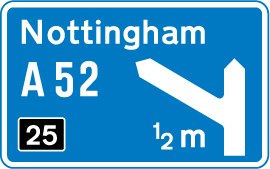 Primary route direction | Permanent A-road navigation on green boards | Direction (green) |
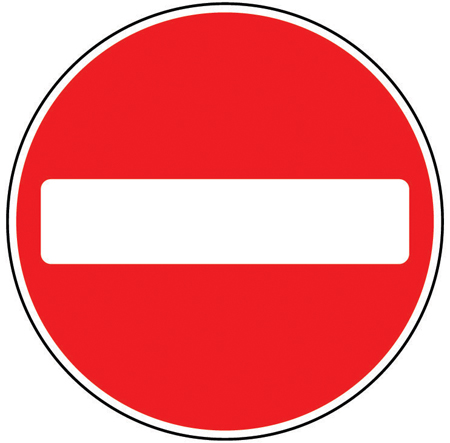 No entry | Do not enter the carriageway beyond the plate | Regulatory red circle |
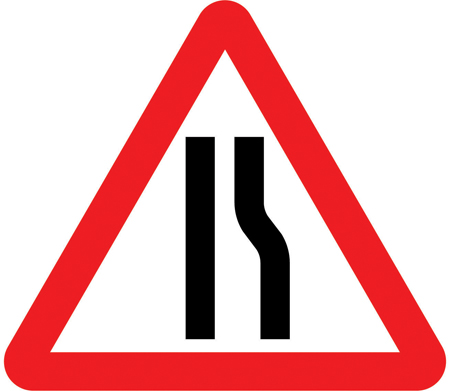 Road narrows both sides | Warning before width tightens | Warning triangle |
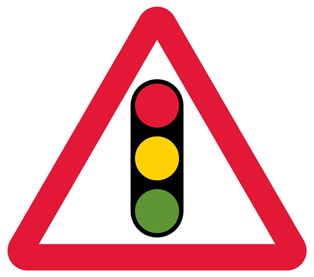 Traffic signals ahead | Lights control flow; often used in works | Warning triangle |
Rules and Penalties
Driving through a signed closure into an excavated lane risks fixed penalties for failing to comply with traffic signs, plus greater charges if workers must scatter or equipment is struck.
Ignoring a yellow diversion arrow and using a resident-only side street can upset local traffic orders where “except for access” plates still apply. Penalty charge notices may follow camera enforcement on bus or camera corridors along the detour.
Careless driving allegations can arise when you U-turn across cone lines because you missed an arm. Courts weigh whether a reasonable driver would have followed the repeaters.
Commercial drivers on timed routes still must obey live diversions. Operator licences can attract scrutiny when telematics show repeated drives through cone tapers to save minutes.
Theory tests rarely quote catalogue numbers aloud; they show yellow boards beside distractors about green navigation and red prohibitions. Learn the yellow-black roadworks family for closure scenarios.
Check the latest theory test pass mark and book when you are ready via our booking guide.
Diversion route in Practice
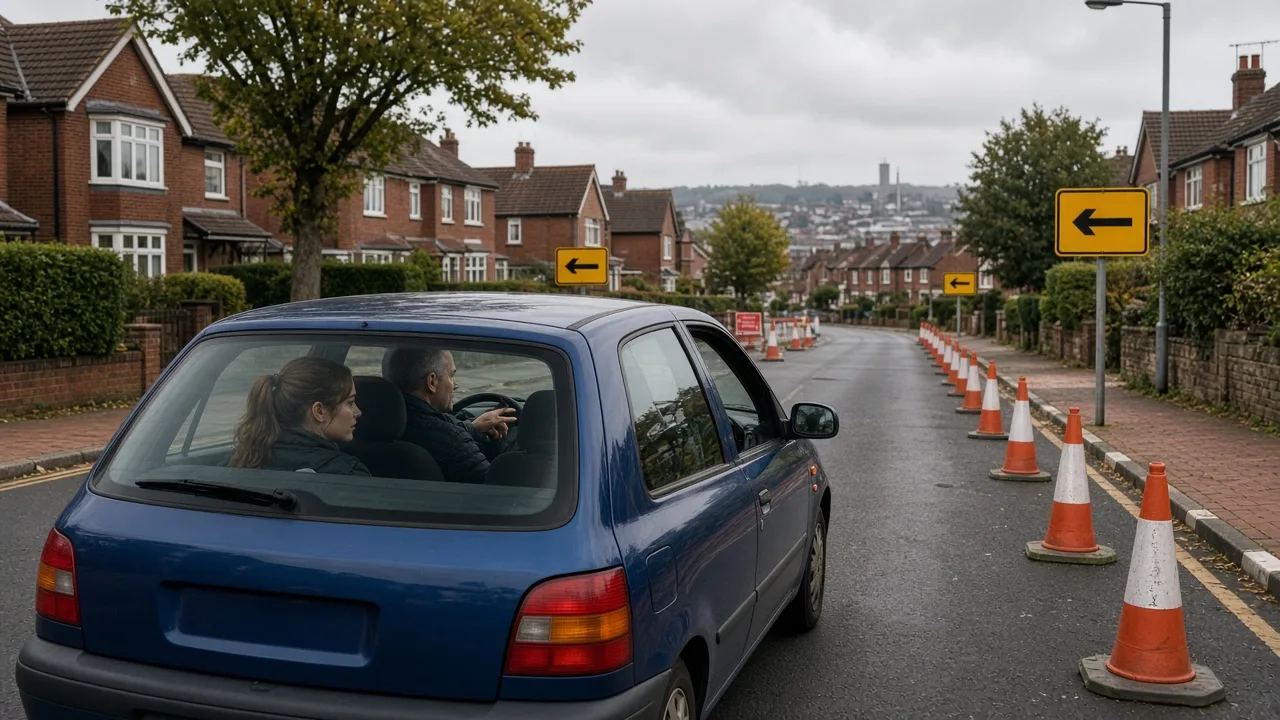
On a damp Saturday in Sheffield, learner driver Kate approaches a suburban A-road where steam rises from fresh tarmac. Orange cones pinch her lane, a “road closed” barrier blocks the straight ahead, and a yellow square on a barrier shows a black arrow sweeping left toward a housing estate spine road.
Kate checks mirrors, slows before the taper, and steers left as the first repeater confirms the same arrow beside a temporary 30 mph plate. Her instructor asks her to ignore the sat-nav voice insisting she stay on the main line, because the live diversion route plate is the authority until the scheme ends.
At a mini-roundabout on the estate loop, a second yellow board points right past parked cars. Kate signals early, gives way to a bus exiting the closure corridor, and keeps inside the cone line where a cyclist contraflow is marked on the footway.
Near the rejoin point, an “end of diversion” face sits beside fresh white lines. Kate merges smoothly, cancels the confused navigation prompt, and later scores a theory mock item by picking the answer that follows the black arrow on yellow rather than a green place-name board.
How This Sign Appears on the Theory Test
Closure scenarios show yellow squares with black arrows beside green direction distractors. Choose the option that follows the temporary signed path around works, not the permanent route straight ahead.
Picture banks crop the arrow to test silhouette memory. Only the yellow diversion family uses a square black-bordered plate with a single bold arrow for motor routing at closures.
Stems describe drivers who follow queues into cone tapers. The scored answer usually keeps the official loop even when locals appear to cut through.
Link the symbol with roadworks chapters: temporary lights, marshals, and narrow lanes often appear in the same item.
Hazard perception clips may show late swerves at cone mouths. Spotting the first yellow board early helps you hold lane position without mirroring a dangerous shortcut.
Car candidates need forty-three correct answers from fifty questions within fifty-seven minutes. Filter revision on information signs so yellow roadworks plates stay distinct from blue facility boards under exam pressure.
Take a free mock theory test and filter questions on road and traffic signs. Pair that with the warning signs guide for triangle symbols.
Related Road Signs
Primary route direction
Green boards resume when the diversion ends.
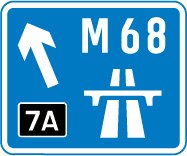
Motorway direction
Blue panels after long motorway closures.
No entry
Blocks wrong-way entry into closed lengths.
Traffic signals ahead
Temporary lights often pair with cone schemes.
Road narrows both sides
Width warnings common on chicaned detours.
Test Yourself on UK Road Signs
Treat the yellow square as a contract for the closure: follow each black arrow, read repeaters at every fork, and rejoin only where the scheme says the diversion ends. Rehearse roadworks scenarios on a free mock theory test before exam day.
Frequently Asked Questions
What does the yellow square with a black arrow mean?
It marks the official diversion route around a road closure or works. Follow the arrow direction on the signed temporary path until an end plate or open carriageway returns you to the normal road.
Must I follow a diversion if my sat-nav disagrees?
Yes. Live yellow plates and cones override navigation apps that still route through a closed section. Update your route after you clear the scheme.
Is the diversion route sign a speed limit?
Not by itself. Separate circular or rectangular plates may show temporary limits beside the yellow arrow. Read every plate on the post.
How is it different from a green direction sign?
Green boards guide permanent A-road navigation with place names. Yellow black-arrow squares are temporary roadworks routing around a closure.
Will the theory test ask about diversion signs?
Yes, often in roadworks and navigation items. Learn the yellow square family and pick answers that stay on the signed temporary path.