
Last updated: October 2026 · Checked against Highway Code
Non-Primary Direction Sign: meaning, rules and what to do
A non-primary direction sign is a white rectangular panel with black lettering and arrows that guides you along local routes, distributor roads, and many ring-road arms where green primary boards are not used.
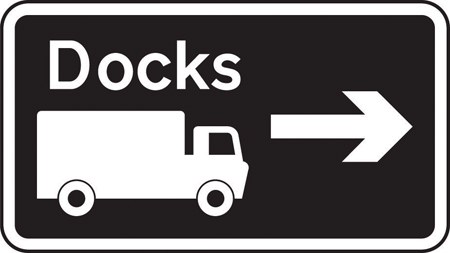
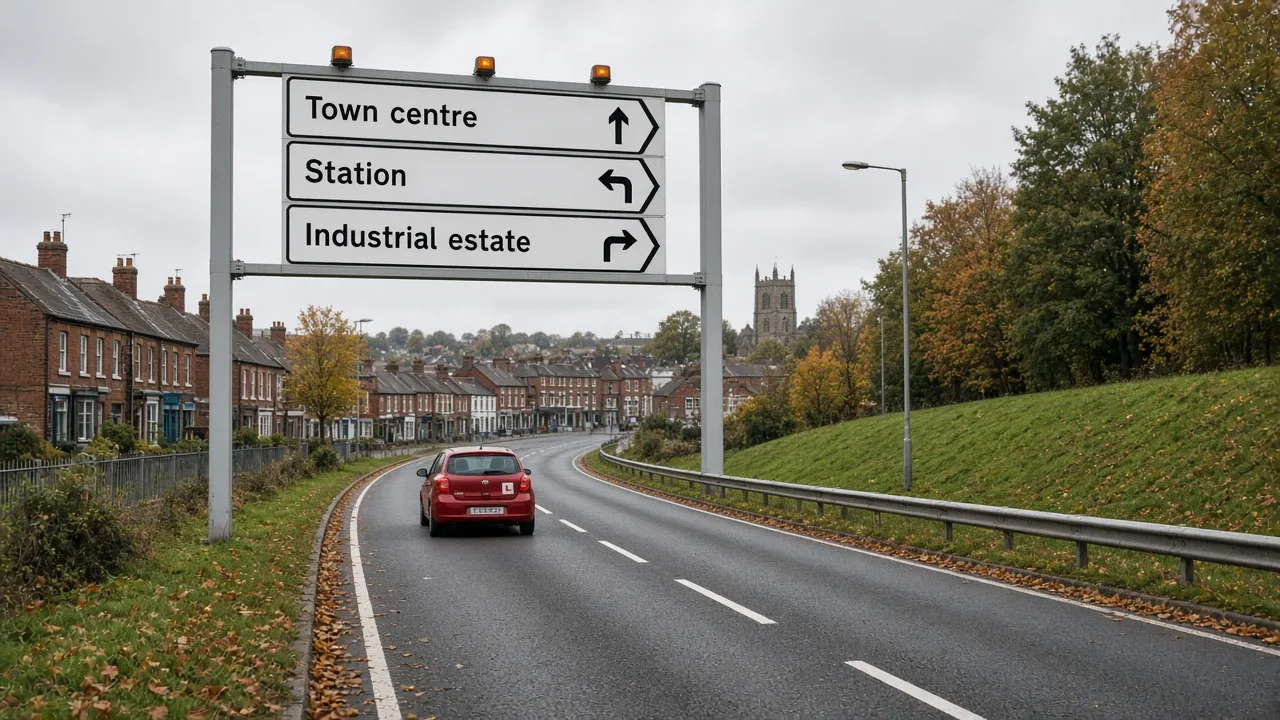
Sign image © Crown copyright, reproduced from GOV.UK traffic sign images under the Open Government Licence v3.0.
What the Non-primary direction Sign Looks Like
Standard local direction boards use a white field, thin black border, bold black Transport-style text, and solid black arrows showing which stream serves each fork. Distances may appear in miles, yards, or fractions of a mile beneath place names.
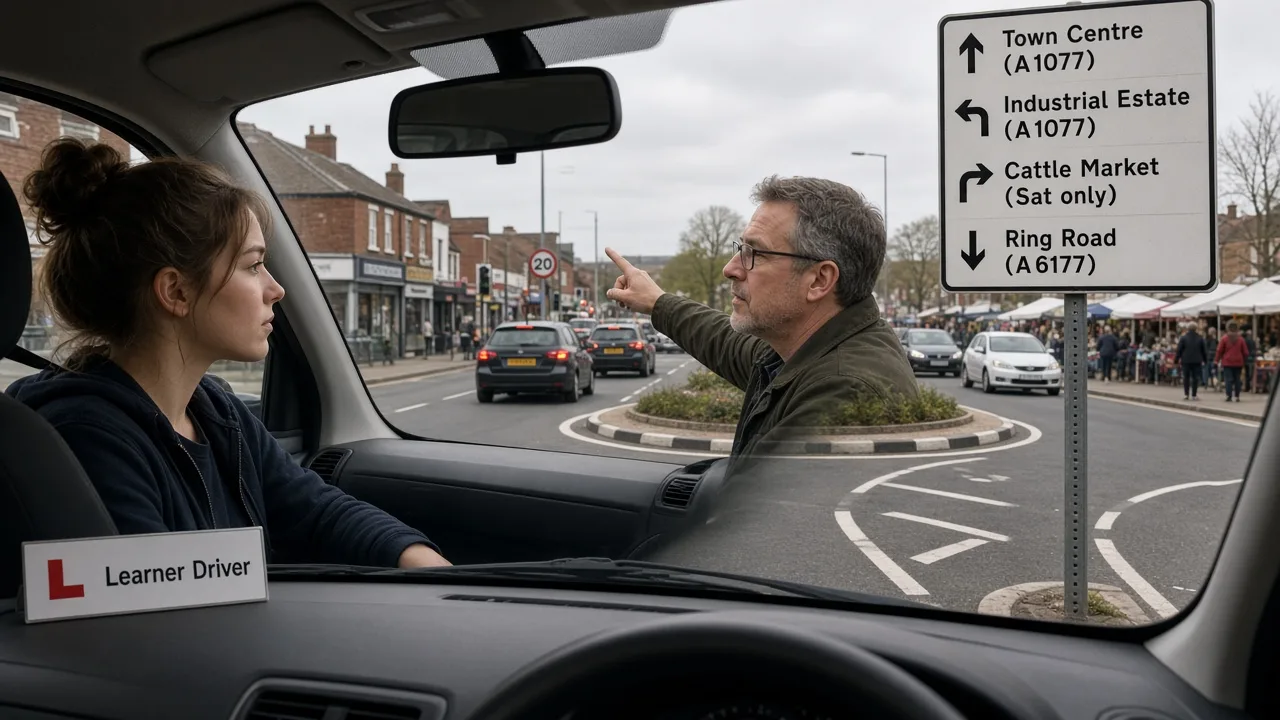
On a market-town ring road you often meet stacked arms: one white panel lists suburbs and industrial estates, while a separate green board on the same gantry carries primary A-road numbers. The white arms are the non primary direction sign family learners must not confuse with motorway blue or tourist brown.
Chevrons, lane arrows, and map-type diagrams on larger assemblies repeat the same black-on-white grammar. Supplementary white rectangles beneath can quote hospital names, park-and-ride sites, or weight limits without changing the background colour.
Temporary yellow diversion boards copy the arrow logic during roadworks but are not permanent catalogue items. At night retroreflective white faces keep black legends readable when sodium street lights glare on wet tarmac.
Some newer digital matrix panels mimic white direction styling with LED text. Treat them like fixed boards: read the live message, choose lanes early, and ignore sat-nav if the arrow on the structure points differently.
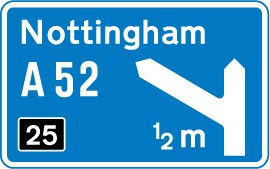
Green direction signs mark primary routes with white text and route patches. Blue boards belong to motorways. Brown rectangles sign tourist attractions. The non-primary family is white with black content for local and many orbital destinations. A ring-road name may appear on green or white depending on how the highway authority classifies that arm.
What the Non-Primary Direction Sign Means
Highway authorities use white direction panels where traffic needs clear place-name guidance without promoting a route to primary status. Suburban distributors, inner ring roads, and links between housing estates rely on them so drivers reach schools, retail parks, and station approaches without entering the core network.
Rule 142 in The Highway Code expects you to read direction signs in good time. On a busy orbital that means signalling and changing lanes before hatched gores, especially when two exits sit close together and the white board only names the nearer suburb.
Black arrows show lawful travel directions from the sign you face. They do not permit turning against a no-entry plate, using a bus-only throat, or crossing solid white lines to reach a filter lane at the last second.
Place names reflect local spelling and historic labels. A panel may still say “Town centre” when the high street was pedestrianised decades ago; the arrow shows which carriageway stream continues toward signed parking or relief roads.
Ring roads in medium-sized towns often mix sign colours on one structure. Staying on the orbital may require following a white arm that lists the next quadrant, while leaving for the market square uses another white fork or a green panel if that radial is primary.
Non-primary boards do not cancel speed limits, clearways, or bus lanes printed on separate regulatory plates. They answer “which way to the name shown?” rather than “what hazard is ahead?”
Northern Ireland uses the same white-and-black direction family on most public roads. If you practise in England then sit a test in Belfast, the grammar of black arrows on white remains consistent even when place names change.
Catalogue study groups these panels with other direction rectangles. Transport students file them beside primary green examples and motorway blues, not beside warning triangles or red prohibition circles.
Before you join a ring road, decide whether your destination is on the loop or inside the core. White boards name intermediate suburbs; missing your quadrant may mean an extra lap rather than a quick cut through narrow streets.
When supervising learner Imogen around a market town orbital, rehearse reading every arm on a gantry aloud: colour first, then arrow, then place name. Examiners reward early lane discipline more than correcting position across hatchings.
Sat-nav audio may say “take the second exit” without showing the same wording as the post. Cross-check white panels at every fork because phone maps shrink complex gantries into one blue line.
Market days and farmers’ markets clog inner approaches. The white board may still point “Town centre” while temporary no-entry orders close a terrace; obey live plates and marshals over memory from last week’s lesson.
Large vehicles need wider arcs on tight orbital roundabouts. If a white arm names an industrial estate with a low bridge ahead, a separate height circle on the same post matters more than the direction arrow alone.
Rain on a windscreen blurs distant gantries. Use route numbers on green neighbours as a backup when white text is hard to read, but never climb onto primary green lanes unless the panel and road markings agree.
Out-of-hours ring roads can feel empty yet keep 30 or 40 mph limits. White direction signs do not raise the limit; repeaters and street lighting cues still define lawful speed.
If you miss an exit, continue to the next signed junction rather than reversing on the live carriageway. Many orbitals offer a second white arm to the same suburb from the opposite side of the loop.
Highway Code rules 142 to 144 (direction signs and planning)
Non-primary direction vs Similar Signs
| Sign | Meaning | Legal or warning? |
|---|---|---|
| Non-primary direction | Local destinations on white boards | Direction (white/black) |
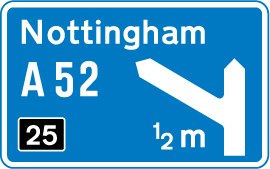 Primary direction | Primary routes on green boards | Direction (green/white) |
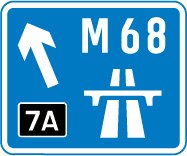 Motorway direction | Motorway routes on blue boards | Direction (blue/white) |
 Ring road panel | Orbital route naming | Direction (green or white) |
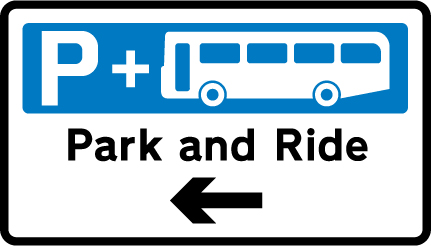 Park and ride | Car park linked to buses | Information (white direction) |
Rules and Penalties
The white direction board itself does not carry a fixed penalty schedule. Risk rises when poor lane discipline forces others to brake: last-second weaves across hatched gores attract police attention for careless driving.
Entering a bus lane or clearway to catch a missed white-signed exit can produce fines where cameras operate, even if the place name on the board matched your destination.
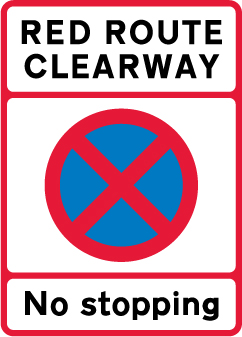
Stopping on a live orbital carriageway to read a map breaches clearway and red-route rules on many market-town approaches. Use a signed lay-by or leave at the next lawful exit.
Theory tests seldom quote “non-primary” in words; they show black-on-white graphics and ask which destination matches an arrow. Practical examiners watch lane position on approach to stacked ring-road gantries.
Habitual rat-running through pedestrianised cores after ignoring white ring-road arms may be challenged under local traffic orders even when no single sign breach is cited. Treat the panel as a prompt to stay on the signed distributor.
Check the latest theory test pass mark and book when you are ready via our booking guide.
Non-primary direction in Practice
Imogen is on a Saturday lesson with her instructor, practising navigation around the ring road that wraps a Gloucestershire market town. Sat-nav calls it “A417 bypass” but the gantry ahead shows white arms for “Stroud Road”, “Station”, and “Town centre”.
Her instructor asks her to reach the cattle-market car park without cutting through the pedestrianised high street. Imogen reads the white non-primary arms, spots “Cattle market” on the middle fork with a straight-ahead arrow, and moves left in good time while traffic is still flowing at forty miles per hour.
A van ahead hesitates, then swerves across the gore at the last moment. Imogen holds her lane, passes the conflict smoothly, and follows the white panel through a dual-lane roundabout where the same name repeats on a repeater post.
At the next junction a green primary arm lists the A46 while a white arm beneath lists “Industrial estate”. She explains aloud that green carries the long-distance number and white lists the local estate she does not need, so she stays with the cattle-market arrow instead of drifting toward the primary patch.
On the return leg she ignores a phone prompt to “exit ring road” because the overhead white board still shows her suburb on the straight-ahead stream. She names the sign type for her instructor: white field, black text, local direction, not a speed limit or hazard warning.
That evening she drills a mock theory item showing black arrows on white beside a green panel and picks the answer that matches the white arm to the named suburb. The market-town story fixed the colour grammar better than memorising a single photograph.
How This Sign Appears on the Theory Test
Navigation items show white direction boards with several place names. Match the arrow to the destination named in the question stem, not to the longest road number on a neighbouring green arm.
Contrast white local panels with green primary and blue motorway examples in the same diagram. Examiners swap colours to test whether you read background hue before reading text.
Scenario questions may describe a driver following a primary green lane when a white arm listed their suburb. The lawful pattern is to follow the board that names your exit, moving early without crossing hatchings.
Car candidates need forty-three correct from fifty multiple-choice questions in fifty-seven minutes; sign recognition sits inside that mix. Use timed mocks so one complex gantry graphic does not consume half the exam.
Hazard perception clips sometimes show late lane changes before ring-road splits. Click when brake lights cluster because a driver swerved for a missed white-signed exit, not when a distant gantry first appears.
Picture questions may show only black arrows without the words “non-primary”. Identify the white rectangle family and treat it as local direction information rather than a prohibition or warning triangle.
Take a free mock theory test and filter questions on road and traffic signs. Pair that with the warning signs guide for triangle symbols.


Test Yourself on UK Road Signs
White boards with black arrows carry everyday navigation on ring roads and local distributors: read every arm, choose lanes before gores, and let colour tell you whether a route is local or primary. Practise on a free mock theory test so gantry graphics feel familiar before exam day.
Frequently Asked Questions
What is a non-primary direction sign?
It is a white direction panel with black text and arrows that guides you to local places, many ring-road exits, and distributor routes that are not signed as green primary roads.
How is it different from a green direction sign?
Green boards mark primary routes with white lettering and often show prominent route numbers. White boards list local destinations with black content and are common on town ring roads and estate distributors.
Does a white direction sign set the speed limit?
No. It only shows destinations and arrows. Speed limits come from circular signs, repeaters, and street lighting rules on that carriageway.
Should I follow white boards on a ring road?
Yes when they name your suburb or exit. Orbital routes often use white arms for local places and green arms for primary numbers on the same structure.
Will the theory test ask about non-primary direction signs?
Questions usually show the white panel artwork and ask which destination matches an arrow, or they contrast it with green and blue boards. Learn the colour grammar rather than one town map.