
Last updated: October 2026 · Checked against Highway Code
Bypass Sign: meaning, rules and what to do
Green direction boards that name a bypass tell you to stay on the signed relief road so through traffic, coaches, and lorries can skirt a congested town centre without cutting through narrow high streets.
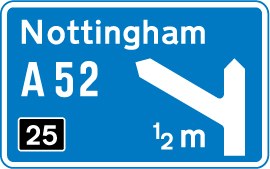
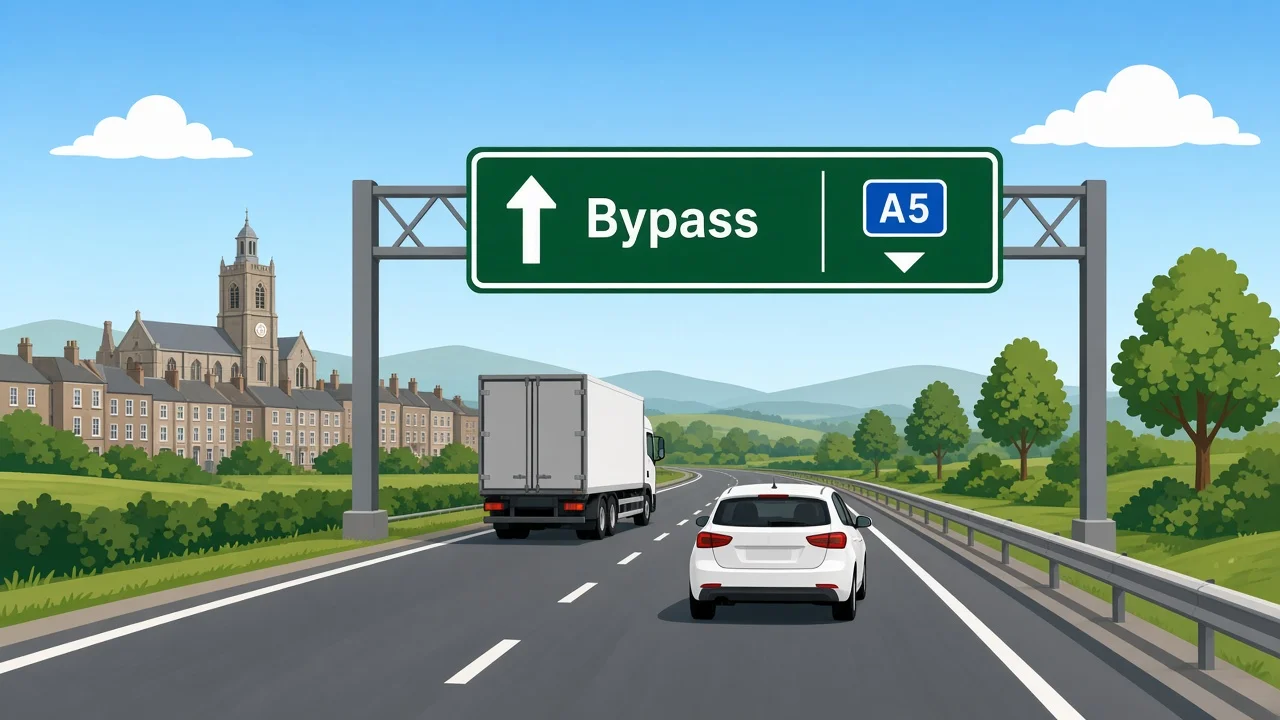
Sign image © Crown copyright, reproduced from GOV.UK traffic sign images under the Open Government Licence v3.0.
What the Bypass Sign Looks Like
GOV.UK catalogue diagram 2204 shows the standard wording on a primary route direction sign: white “Bypass” text on a green rectangle, often beside yellow route number patches and place names on the same arm. Chevrons on gantries repeat the legend above dual carriageways where the main stream stays on the relief road.
The plate is horizontal, mounted on a post at a fork or duplicated overhead. A separate arm may list “Town centre” with a left filter while the bypass name sits on the straight-ahead arrow. Distances sometimes appear in miles or fractions of a mile on repeaters after busy junctions.
It is not a warning triangle, not a brown tourist board, and not a yellow diversion symbol for temporary closures. Non-primary white boards can name local distributors, but the familiar bypass label usually appears on green primary grammar where a new road was built to carry through traffic.
Night driving relies on retroreflective green and white faces. Rain on a windscreen can blur distant legends, so use route numbers as a backup when the word smears. Sat-nav may say “bypass” in speech while the screen shortens the town name; trust the live panel at the fork.
Some councils pair the bypass name with a small pictogram of a truck on supplementary plates where HGV routing is encouraged. That rectangle refines advice; it does not turn the green board into a mandatory lorry route order by itself.
Ring road panels name an orbital loop that may wrap several suburbs. Diversion route symbols on yellow boards mark temporary closures during roadworks. A town centre arm on the same gantry peels traffic into streets with shops and bus gates. The bypass legend usually means stay on the purpose-built relief carriageway that skirts the retail core, not every green arrow that avoids a village green.
What the Bypass Sign Means
Highway authorities label relief roads so drivers visiting one side of town need not thread through pedestrianised streets. The bypass sign UK learners meet in mocks answers which stream keeps through traffic on the fast link versus peeling off for the high street.
Rule 143 in The Highway Code expects you to plan ahead and read direction signs in good time. On busy approaches that means choosing lane two or three before solid white lines appear, especially when an HGV convoy sits in lane one beside a nearside filter for the centre.
Route numbers on yellow patches can continue for many miles even when place lists change. Trust the panel in front of you rather than memory from an old map. One fork may show the same A number on both arms with different town names; pick the arm that lists bypass or your through destination.
Green boards do not exempt you from speed limits, speed cameras, or bus lanes on separate white rectangles. They describe where the carriageway goes, not who may stop or which lane is camera enforced.
Relief roads sometimes end at a roundabout where white local arms take over. Watch for a sudden background colour change from green to white on the next post, which tells you the strategic bypass has stepped down to a non-primary distributor.
HGVs and coaches rely on bypass labels because height and weight orders often block the historic centre. Learners should rehearse reading overhead arrows while checking mirror blind spots, because a lorry beside you may hide a nearside filter for a different town.
Smart sections with variable limits still apply on relief dual carriageways. The bypass name describes function, not a special exemption from local traffic orders or clean air zones that sit inside the old core.
Before you commit across hatched gores, decide whether you need the relief through route or the town centre arm. Last-second weaves fail practical tests and unsettle traffic on fifty-mile-per-hour approaches.
When supervising learner Megan on an A5 lesson past a Midlands market town, rehearse calling out bypass and centre names aloud as each gantry passes. Examiners reward steady lane discipline more than late heroics at the fork.
If you miss an exit, continue to the next junction rather than reversing on the dual carriageway. Many relief roads offer a parallel rejoin after one loop or a safe turn at a roundabout.
Do not follow a queue into a lane whose arrow lists a destination you do not need. Bypass routes attract confident locals who know the shortcut; read every arm before you merge.
Bus lanes beside relief carriageways stay enforced even when a green board points the same way. White regulatory plates beside the post still govern who may use the nearside lane.
Winter sun low on the horizon can wash out green faces. Dip visors and reduce speed slightly so you have time to read repeaters after a blind crest.
Out-of-town retail parks sometimes erect private direction boards that mimic council colours. Official green primary arms cite A-road numbers and match the GOV.UK layout rather than a shop logo alone.
Pair revision with ring road and primary direction panels, because orbitals and relief roads often share green grammar with different place lists.
Highway Code rules 142 to 144 (direction signs and planning)
Bypass vs Similar Signs
| Sign | Meaning | Legal or warning? |
|---|---|---|
| Bypass panel | Stay on the relief road around the core | Direction (green) |
 Ring road panel | Stay on the orbital loop | Direction (green or white) |
 Primary route direction | Lane for the main numbered A-road link | Direction (green) |
 Non-primary direction | Local streets on white boards | Direction (white) |
| Town centre filter | Peel into streets serving the core | Direction (green arm) |
Rules and Penalties
Missing a signed relief exit is not an offence, but careless lane changes across hatched areas can attract police attention when following traffic must brake hard.
Using a hard shoulder or bus lane to recover a missed fork can produce fines where cameras operate. Green navigation arms do not override mandatory regulatory plates.
Stopping on a live relief carriageway to read a map breaches clearway and red-route rules on many approaches. Use a signed lay-by or leave at the next lawful exit.
Theory tests seldom quote diagram numbers aloud; they show green boards and ask which lane matches a destination. Practical examiners watch lane position on fast approaches even when the test route avoids the slip you feared.
Rat-running through pedestrianised cores after ignoring bypass arms may be challenged under local traffic orders even when no single sign breach is cited. Treat the panel as a prompt to stay on the signed distributor.
Check the latest theory test pass mark and book when you are ready via our booking guide.
Bypass in Practice
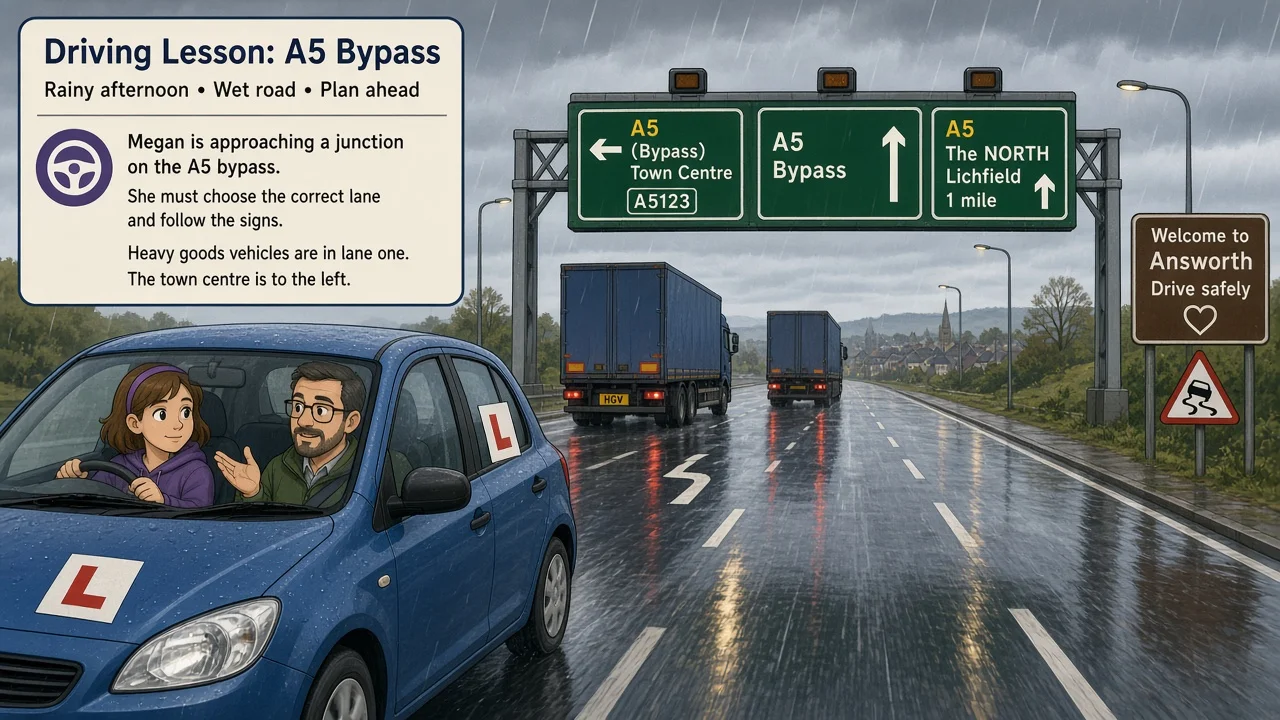
Megan is on a Thursday afternoon lesson with her instructor on the A5 relief dual carriageway that skirts a Shropshire market town. A queue of HGVs fills lane one, and an overhead gantry lists white place names on green arms: straight ahead names the bypass with a yellow A5 patch, the left filter shows “Town centre”, and a right arm points to an industrial estate.
Three hundred metres back, Megan reads the panel aloud and holds lane two while the broken white line still allows a smooth position. She checks the offside mirror for an artic that might hide the nearside filter, then keeps a steady forty-five miles per hour rather than braking late at the gore where spray from lorries cuts visibility.
A box van ahead swerves left at the last moment toward the high street arm. Megan stays with the through bypass arrow, does not chase the van across solid white hatchings, and notes that the green board named the relief link, not every driver’s chosen shortcut through narrow streets.
After the fork, a repeater confirms the yellow A5 patch still applies. Megan links the scene to a theory mock item that cropped the board to the bypass legend alone and asks which lane keeps through traffic off the core. She picks the straight-ahead arm with the matching number, not the town centre filter.
On the return leg they pass the same gantry from the opposite carriageway. Megan explains to her instructor that outbound arrows mirror inbound names, and that missing this fork would mean continuing to the next roundabout rather than reversing on the dual carriageway. Calm early lane choice beside HGVs is what examiners expect on relief-road lessons.
How This Sign Appears on the Theory Test
Navigation items show green boards with mixed place names and yellow route patches. Select the lane whose arrow lists the bypass or your through destination and A-road number, not the town centre unless the stem asks for it.
Distractors swap in blue motorway panels, white non-primary arms, and brown tourist signs. Read background colour and number style before you tap.
Some stems describe a driver who follows a queue into the wrong lane. The safe answer moves early using the posted arrows, not panic weaving at the gore.
Car candidates need forty-three correct answers from fifty questions within fifty-seven minutes. Practise green-board filters on a free mock so lane logic stays automatic under time pressure.
Pair direction revision with roundabout and give-way drills, because relief forks often sit one junction after a large roundabout with its own arrow sets.
Hazard perception clips sometimes show late lane changes before relief splits. Click when brake lights cluster because a driver swerved for a missed green arm, not when a distant gantry first appears.
Take a free mock theory test and filter questions on road and traffic signs. Pair that with the warning signs guide for triangle symbols.
Related Road Signs
Ring road sign
Orbital routes that use similar green grammar.
Primary direction sign
Yellow route patches on strategic A-roads.
Non-primary direction
White boards for local centre spurs.
Roundabout ahead
Warning before lane choice at large junctions.
Give way sign
Priority at the mouth of many slip roads.
Test Yourself on UK Road Signs
When the board names a bypass on green with route patches, you are choosing the relief stream that keeps through traffic out of the core. Practise reading arms early on a free mock theory test, then rehearse a real dual-carriageway fork with your instructor so hatchings and repeaters feel familiar before test week.
Frequently Asked Questions
What does a bypass sign on a green board mean?
It tells you to stay on the signed relief road around the town centre rather than peeling into the core on the filter arm. Follow the arrow that lists the bypass name and your route number.
How is a bypass different from a ring road?
A ring road names an orbital loop that may wrap several suburbs. A bypass usually describes one relief carriageway built to carry through traffic past a congested centre, though both can appear on green direction panels.
Does the bypass panel set the speed limit?
No. A bypass name board is guidance only. Posted limits still come from red-ring numerals or street lighting rules on the relief road you choose, so read those plates after you commit to the outer route.
Should lorries use the bypass arm?
Heavy vehicles often rely on relief roads because weight and height orders may block the historic centre. Read every arm; supplementary plates may encourage HGV routing without making the nearside lane mandatory for cars.
Will the theory test ask about bypass signs?
Questions usually test reading green direction signs and choosing lanes, which relief panels illustrate. Learn the green-board logic rather than memorising one town map.