
Last updated: October 2026 · Checked against Highway Code
Public Toilet Sign: meaning, rules and what to do
The public toilet sign on UK tourist boards is the white WC letters inside a box on a brown information panel, often grouped with parking, picnic, telephone and viewpoint pictograms and a distance plate such as one mile.
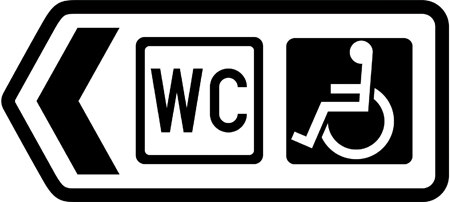
Sign image © Crown copyright, reproduced from GOV.UK traffic sign images under the Open Government Licence v3.0.
What the Public toilet Sign Looks Like
GOV.UK catalogue diagram 2307 shows the familiar brown square with a white border and several white facility symbols in a grid. The WC sits in its own box, usually beside a blue-backed P for parking and an information i. Picnic tables, telephones and viewpoint sun symbols often share the same board because councils bundle amenities at one pull-in.
On A-roads and near visitor attractions the panel may be brown with black legend on white direction arms, matching other tourist signing. On motorway approaches you more often see the same pictograms on blue primary panels at services exits, still with a WC or toilets wording rather than a regulatory order.
Distance plates beneath read 400 yds, ½ mile or 1 mile. Repeaters after side junctions help drivers who joined the route late. At night retroreflective white faces catch headlamps while the brown field stays comparatively dark, so scan early before you pass the last safe turn.
Learners confuse the tourist WC with hospital H panels, plain blue parking squares, or knife-and-fork services symbols on motorway blues. The WC block marks lavatories specifically; it does not promise fuel, hot food or emergency care on the same arrow unless those pictograms appear too.
Temporary yellow diversion boards during roadworks sometimes list toilets beside a black arrow. Treat them as navigation for the signed diversion, not as an excuse to stop on the running carriageway while queues build.
Motorway services direction signs may show knife and fork, fuel pumps or bed symbols for rests and fuel, while brown tourist boards group WC with picnic and viewpoint icons for countryside lay-bys. Blue parking P plates point to bays without guaranteeing toilets. Hospital H symbols lead to clinical sites, not every public lavatory near a retail park.
What the Public Toilet Sign Means
Highway authorities publish toilet pictograms where drivers need early warning of lavatories, often combined with parking because the facility is reached on foot from a bay. The sign answers “where can I legally stop for a comfort break?” at a high level; local waiting orders and payment rules still apply on the forecourt.
Rule 142 in The Highway Code expects you to read direction and information signs in good time. For comfort stops that means signalling before a services deceleration lane or tourist exit, not swerving across hatched gores because the brown board appeared late behind a lorry.
The WC symbol does not override motorway rules. You must leave the main carriageway through a signed slip or emergency protocol; comfort is not a reason to use the hard shoulder when the lane is live. Once inside a services area, internal one-way arrows, pay barriers and pedestrian crossings define how you move between the car park and the building.
Brown tourist information signing covers attractions and amenities in rural and heritage settings. The same WC box can appear on a village approach where the only toilets sit behind a pub car park, with a picnic symbol showing a council-maintained table area nearby. Read the full grid before you assume every icon shares one doorway.
Blue information panels on non-motorway routes sometimes repeat WC text near council-run toilets in seafront car parks. Payment machines, maximum stay limits and disabled bay symbols sit on white rectangles lower on the post. The tourist pictogram starts the search; plates at the bay finish the contract.
Facilities may close overnight or seasonally. A board facing the outbound carriageway can still show one mile while winter hours restrict the block. Check service station websites on long journeys rather than relying on memory from a summer trip.
Plan comfort stops before concentration fades. On the M1 or M6, services spacing is predictable; mark the next signed exit on a paper list so you are not hunting pictograms while tired.
Car parks beside tourist boards may charge even when the WC is free. RingGo codes and pay-on-foot barriers are common at heritage sites. Display a valid ticket before you walk to the block.
Disabled access varies. Radar keys, changing places rooms and step-free routes are not promised by the WC pictogram alone. Follow on-site signs to the accessible entrance rather than the shortest footpath across a coach stand.
Coach and lorry bays sit apart from car parking at many services. Do not block a coach stand while you sprint to the building; marshals and CCTV enforce keep-clear zones quickly.
Parents supervising learners should rehearse calm services entries. Queues at tills and petrol forecourts are poor places to practise clutch control; select first gear once and keep a gap to the car ahead.
Petrol vapour and wet diesel make forecourt corners slippery. Brake before the zebra crossing at the shop mouth, not on the marking itself.
Highway Code rules 142 to 144 (planning, direction signs and lane discipline)
Public toilet vs Similar Signs
| Sign | Meaning | Legal or warning? |
|---|---|---|
| Public toilet (WC) | Lavatories at the facility on the arrow | Information (brown tourist) |
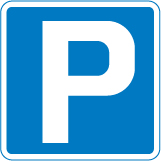 Parking (P) | Parking place linked to the facility | Information (blue or brown) |
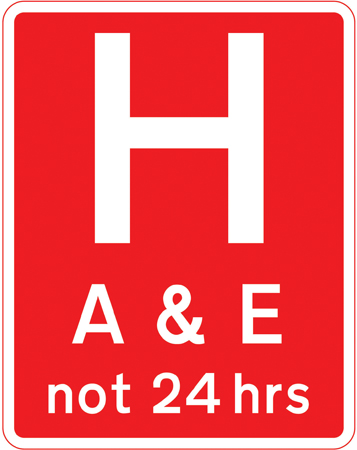 Hospital direction (H) | Route toward hospital facilities | Information (blue) |
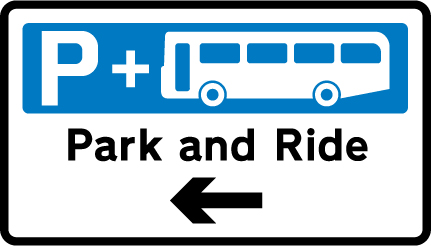 Park and ride | Car park with linked bus services | Information (white direction) |
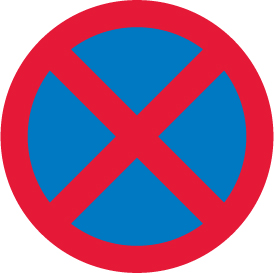 No stopping | Stopping forbidden on the signed length | Regulatory circle |
Rules and Penalties
Stopping on a motorway hard shoulder without a genuine emergency breaks motorway regulations even when you feel uncomfortable. Use the next services exit shown with toilet or WC pictograms, or follow emergency telephone guidance.
Parking in a coach stand, fuel pump lane or keep-clear hatch at services can bring penalty charge notices or removal. Information boards do not exempt you from forecourt orders printed on white plates.
Urban clearways and red routes beside town-centre toilets still forbid kerb waiting. Peel into the signed car park rather than hazard lights on a bus lane while a passenger runs inside.
Misreading a services fork and cutting across solid white hatchings can attract careless driving attention when following traffic brakes hard. Early lane discipline matters more than saving two minutes.
Theory tests rarely quote diagram numbers aloud; they show mixed pictogram panels and ask which symbol marks public lavatories versus parking alone, hospital access or food services. Learn the WC box by shape, not by memorising one junction layout.
Check the latest theory test pass mark and book when you are ready via our booking guide.
Public toilet in Practice
Aisha is midway through a motorway lesson with her instructor when traffic stacks after a summer shower on the M40. Her instructor suggests using the next services for a short comfort break rather than rushing past with stiff shoulders and a full bladder.
A blue direction gantry lists fuel, food and a WC pictogram beside the services name. Aisha checks mirrors, signals left in good time, and rolls into the deceleration lane without braking sharply on the main carriageway. A following hatchback tries to dive from lane three at the last marker; Aisha holds her line and lets it pass rather than swerving toward the chevron hatch.
Inside the car park she reverses into a bay facing out, as her instructor prefers for safe rejoining. They walk past a brown tourist repeater that shows WC, picnic tables and parking one mile, which matches the cluster on the building wall near the entrance. Aisha notes that the board informed them earlier; it did not permit stopping on the motorway itself.
After the break she pays at the barrier, waits for a gap on the slip road, and accelerates smoothly to motorway speed. In a later mock theory session she spots the same WC box beside a parking P and picks the answer for public toilets, not the hospital H or knife-and-fork services panel.

How This Sign Appears on the Theory Test
Facility questions mix brown tourist grids and blue motorway panels. Choose the WC symbol when the stem asks about public lavatories, not when it describes food, fuel or emergency telephones.
Distractors show parking P alone without a WC box. Parking may exist without toilets; only the combined panel or explicit WC pictogram promises lavatories on that arrow.
Scenario items describe a driver who stops on the hard shoulder for comfort. The safe answer uses a lawful services exit; pictograms do not relax motorway stopping rules.
Distance plates test whether you read the whole board. A one mile line means plan early; it does not invite stopping immediately in a live lane.
Hazard perception clips may show sudden lane changes toward a services fork. Spotting toilet and parking symbols early helps you mirror smooth entries instead of copying a late cutter.
Take a free mock theory test and filter questions on road and traffic signs. Pair that with the warning signs guide for triangle symbols.
Related Road Signs
Parking sign
Parking pictograms often sit beside WC on tourist boards.
Hospital sign
Blue H panels for clinical sites, not every public lavatory.
Park and ride sign
Combined parking and transport, rarely a motorway WC stop.
No stopping sign
Stopping bans on approaches where kerb waits are unsafe.
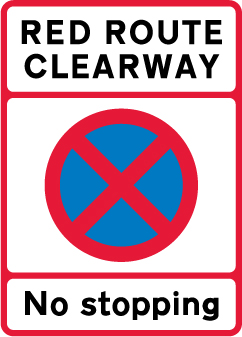
Clearway sign
No stopping periods on lengths near town-centre facilities.
Test Yourself on UK Road Signs
Treat the WC pictogram as a planning cue: read the full brown or blue panel, choose a lawful exit before hatchings tighten, and keep forecourts clear for coaches and emergency traffic. Rehearse tourist facility grids on a free mock theory test, then compare them with parking and hospital symbols so comfort stops never blur into hard-shoulder risks.
Frequently Asked Questions
What does WC mean on a brown tourist sign?
WC marks public toilets at the facility on the arrow, often with parking and picnic symbols on the same board. It is information signing, not a speed limit or hazard warning.
Can I stop on the motorway when I see a toilet symbol?
You must use the next signed services exit or follow emergency rules. The pictogram does not allow stopping on live lanes or the hard shoulder for a comfort break.
Is the toilet sign the same as motorway services food signs?
No. Services panels may show knife and fork or fuel symbols for rests. The WC box points to lavatories specifically, though several pictograms can share one exit.
Does a parking P always mean toilets are available?
Not always. Parking pictograms show where to leave the car; toilets appear only when a WC symbol or explicit wording is on the same panel or local plates.
Will the theory test use the WC symbol?
Yes, often in mixed facility questions. Learn which pictogram matches public lavatories versus hospital, parking alone or food services panels.