
Last updated: October 2026 · Checked against Highway Code
Telephone Sign: meaning, rules and what to do
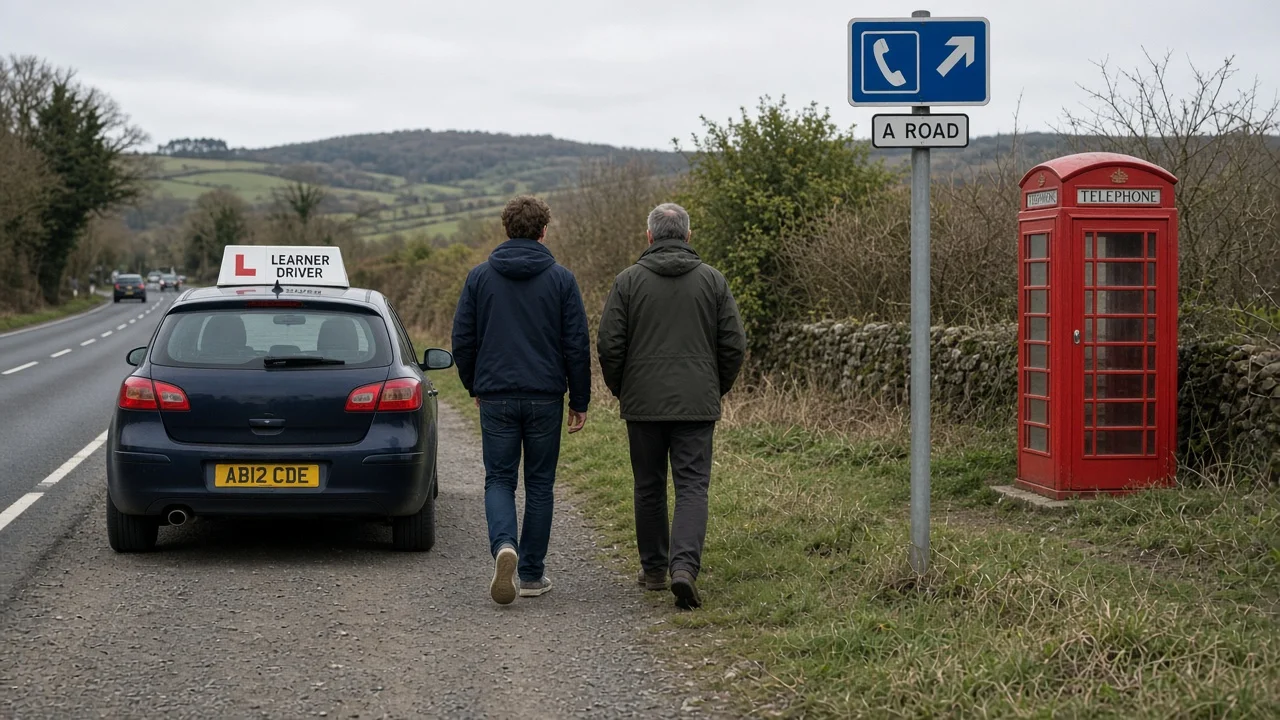
The telephone sign UK learners meet most often is a white handset on a blue direction panel. It tells you which turn or lay-by leads to a public call point, such as a phone box or kiosk, rather than warning of a hazard ahead.
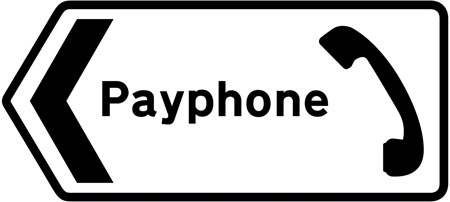
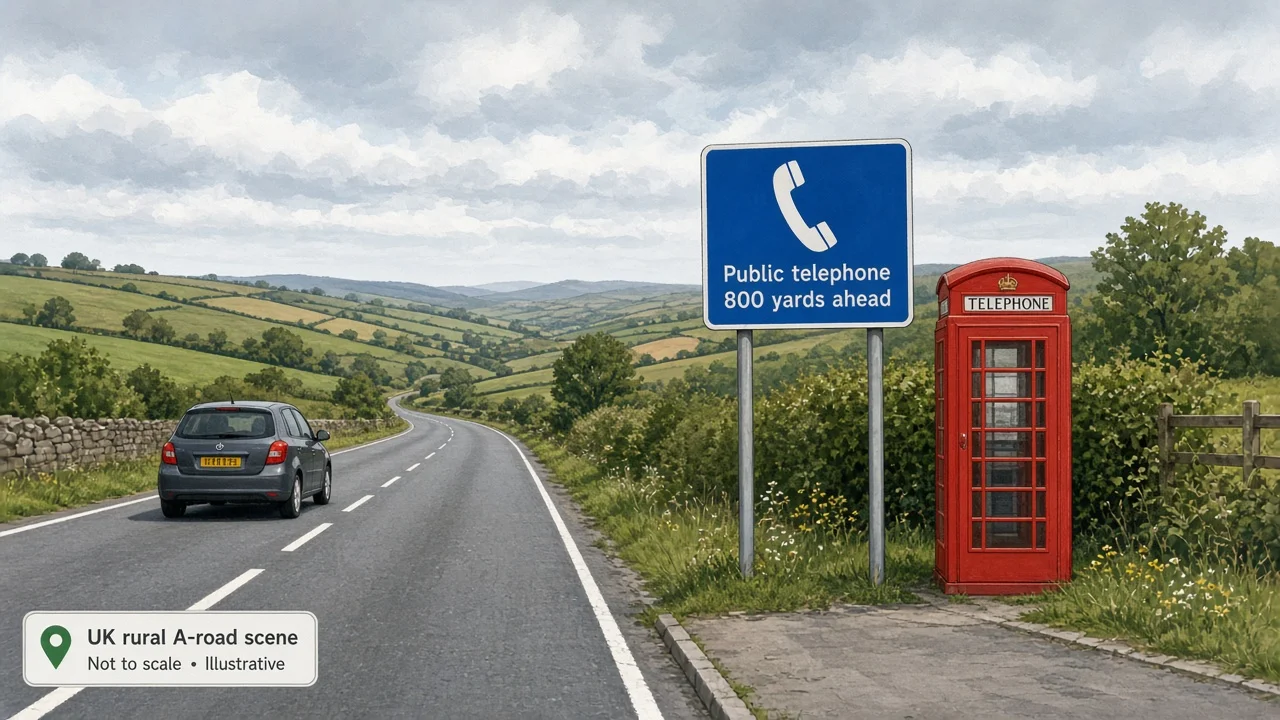
Sign image © Crown copyright, reproduced from GOV.UK traffic sign images under the Open Government Licence v3.0.
What the Public telephone Sign Looks Like
GOV.UK catalogue diagram 2307 shows the standard facility pictogram: a bold white telephone receiver on a blue square or blue band within a larger white direction board. Black arrows and place names sit beside the symbol on A-road and local distributor signs.
On rural routes the board often appears before a left turn into a grassed lay-by where a red kiosk phone box still stands, or before a village green with a modern payphone cabinet. Repeaters may quote distances in miles or fractions of a mile when the box is tucked behind a hedge.
Colour grammar matches other driver information blues: white legend on blue, not brown tourist panels and not red warning triangles. The handset is stylised, with the earpiece and mouthpiece clearly separated so examiners can distinguish it from an emergency SOS symbol on motorway verge plates.
Supplementary white rectangles can name the operator, show opening hours, or add “No stopping except in lay-by” on the approach. Those plates refine behaviour once you turn; they do not turn the main board into permission to halt on the live carriageway while you read a map.
Night driving on unlit A-roads makes retroreflective blue faces easy to spot while the phone box itself stays dark until your headlights sweep the lay-by. Rain and mud on repeater posts can hide smaller text, so treat the pictogram as the primary cue and confirm with road markings at the mouth of the turnout.
Motorway emergency telephones use a different handset layout on verge posts and connect to the police control room with location data. Tourist information uses brown boards. Parking shows a white P on blue. The public telephone pictogram points to a callable facility for general use, not to hard-shoulder SOS equipment or a hospital H panel.
What the Telephone Sign Means
Highway authorities retain public telephone signs where mobile coverage is patchy and a signed call point still serves walkers, breakdown drivers, and local residents. The plate answers “where can I make a landline call?” rather than “must I stop here?”
Rule 142 in The Highway Code expects you to read direction signs in good time. On a fast A-road that means signalling before the lay-by mouth, checking mirrors for following traffic, and not swerving across hatched centrelines when you spot the handset late.
The symbol does not create a parking bay on the main carriageway. You must use the signed turnout, a lawful parking place, or continue to the next village unless plates explicitly allow a brief stop. Hazard lights do not convert a clearway into a phone stop.
Public telephones accept coins, cards, or contactless payment depending on the kiosk age. The direction sign does not guarantee the box is working, stocked, or lit; it only marks the route the authority expects you to follow to reach the equipment.
Emergency calls on a public kiosk still dial 999 when you follow the keypad instructions. That is different from motorway SOS phones, which prioritise location reporting to the control centre. Choose the facility that matches your situation and stay off the carriageway while you call.
Lay-bys shared with refuse bins, picnic tables, or tourist coaches need careful positioning. Stop with all wheels inside the bay, apply the handbrake, and walk to the box on the verge side facing traffic if you must stand near the road.
Learner supervisors should rehearse calm turnout technique before relying on a phone box during a lesson. Examiners on nearby routes notice harsh braking when a pictogram surprises a student who was watching sat-nav instead of blue boards.
Northern Ireland uses the same blue information family on most public roads. If you revise in Belfast after practising in Wales, the handset pictogram still marks public telephone access on the arrow shown.
Before you commit to the lay-by, decide whether you truly need the box or whether a hands-free mobile call from a safer car park is better. Last-second turns across double white lines fail practical tests and unsettle artics behind you.
If you supervise Ben on a rural A-road lesson, ask him to name the pictogram aloud when it appears: white handset, blue field, arrow direction. That habit separates facility signs from red triangles under theory timers.
Lock the car and take keys if the lay-by is isolated. Phone boxes are public space; do not leave engines running or doors open while you search for change.
When the box is vandalised, note the location and use a mobile if signal returns further uphill. The sign still meant a call point existed on the network map even if maintenance lags.
Do not reverse along the A-road if you miss the turnout. Drive to the next signed access or a side road where turning is safer than backing against national speed limit traffic.
Winter mud can make lay-by ramps slippery. Slow before the transition, especially in a front-wheel-drive tuition car with worn tyres.
Horses and cyclists sometimes use the same lay-by as a refuge. Give them space and avoid blocking the only gap between the box and the hedge.
After your call, rejoin the A-road with a full shoulder check and brisk acceleration so you do not dawdle in the mouth while traffic bears down from behind.
Highway Code rules 142 to 144 (direction signs and planning)
Public telephone vs Similar Signs
| Sign | Meaning | Legal or warning? |
|---|---|---|
| Public telephone | Route to a public call point on the arrow shown | Information (blue) |
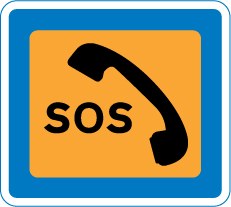 Emergency telephone | Motorway SOS phone on the hard shoulder | Information (blue) |
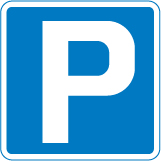 Parking | Signed parking place ahead | Information (blue) |
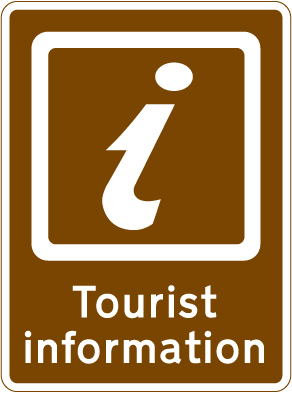 Tourist information | Visitor information centre on brown boards | Information (tourist) |
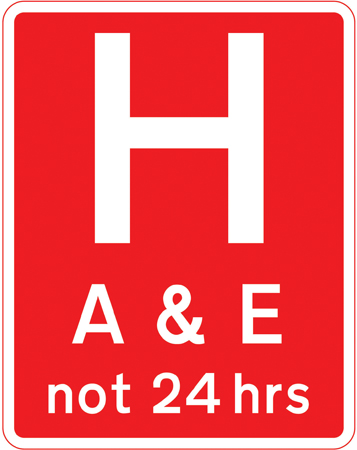 Hospital direction | Route to hospital facilities | Information (blue) |
Rules and Penalties
The direction board itself carries no fixed penalty. Fines follow real offences: stopping on a clearway, reversing on a dual carriageway, careless driving when a late turn forces others to brake, or obstructing a lay-by used by emergency services.
Parking partly in the live lane while you walk to a phone box can attract police attention on fast roads even when a handset board made the lay-by obvious. Keep all four wheels inside the bay markings.
Misusing a motorway emergency telephone for non-emergencies wastes control-room time and may breach motorway regulations. Use public kiosks or mobile networks when the situation is not life-threatening.
Vandalism or theft from phone boxes is a police matter; do not block traffic while you argue with a broken coin slot. Move to a safer place and report the fault reference if one is printed on the door.
Theory tests often crop the blue panel to the handset alone and ask which service awaits. Learn pictogram families so public telephones, SOS phones, and hospital symbols never blur together under exam pressure.
Check the latest theory test pass mark and book when you are ready via our booking guide.
Public telephone in Practice
Ben is midway through a rural A-road lesson with his instructor when the tuition car loses mobile signal in a wooded valley. The fuel gauge is healthy, but Ben needs to call home about a later pickup time, and his instructor wants him to use real-world signage rather than guessing where coverage might return.
Rounding a gentle bend, Ben spots a white direction board with a blue handset band and a left arrow above a grass lay-by. He checks the interior mirror, signals left in good time, and slows before the dashed taper so he does not scrub tyres across gravel scattered by lorries.
Inside the lay-by sits a classic red phone box with a small white plate repeating the handset symbol. Ben parks parallel to the hedge, applies the handbrake, and switches off the engine before he walks to the box with coins ready. A tractor passes on the main carriageway; Ben waits until he is on the verge side before he opens the kiosk door.
The call completes, and Ben returns to the car without reversing along the A-road. His instructor asks what he would have done if the box had been out of order. Ben answers that he would note the location, drive to the next village shown on a distance plate, and only use the carriageway shoulder in a genuine emergency with hazard lights, not for a scheduling chat.
That evening Ben revises a mock theory item that shows the handset pictogram beside a motorway SOS plate. He selects the answer that describes a public call point on a local road, not the hard-shoulder emergency phone, and adds the symbol to his flashcards next to parking and hospital panels.
How This Sign Appears on the Theory Test
Picture questions show the white handset on blue and ask which facility the arrow indicates. Choose public telephone or call point, not motorway SOS, hospital H, or plain parking unless the stem shows the correct pictogram.
Scenario stems describe a driver stopping in lane one to use a phone box pointed to by an earlier sign. The safe pattern uses the signed lay-by; the board does not permit stopping on the live carriageway.
Distractors swap in brown tourist symbols, red warning triangles, and emergency telephone artwork from motorway vignettes. Read shape and colour before you tap.
Navigation items may ask which pictogram marks a callable kiosk in a village. Pair the handset with information blues, not regulatory red rings.
Car candidates need forty-three correct answers from fifty questions within fifty-seven minutes. Practise facility filters on a free mock theory test so pictograms stay distinct.
When a question mentions poor mobile signal, the lawful answer still respects clearways and lay-by markings; the telephone direction sign guides you to equipment, not to any stop you fancy.
Take a free mock theory test and filter questions on road and traffic signs. Pair that with the warning signs guide for triangle symbols.
Related Road Signs
Hospital sign
Blue H panels that often sit beside facility pictograms.
Parking sign
Blue P boards when the lay-by also serves parking.
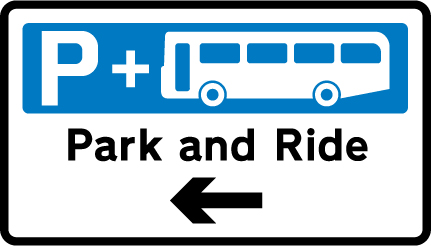
Park and ride
Combined P and bus panels near transport hubs.
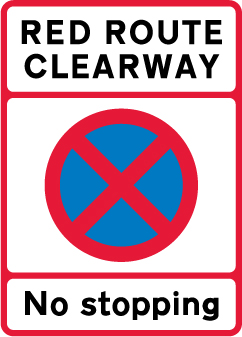
Clearway
Stopping bans on fast approaches to turn-offs.
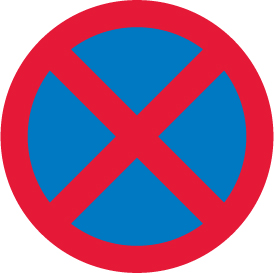
No stopping sign
Red-ring orders that override impulse stops.
Test Yourself on UK Road Signs
When the blue panel shows a white handset, you are being directed to a public call point, not invited to stop wherever you like on the A-road. Practise pictogram recognition on a free mock theory test, then walk a real lay-by with your instructor so turnout timing feels natural before test day.
Frequently Asked Questions
What does a telephone sign UK drivers follow on an A-road mean?
It marks the direction to a public telephone or call kiosk on the arrow shown. It is an information pictogram, not a hazard warning or speed limit.
Is this the same as a motorway emergency telephone?
No. Emergency telephones on motorways use a separate SOS layout on verge posts and connect to the control room with location details. The public handset symbol points to general call points on local roads.
Can I stop on the carriageway when I see the sign?
You should use the signed lay-by or another lawful parking place. The direction board does not allow stopping on clearways or live lanes while you walk to the box.
Does the sign guarantee the phone box works?
No. It shows where the authority routes you to equipment that should be on the network. If the kiosk is faulty, continue to the next village or regain mobile signal before you rely on the call.
Will the theory test use this pictogram?
Yes. Items often show the handset on blue among other facility symbols. Learn how it differs from emergency telephones, parking, and hospital panels.